At a Glance
- Read by: Bruce Cannon has the reading credit, and place names carry the whole local claim in a guide built on residency.
- At its heart: Local knowledge, cultural layering, art and food, travel beyond the tourist route
- Vibe: Warm, affectionate, unhurried
- Short version: A good pre-trip orientation at three and a half hours, though itinerary builders will still want a conventional guidebook beside it.
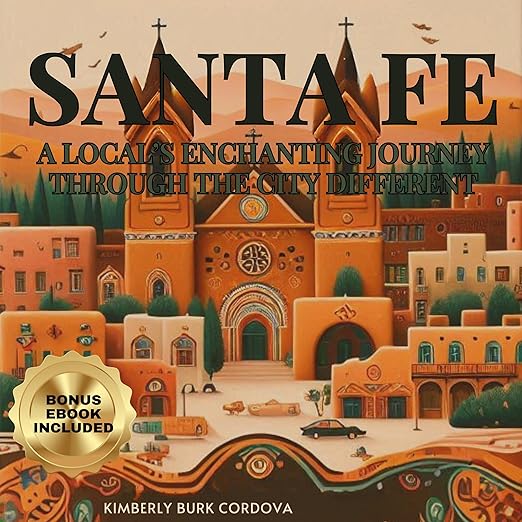
What survives when a travel guide loses its photographs? That question hangs over this audiobook more heavily than over most, because the reviewers of the printed edition keep returning to how the thing looks. One calls the cover pretty and is unmoved by the black-and-white photographs inside. Another is keeping the book specifically for its illustrations. Strip all of that away, hand the remainder to a narrator, and you are left with the part of a guidebook that was always words: history, opinion, and a resident's sense of which streets matter.
A Closer Look at Santa Fe
Santa Fe has spent decades marketing itself on a nickname, and Kimberly Burk Cordova's title leans on it directly. Asking what makes the place the City Different is a rhetorical move as much as a question, since the answer the book gives is the one the city gives about itself: a layering of Native American, Spanish and Mexican influence that no other American city stacks in quite that order. The pitch against the competition is a resident's authority, promising hidden trails and tucked-away restaurants instead of the tourist board's list.
The reviews split hard, and the split is more useful to a buyer than any single verdict in it. One reader, at three stars, dismisses it in a sentence, complaining of 'black and white photos inside, no depth' and calling the whole thing dull. Kelly Taylor, at five, describes a very thorough book covering the basics of a trip alongside details known only to residents, and singles out a chapter of unusual local facts. Chris calls it 'a love letter to one of the most culturally rich and artistically vibrant cities in the United States'. Same book, and the verdicts scarcely touch each other.
The four-star review resolves the disagreement better than either extreme. NellieBamaBly keeps the volume for its illustrations while reaching for Fodor's for the actual work, wanting more detail on planning tours and attending events such as the opera, and mentions buying the author's other three destination guides before returning them as too similar in format. Read together, those reactions describe a book that succeeds as affection and orientation and underdelivers as an itinerary tool, which is a perfectly respectable thing for a guide to be as long as you know it going in.
The layer that transfers best to audio is the layer the lukewarm reviewers were least interested in. Cultural history is narrative by nature, and a spoken account of how three traditions settled into one small high-desert city works better in the ear than on a page competing with photographs for attention. Patrick Sanaghan, who spent a week there years ago, calls the book 'an excellent resource for visitors' and reports it reviving the pull of the place strongly enough to book a return. That is the effect this format is best positioned to produce.
At three hours thirty-five, this is the right length for what I would call a pre-trip listen. Long enough to arrive with context and a shortlist, short enough to finish on the flight or across two evenings before you go. Guidebooks are usually consulted in fragments at the moment of need, and audio is bad at that. Audio is good at the thing print guides rarely get: an uninterrupted hour of somebody explaining why a place is the way it is before you are standing in it deciding where to eat.
Bruce Cannon is the credited reader, and northern New Mexico puts an unusual load on proper nouns. Spanish street and mission names, Pueblo place names, and the vocabulary of local food all carry the resident's claim this book is built on, and a listener registers a mispronunciation instantly even when they could not produce the right version themselves. My honest test for a regional guide in audio is thirty seconds of a sample played for the names alone, because credibility in this genre lives or dies on them.
Things to Know Before Starting Santa Fe
List content is the weak point, and this book contains a lot of it. Restaurant names, trail heads, transport advice and seasonal timings are all things you need to capture, not experience, and no listener can write down a recommendation while driving toward it. An accompanying PDF ships with the audio edition, which restores some of the reference layer, though it also means the format you actually consult on the trip is a document on your phone rather than the recording you paid to hear.
Set expectations on planning depth. NellieBamaBly's complaint is precise: for trip planning and execution, an established guide brand does more, particularly for booking tours and cultural events. Nothing here suggests the book is trying to compete on that ground, since its stated appeal is the local perspective rather than logistical completeness. If you need opening hours, ticketing and a workable day-by-day itinerary, treat this as a companion to a conventional guide rather than a replacement for one.
Currency deserves a thought too. This is described as a second edition offering fresh insights and updated recommendations, which is a freshness claim rather than an itemized revision, and travel information decays faster than almost any other kind. A restaurant recommended in a guide published in late 2024 may not survive to your visit. The cultural and historical material ages gracefully; the practical layer wants checking against something current before you rely on it.
Who Kimberly Burk Cordova Is Writing For
Travelers with a Santa Fe trip already booked are the natural audience, especially those who would rather understand a place than tick it off. History and art enthusiasts get the strongest version of the book, since the cultural layering is where the writing has the most to say and where the audio format helps rather than hinders. It also works for the armchair listener with no plans at all, which is roughly what happened to Patrick Sanaghan, whose week in the city lay years in the past and who finished the book intending to return.
Look elsewhere if you want a planning tool, a restaurant database, or the visual pleasure that two reviewers here bought this book for and would not find in a recording. Anyone allergic to civic affection should also be warned, because the book loves its subject openly and never pretends to weigh Santa Fe against anywhere else. That warmth is the product. The only real question is whether you want three and a half hours of it.
Common Questions
What happens to the guide's photographs in the audiobook edition?
They do not travel, though a supplementary PDF comes with the audio and restores part of the visual layer. Two reviewers of the print version comment specifically on the pictures, one favorably and one not, so a listener is skipping the element that divided them most sharply of all.
Is this usable on the ground in Santa Fe, or only before the trip?
Before, overwhelmingly. Restaurant names, trailheads and timings need capturing rather than hearing, and nobody transcribes a recommendation while walking to it. Use the recording to arrive informed and opinionated, then keep the supplied document, or a conventional guide, for the decisions you make once you are there.
How much history and culture does the audiobook actually carry?
Enough to justify the purchase on its own. The Native American, Spanish and Mexican strands running through the city are the book's strongest material, and narrative history is exactly what listening does well. Reviewers who praise the depth are almost always praising this part rather than the practical chapters.