Quick Take
- Narration: Virtual Voice. This is a significant format problem for a book built on somatic practice, guided embodiment exercises, and the kind of intimate transmission that requires a human voice to land.
- Themes: Tantric sexuality, shame deprogramming, eros as life force energy
- Mood: Devotional and spiritual, leaning toward workshop-companion
- Verdict: The content has genuine depth and a real following, but Virtual Voice strips the somatic work of the warmth and presence it requires. Print is the better format here.
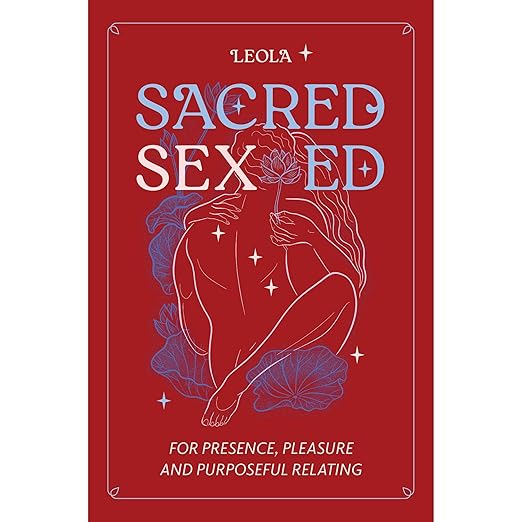
I need to flag something before I say anything else about the content: Sacred Sex Ed is narrated by Virtual Voice, Audible’s AI-generated narrator, and the mismatch between that delivery system and this book’s material is about as severe as I’ve encountered in this genre. This is a book about sacred sexuality, tantric practice, embodied presence, and somatic healing. It contains guided exercises designed to help readers connect with their own bodies and desires. The entire project depends on a quality of warmth, intimacy, and presence that a synthetic narrator structurally cannot provide. That’s not a judgment about the book itself, which has a 4.7 rating from 58 reviewers who’ve clearly found genuine value in it. It’s a judgment about the audiobook format specifically.
With that said, Leola’s work deserves serious attention, because the content here is more substantive than many books in the tantra-adjacent wellness space.
What Leola Actually Teaches
Sacred Sex Ed organizes itself around three invitations that the author describes as Illuminate, Expand, and Liberate. The first section asks readers to examine the conditioning they’ve absorbed around sexuality: from cultural institutions, religious frameworks, early education, and family messaging. Leola doesn’t treat shame as a personal failure but as a systemic product of the systems we were raised inside. That framing is both compassionate and accurate, and it’s where the book is strongest.
The middle sections move into what she calls conscious erotic experience, exploring the use of intention in intimate life and the relationship between erotic energy and life force more broadly. The tantric lineage here is genuine rather than decorative. Endorsers including James McCrae and Melissa Wells, both authors in the transformational space, highlight the way Leola weaves ancient tantric wisdom with contemporary psychology. The third section, on liberating eros, pushes toward the edges of what readers are comfortable with around pleasure and desire as navigational tools for a full life.
The Exercises and the Format Problem
Throughout the book, Leola includes exercises, journal prompts, and embodied practices designed to be done rather than simply read. This is where the Virtual Voice narration creates its most serious limitation. When a guided somatic exercise is delivered by an AI voice, the relational quality that makes such exercises effective is absent. Several of the five-star reviewers mention marking up physical copies with highlighters and engaging with specific passages repeatedly, which suggests the book’s natural relationship is with print, not audio.
One reviewer describes reading passages aloud to her partner of 14 years and experiencing a breakthrough in mutual understanding of what tantra could mean for their relationship. That’s the mode this material wants. The transmission happens through engaged, attentive reading, not passive listening to a synthetic voice. If you’re drawn to this content, the print edition is the honest recommendation, or working with the audiobook in short segments with the space to pause and actually practice what’s being described.
The Community and the Credibility
The 4.7 rating from 58 reviewers is meaningful signal. In a niche as contested as sacred sexuality, that kind of consistent positive response suggests Leola’s framework is resonating with people who have genuine experience in this space. The endorsements from Madelyn Moon and Thea Wayne, both practitioners in somatic and embodied sexuality work, lend credibility beyond the self-promotional blurbs that often populate books in this genre. The content has real roots in a living tradition rather than in wellness trend-following.
Who Should Listen, Who Should Skip
Listen if you’re familiar with tantric frameworks and want a contemporary, shame-free integration of that tradition with modern relationship psychology, and you plan to use this primarily for conceptual learning rather than guided practice. Consider the print edition if embodied exercises and somatic practices are your primary interest. The Virtual Voice narration is the main obstacle between this content and the impact it clearly has on readers in the format it was designed for.
Frequently Asked Questions
Why is Virtual Voice narration a particular problem for Sacred Sex Ed specifically?
Sacred Sex Ed contains guided embodiment exercises, somatic practices, and intimate transmissions that depend on warmth and presence to land effectively. When an AI-generated voice delivers material designed to help readers connect with their bodies and desires, the relational bridge the exercises require is absent. The book’s documented impact on readers comes through engaged, personal encounter with the text, not passive listening.
Is this book explicitly tantric, or does it use tantra as a loose metaphor?
The tantric lineage is genuine and specific rather than decorative. Leola draws on ancient tantric wisdom and weaves it with contemporary somatic psychology and relationship frameworks. Endorsers who are practitioners in this space confirm the depth of the tradition she’s working within.
Is Sacred Sex Ed appropriate for someone with no prior background in tantra or sacred sexuality frameworks?
Yes, the book is designed to be accessible without prior background. Leola begins with shame deprogramming and cultural conditioning work before moving into more advanced practice, which means new readers aren’t dropped into unfamiliar territory without orientation.
The synopsis mentions illuminating shadows around sexual assault and trauma. Is this book therapeutic in intent?
It has therapeutic dimensions, particularly in the shadow-work sections, but it isn’t therapy and doesn’t position itself as a substitute for professional support. The language around sexual trauma is present and compassionate, but the overall orientation is toward expansion and liberation rather than clinical processing.