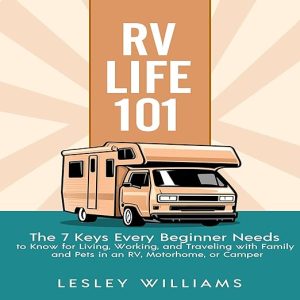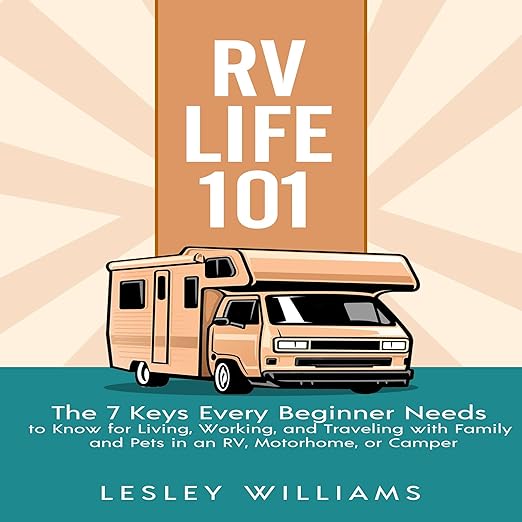
I have spent a fair amount of time in proximity to people who have made the switch to full-time RV living, enough to know that the gap between the Instagram version of the lifestyle and the lived reality is substantial. The van life hashtag has been used six million times, as this book notes, and the ratio of aspirational content to genuinely useful logistical guidance is wildly skewed toward the former. RV Life 101 by Lesley Williams exists in the latter category, and that is its primary virtue.
I listened to Audrey J Williams narrate this on a Sunday afternoon while half-planning a hypothetical version of the trip I am never quite organized enough to actually take. By the end I had a clearer sense of what it would actually involve, which is exactly what the book promises.
How RV Life 101 Holds Up
The book organizes itself around seven foundational areas: self-assessment and readiness, choosing the right rig, life on the road with kids and pets, remote work and income while traveling, utilities and maintenance, budgeting and cost, and practical tips that do not fit neatly into the other categories. That structure is sensible, and Williams moves through it without the over-padding that afflicts many similarly structured guides. Each chapter delivers enough detail to be useful without becoming a technical manual.
What distinguishes this from the more purely aspirational entries in the RV genre is the readiness questionnaire in the opening chapters. Williams is asking readers to genuinely assess whether this lifestyle suits their situation rather than simply persuading them it does. The questionnaire covers practical questions about family dynamics, financial reserves, work flexibility, and tolerance for the specific frustrations of road life: limited space, maintenance surprises, the emotional labor of being in close quarters continuously. Reviewers consistently cited this balanced honesty as the book's most valuable quality.
The children and pets sections are more substantive than most guides manage. The homeschooling question is addressed directly, with a range of approaches rather than a single prescription, and the pet logistics are specific enough to be genuinely useful rather than a paragraph of reassurance. One reviewer described this as the book she needed after watching friends successfully make the transition and not understanding how it was possible to begin thinking through it.
Why RV Life 101 Works as an Audiobook
Audrey J Williams' narration has the quality of a knowledgeable friend explaining something rather than a performer dramatizing content. For practical nonfiction, that register is exactly right. The enthusiasm is present but not relentless, and the sections on maintenance issues and financial challenges are delivered with the same even tone as the sections on freedom and adventure, which is appropriate to material that the author is trying to present honestly rather than promotionally.
The companion PDF is available in Audible and adds a resource layer that the audio format cannot fully replicate. For a book that covers rig types, cost comparisons, and maintenance checklists, having a visual reference while listening is genuinely useful rather than a marketing add-on.
Weak Spots in RV Life 101
The book's regulatory and logistical content is calibrated primarily for a US audience. International reviewers, including UK and German readers, noted that it remains broadly useful but some sections covering specific campground regulations, domicile address requirements, and insurance structures are distinctly American. European RVers and full-time van lifers from outside the US will need to seek supplemental resources for country-specific regulations.
At three hours and forty-five minutes, the audiobook is also on the shorter side of what it is covering. Williams moves through the seven keys at pace, and listeners who want to go deeper on any particular area, remote work income streams, for example, or specific rig comparison data, will want to follow up with dedicated resources on those topics. This is an excellent framework and orientation rather than a comprehensive treatment of any single area.
The Right Listener for RV Life 101
Anyone genuinely considering a transition to full-time or extended RV living will get more practical orientation from this than from any comparable title currently available. It is particularly valuable for families with children and pets, where the logistical complexity is highest and the desire for realistic guidance is strongest. Listeners at the very early curiosity stage will appreciate the honest framing of both the appeal and the difficulty; those further along in their decision-making will value the specific chapters on rig selection, maintenance costs, and remote work. The book is not for seasoned RVers looking for advanced guidance; it is precisely calibrated for the thoughtful beginner who wants to understand the full picture before committing.
Before You Press Play
- Narrator: Audrey J Williams delivers an accessible, warm read that matches the book's encouraging tone without overcooking the enthusiasm.
- Subjects: lifestyle transition and freedom, family logistics on the road, financial planning for nomadic living
- Tone: Practical and motivating, with a realistic view of both the appeal and the difficulty
- Bottom line: The most balanced and practically useful RV beginner guide currently available in audio, honest about the hard parts while making the life genuinely appealing.
Is RV Life 101 useful for families with children, or does it focus primarily on couples or solo travelers?
The book addresses families with children explicitly and in detail. There are dedicated sections on life on the road with kids, including the homeschooling question, social development concerns, and how the lifestyle can affect family closeness in both positive and challenging ways. Several reviewers with families specifically praised this as the most useful aspect of the book.
Does the book address how to make money while living in an RV, or is it purely about logistics?
Yes, there is a dedicated section on remote work and income while traveling. Noonan outlines the range of approaches people use, from remote employment to freelance work to location-independent businesses, and discusses how the nomadic lifestyle actually creates some income opportunities that conventional living does not. This section is an overview rather than a detailed guide, so readers who need deep remote work guidance will want supplemental resources.
The audiobook is only 3 hours and 45 minutes, is it too short to be genuinely useful across all seven topics?
It is on the shorter side, and Williams moves through the material at pace. What it delivers is a solid framework and orientation across all seven areas rather than deep coverage of any single one. For most beginners, the breadth is more valuable at this stage than depth in one area, but listeners who want to go further on specific topics like rig selection or maintenance will need additional resources.
The book is listed under travel, but it covers RV living as a full lifestyle change, is it really for vacationers or for people considering a permanent move?
It is unambiguously addressed to people considering a permanent or extended lifestyle change rather than vacation RVers. The readiness questionnaire, the domicile and legal address sections, the remote work guidance, and the detailed cost breakdowns are all calibrated for full-time or long-term nomadic living. Occasional RVers looking for camping trip advice will find it less relevant to their situation.