- Themes: a wrongful conviction, police tunnel vision, press pressure on a criminal case, capital punishment, a small community under scrutiny
- Mood: methodical and cumulative, closer to a case file opened in order than to a thriller
- Verdict: Ten hours of documented true crime for listeners who want the paperwork rather than the reconstruction, and who already know the ending.
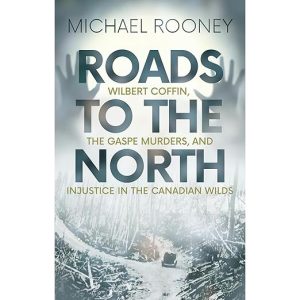
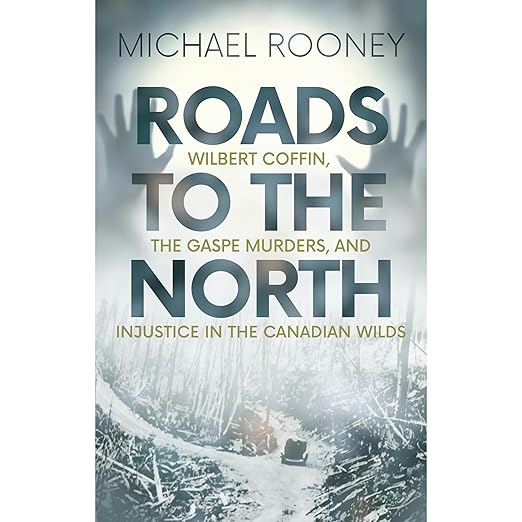
Gaspé, Québec, July 1953: three American hunters go into the bush and do not come out. When the remains are found they have been torn by bears, and the evidence still points at a person. That is the first ten minutes of this audiobook, and everything in the following ten hours and twenty-two minutes flows from a decision taken shortly afterward, when investigators from Québec City arrived, took the case away from the local police, and settled on the last man known to have seen the hunters alive.
That man was Wilbert Coffin, a prospector and jack-of-all-trades whose bad luck was geographic. Provincial police captains J. Alphonse Matte and Raoul Sirois arrested him, prosecutor Noel Dorion charged him with murder, and the trial that followed became one of the most closely watched in Canadian criminal history. Six journalists from the Toronto Daily Star worked the story in parallel with the investigation, which is the detail that tells you what kind of case this was: a killing in a place usually left to itself, suddenly carrying a national audience and the pressure that comes with one.
Michael Rooney built the book out of paperwork. Court transcripts, official government and police reports, newspaper articles, diplomatic cables, personal histories, telegrams, and interviews conducted for the project. A September 2025 endorsement calls the result an extremely thorough and entertaining piece of narrative nonfiction and predicts it will become the definitive work on the Coffin case, which is a large claim and, on the evidence of how the sources are stacked, not an unreasonable one. The reconstruction is patient. It accumulates rather than accelerates.
The press thread is the part that lifts this above a procedural. Newspapers were not observing the Coffin case from a distance; they were working it, chasing the same witnesses, printing theories while the investigation was still forming, and shaping what a jury pool already believed before anyone was sworn in. Set that alongside three dead American citizens and the diplomatic cables in Rooney's source list, and the picture that emerges is of a prosecution operating under several kinds of pressure at once, none of them evidentiary. That is the argument the book is really making, and it does not need to raise its voice to make it.
Local Memory and Archival Record Agreed
The most striking response on the page comes from someone who grew up in the Gaspé, raised on the theories and stories a father and his friends passed around, and who came to the book already holding an opinion. What that endorsement reports is unusual and worth the whole column: the detailed account did not overturn the family belief in Coffin's innocence, it hardened it. Local memory and archival record met and agreed. For a case that has spent seven decades as regional folklore, that is the highest compliment the material could be paid.
An October endorsement filed in Canada adds the other reason to spend ten hours here: after laying out the events in the wilderness, the book closes by offering a believable explanation of what happened on the day of the murders. Rooney is not content to demolish the prosecution and walk away. Whether you accept the conclusion or not, having one changes the experience from a catalog of errors into an argument, and an argument is a great deal easier to follow through headphones than a list of them.
Ten hours and twenty-two minutes is also the right length for this kind of case. Wrongful conviction stories collapse when they are compressed, because the whole point is the accumulation of small decisions: which witness was interviewed twice, which report went missing, which question nobody asked. A podcast episode gives you the outrage without the spine. Here the sequence is laid out at the pace the documents were generated, and by the time the trial arrives you have watched the case being built well enough to see where it was load-bearing and where it was not.
Virtual Voice Can't Mark That Seam
Start with the reading. The narrator slot on this page carries the label Virtual Voice, which marks a synthetic reading. On most books that is a neutral fact, but this one is assembled from other people's documents, and the ordinary work of a human reader is to mark the seam where a telegram stops and the author's own analysis starts. A change of pace, a slight flattening for a quoted report, a lift for a newspaper headline. Without those signals, ten hours of transcript, cable and commentary arrive in a single register, and the listener has to do the attribution work unaided. Anyone who follows true crime for the documents rather than the drama should factor that in.
The written column needs reading with care as well. All five visible endorsements carry five stars while the page reports 4.5 from twenty-eight ratings, so the responses you can read sit at the top of a spread you cannot see. Research is the recurring word, used outright by three of the five. And one endorsement is posted under an account carrying the author's own surname, which is a matter of public record on the page and worth weighing for exactly as much as you think it is worth. None of this touches the quality of the work. It does affect how much the star average should move you.
French Names Arriving in an English Recording
True crime listeners who prefer the archive to the reenactment are the natural audience, and one endorsement reduces the recommendation to a single line: if you like crime cases, read this one. Canadian legal history, wrongful conviction narratives and the machinery of a capital trial are all served here, and the setting is a genuine draw. The Gaspé of the 1950s was remote enough that outside investigators arriving from Québec City changed the balance of power in the community overnight, and the book understands that.
Look elsewhere if you want suspense. The description states the ending, and the case is not structured as a mystery with a solution withheld; the tension comes from watching a system narrow its focus onto one man and close around him. Listeners who need a whodunit will feel the shape of this misdescribed by the true crime label. And anyone who struggles with French-language proper names arriving in an English-language recording should sample first, because Gaspé place names, Québécois surnames and legal titles recur constantly across ten hours.
Who narrates the Roads to the North audiobook?
Nobody is credited. A machine reads it, and the page marks that with a Virtual Voice tag instead of a name. That matters more than usual on a book built from quoted documents, since a synthetic reading gives no cue for where a quotation opens or closes.
Is Wilbert Coffin's guilt still an open question?
The book treats it as one. The description frames the investigation as narrowly focused on Coffin from the start and the trial as controversial, and the account closes with the author's own reconstruction of the day. Readers of the case will recognize a position being argued rather than a neutral summary.
Does the audiobook work if you know nothing about Canadian criminal history?
Yes. The case is introduced from the July 1953 discovery onward, with the local police, the Québec City investigators, the prosecution and the press each explained as they enter. No prior knowledge of Canadian courts is assumed, though the terminology takes a chapter to settle.
How graphic is the account of the murders?
The description does not soften the state of the remains, and a capital case ending at the gallows carries what that implies. The emphasis throughout falls on investigation, testimony and legal process rather than on violence, so expect grim subject matter handled at a documentary distance.