The Short Version
- Performance: Tim Wheeler delivers Kiyosaki's framework with clear, even pacing suited to the instructional register without adding unnecessary motivational energy.
- What it covers: Active versus passive investing, risk through knowledge, income conversion
- Feel: Direct and instructional, framework-first rather than anecdote-heavy
- Our call: A compact, philosophy-focused primer on Kiyosaki's investing approach that delivers framework over tactics, best suited to listeners who already know the Rich Dad series.
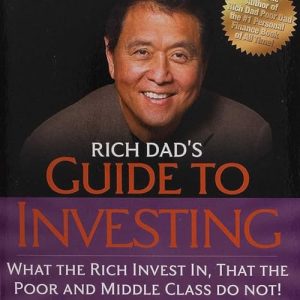
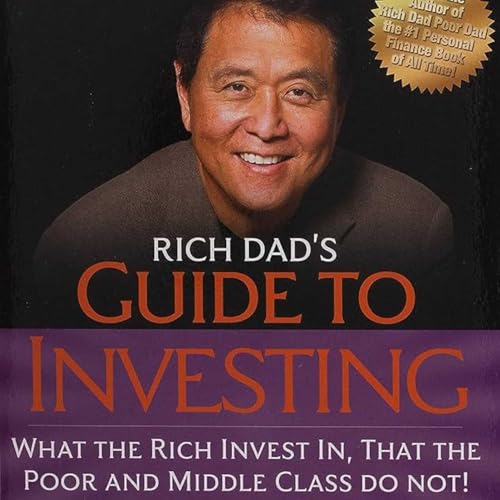
The distinction Kiyosaki draws between managing money and growing it is the load-bearing beam of Rich Dad's Guide to Investing, and this audiobook, narrated by Tim Wheeler, makes that distinction its first and most sustained argument. At just over an hour, this is one of the shortest titles in the Rich Dad series, and understanding what that runtime means for the content is essential before purchasing. Kiyosaki positions this explicitly as one of three core titles in the Rich Dad Series alongside Rich Dad Poor Dad and the Cashflow Quadrant. It is a primer on his investing philosophy, not a comprehensive investing manual. Wheeler's narration treats it accordingly: clear, paced for absorption, without motivational inflation.
Kiyosaki's central proposition in this audiobook is that most people approach investing as passive participants, buying instruments they do not fully understand and hoping the market trends in their favor, while the investors who consistently build wealth do something fundamentally different. They become active, engaged investors who understand what they own, why they own it, and how to evaluate it against their specific financial situation. The Rich Dad framework draws a sharp and deliberately provocative line between these two postures. The passive investor is always somewhat at the mercy of the market, advisors, and circumstances. The active investor develops the knowledge and judgment to reduce risk through understanding rather than through diversification into more instruments they do not fully understand.
Wheeler delivers this argument with the even, instructional pacing the material requires. He does not add the evangelical energy of a motivational speaker, which is the right call for a book that is specifically arguing for knowledge-driven investing rather than enthusiasm-driven risk-taking. The 10 Investor Controls, the most systematized element of the book's framework, are introduced in sequence and benefit from audio delivery because the cumulative logic of the list is easier to follow when heard than when read across a page. Each control builds on the previous ones, and Wheeler's consistent pacing makes that building clear.
The distinction Kiyosaki makes between accredited investors, who qualify for certain investment opportunities based on income or net worth, and sophisticated investors, who understand the mechanics of what they are investing in, is the conceptual heart of the book and the point most listeners identify as the framework's most useful contribution. Kiyosaki argues that the sophisticated investor category is the meaningful target, not the accredited one. Being qualified to invest in something by regulatory definition and understanding whether you should are not the same, and closing that gap is what the active investor approach requires.
Wheeler Makes Ten Controls Easy to Follow
For listeners who have already absorbed Rich Dad Poor Dad and the Cashflow Quadrant framework and want to understand how Kiyosaki's philosophy translates into specific investment behavior, this audiobook is the most efficient next step. The 10 Investor Controls are presented with a clarity in audio form that the print version sometimes obscures through the surrounding context, and Wheeler's handling of the sequential presentation keeps the structure legible across the compact runtime. The audiobook's focus on converting earned income into passive income and on understanding the three primary investment categories, paper assets, real estate, and business ownership, gives listeners a working vocabulary for evaluating investment choices even before they are in a position to act on them.
Kiyosaki's framing of this book as guidance rather than guarantee is worth taking seriously. The Rich Dad series has generated its share of criticism for oversimplification, and some of that criticism is fair when applied to the more prescriptive sections of other titles. Here, the brevity enforces a useful restraint. There is not enough runtime to build elaborate case studies or to oversell specific tactics. What the audiobook delivers is framework and philosophy, which are the elements of Kiyosaki's thinking that have aged best.
Knowledge Reduces Risk More Than Diversification
The section on reducing investment risk through knowledge rather than diversification is the most intellectually substantial portion of the audiobook and the one that most rewards being paused over and returned to. Kiyosaki is making a counterintuitive claim: that the standard financial advice to diversify across many instruments you do not deeply understand can actually increase certain forms of risk because it distributes your exposure across multiple things you cannot properly monitor or evaluate. This is not an argument against all diversification, but it is a specific challenge to passive diversification as a substitute for knowledge. Wheeler paces this section carefully, which is the correct choice for an argument that requires some sitting with before acceptance or rejection.
The book is also honest about what it does not cover. It is not a guide to specific investment products or markets. Listeners expecting tactics will need to supplement with more specialized material. What the audiobook delivers is the investment philosophy that Kiyosaki argues must precede tactical decisions, and that is a meaningful contribution for listeners who have been collecting tactics without a coherent framework to organize them against.
New Readers Should Start With Poor Dad First
Listeners new to the Rich Dad series should start with Rich Dad Poor Dad rather than here. This audiobook assumes familiarity with Kiyosaki's foundational concepts and builds specifically on them. For listeners who know the framework and want to understand how Kiyosaki applies it to investment decisions, the hour-long runtime is an efficient commitment that delivers focused value rather than a comprehensive curriculum. The audiobook works well as preparation for a conversation about financial planning or as a structured reorientation for listeners who have been accumulating investment accounts without a clear philosophy driving the decisions. At 4.7 stars across more than five thousand ratings, the book has consistently found an audience for this specific function.