Quick Take
- Narration: Razeen Sally narrates his own book, which is both a strength and a limitation, the intimacy is real, but the pacing is uneven in places where a professional narrator would have added more rhythmic control.
- Themes: Diaspora identity and return, post-civil-war complexity, travel as political and personal reckoning
- Mood: Layered and reflective, with moments of genuine emotional weight amid the historical analysis
- Verdict: Return to Sri Lanka is the rare travel book that works as memoir, political history, and cultural guide simultaneously, essential reading if you have any connection to the island or its story.
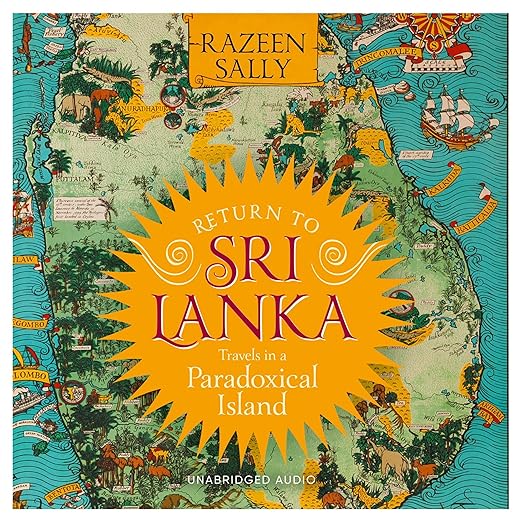
I finished Return to Sri Lanka over the course of a long weekend, and I kept finding myself pausing the audio to look up places Razeen Sally describes: coastal temples, inland ruins, towns that bear different names in Sinhala and Tamil and English. That impulse to follow along, to check a map, to want to see the thing he is describing, that is the mark of travel writing that actually works. Most books in this genre describe places. The good ones make you feel that the description is insufficient and you need to go yourself.
Sally’s situation as both author and subject is unusual. Born to a Sri Lankan Muslim father and a Welsh mother, he left Sri Lanka in his early teens after political conflict tore his family apart. He barely returned for thirty years. When he did, he spent the better part of a decade crisscrossing the island, approaching it simultaneously as a native and as a tourist, two lenses that each reveal things the other misses. That dual position is what gives the book its texture.
Our Take on Return to Sri Lanka
The book is genuinely multiple books at once: childhood memoir, political economy, travel chronicle, cultural history. What holds these strands together is Sally’s voice, which maintains a consistent register even as the subject matter shifts. He is not performing objectivity, this is openly a book about his relationship with Sri Lanka, and the personal stakes are visible throughout, but he also brings scholarly rigor to the historical and political sections that prevents the memoir elements from softening the harder truths about ethnic conflict, civil war, and the ongoing complexity of a country that is blessed with nature’s bounty while being scarred by ethnic conflict and the violence of civil war, as the synopsis puts it.
One reviewer who had traveled to Sri Lanka professionally in the 1990s and had been searching for this kind of book since described it as the book he was looking for back then. That captures something important: this fills a real gap in the available literature on Sri Lanka for English-language readers who want something beyond guidebook listings and surface-level cultural primers.
Why Listen to Return to Sri Lanka
Sally’s self-narration carries the personal chapters particularly well. When he describes his childhood memories, revisiting places from his youth through the lens of adult reckoning, the intimacy of hearing the author’s own voice matters in a way it might not for a different kind of book. One reviewer noted being moved to tears during the childhood sections, and the audio format intensifies that register. The political and historical chapters are less affected by who is narrating them, but the overall consistency of Sally’s voice keeps the transitions between registers from feeling jarring.
The book is also more useful as an audio companion for someone already planning to visit Sri Lanka than it would be as a map-and-budget guide. Sally explicitly says he will not tell you which restaurant has the best reviews or the price of a hotel room, he will accompany you like a learned friend. That is exactly what the audio format delivers.
What to Watch For in Return to Sri Lanka
The book’s structural ambition, moving between childhood memory, travel chronicle, political analysis, and economic commentary, means some sections are denser than others. The political economy chapters, in particular, require more active listening than the narrative memoir sections. Sally’s background as an academic shows in those passages, and casual listeners looking purely for the travel narrative should be prepared for some material that reads more like analytical nonfiction than personal essay.
The pacing of Sally’s self-narration is also uneven in places. He is not a trained narrator, and there are moments where the delivery feels slightly flat compared to how a professional might have handled the same material. This is a minor complaint against a substantial achievement, but worth noting.
Who Should Listen to Return to Sri Lanka
Sri Lankan readers in the diaspora will find this book speaks directly to questions they may have carried for years. Non-Sri-Lankan listeners planning a first visit will find it an invaluable orientation that goes far beyond what any guidebook offers. Readers interested in post-conflict societies, the politics of ethnicity in South Asia, or travel writing that takes place seriously as a subject will all find something here. Those who prefer travel writing that focuses purely on place rather than politics and personal history may find the book’s range a stretch.
Frequently Asked Questions
Is Return to Sri Lanka useful as a practical travel guide, or is it more of a literary memoir?
Sally is explicit that this is not a practical guide, he will not tell you hotel prices or restaurant ratings. It functions instead as a deep cultural, historical, and personal orientation to the island. Many readers describe it as the ideal companion alongside a conventional guidebook rather than a replacement for one.
Does the book address the civil war and ethnic tensions directly, or does it keep to more scenic territory?
The political history of Sri Lanka, including the civil war, ethnic conflict, and its ongoing consequences, is woven throughout the book. Sally does not avoid difficult territory, and the political economy chapters engage seriously with why the island has faced such persistent instability despite its natural advantages.
How does Razeen Sally’s self-narration compare to a professional narrator’s delivery?
The intimacy is genuine and adds weight to the childhood and personal sections. However, Sally’s pacing is less consistent than a trained narrator’s, and some analytical sections feel slightly flat. Most reviewers found the trade-off worthwhile given the personal material involved.
Do I need background knowledge about Sri Lankan history to follow the book?
No prior knowledge is required. Multiple reviewers who knew nothing about Sri Lanka before reading described coming away with a thorough understanding of the country’s history and current situation. Sally builds context organically rather than assuming familiarity.