At a Glance
- Performance: A single credited reader, John Telfer, on a text whose bulleted apparatus was never designed to be spoken aloud.
- What it covers: Formative assessment, cognitive science in the classroom, sustainable workload
- Feel: Measured, practical, unhurried
- Our call: A well-structured teaching guide whose checklists lose everything in audio and whose reasoning loses nothing.
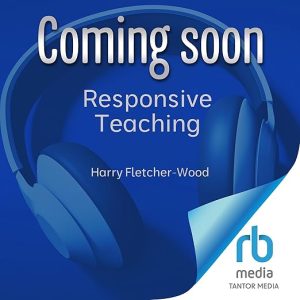
Every practical teaching book faces the same question in audio: what happens to the checklist? Harry Fletcher-Wood's guide is built around six recurring classroom problems, a set of strategies for each, and checklists for applying them, which is a structure designed for a desk and a highlighter. Tantor Media's audiobook runs seven hours and thirteen minutes with John Telfer reading, and it arrived in June 2026 carrying no ratings and no listener accounts at all.
Bolting Formative Assessment Onto Cognitive Science
Fletcher-Wood's premise is narrower and more useful than the title suggests. Rather than a philosophy of teaching, this is an attempt to bolt formative assessment onto cognitive science and make the join hold under a real workload. The description promises a detailed exploration of six core problems that teachers face in planning lessons, assessing learning and responding to students, with practical strategies for each across a range of subjects. The organizing word underneath all of it is sustainably, and that word carries more weight than it looks.
That emphasis separates the book from most of the shelf it sits on. Plenty of classroom guides describe a technique that works perfectly once, for one teacher, with one class, on a good afternoon. This one keeps asking what survives contact with a full teaching load, which is why the description pairs every principle with a checklist and with accounts from teachers already running these approaches. Whether the promise holds up is something only a semester of trying it can settle.
Telfer Reads an Argument That Travels Well
John Telfer reads for Tantor Media, and the recording arrives entirely unassessed: no ratings, no written accounts, nothing at all from a listener who has been through it. That is a consequence of a June 2026 release date rather than a verdict on the reading. What can be said about the fit is that the material suits being spoken in one specific respect, since the six problems are stated as problems, in plain declarative sentences, before any solution turns up.
Argument travels well through headphones; instructions do not. The diagnostic half of this book, the exploration of why a familiar classroom move keeps failing, is exactly the sort of reasoning that lands when somebody reads it to you. The research base gets a proper airing as well, because cognitive science and formative assessment are both areas where the underlying studies matter and where a summary that skips them is worth nothing. None of that requires a printed page.
Length is the other argument in its favor. At seven hours the book is short enough to finish inside two weeks of ordinary listening, which matters in a category most teachers start and quietly abandon. It also means the six problems get real but not luxurious space, which points to a book that makes its case and stops rather than one that circles the same ground for three hundred pages. Early-career teachers, who have the least time and the most to gain, benefit most from that discipline.
Checklists Are the Obvious Casualty Here
The checklists are the obvious casualty. The description explicitly promises checklists for applying each principle successfully, plus advice tailored to teachers with specific responsibilities, and neither is a thing you can work with while listening. No accompanying PDF is mentioned anywhere on the product page, which is worth establishing before you buy the audio expecting the reference apparatus to come with it. If you want the tool rather than the case for the tool, print is the format that delivers.
Listing copy has problems of its own. The four items in the contents list are run together into a single paragraph, with commas standing where bullet points used to be, and one sentence collides with the next without a space between them. It reads as jacket text pasted over from a print edition and never checked afterward. That is cosmetic, but it is also the only description a prospective listener gets, and it hides the structure of the book instead of showing it.
Zero Reviews, and No Way to Audit Claims
Then the silence. A recent release with zero ratings and zero write-ups gives you no independent read on either the book or the recording, and education titles tend to attract very specific complaints once listeners arrive: which grade levels the examples assume, how far the strategies transfer beyond the subjects they were drawn from, whether the workload claim survives September. None of that intelligence exists on this page yet, and buying now means buying on the description alone.
One further caution belongs to the genre rather than to this title. Books leaning on cognitive science are only as sound as their reading of it, and a listener cannot check a citation mid-chapter. Fletcher-Wood's copy promises evidence-informed principles balanced against practical suggestions, which is the right ambition, but audio strips out the apparatus that would let you audit the claim. Take the strategies seriously and take the science provisionally.
Teachers in Their First Three Years Benefit Most
Teachers in their first three years are the clearest beneficiaries. Someone at that stage is drowning in advice that is either abstract or flatly contradictory, and a book organized around six specific, recurring failures is a genuinely useful shape for that person. The sustainability argument matters more to them than any individual strategy does, because burnout is what actually removes good teachers from classrooms.
Mentors and department leads make up the second audience, largely because of that line about guidance aimed at teachers carrying extra roles. Anyone who has to make an assessment policy survive across eight colleagues needs the reasoning far more than the checklists, and the reasoning is exactly what the recording delivers whole. Listening once before a training session is a defensible use of an evening.
The wrong listener here is looking for a script. This is not a book of lesson plans or ready-made routines, and the audio edition removes the one component that came closest to that. It is also a thin proposition for anyone already well read in formative assessment, since six problems and a set of responses points toward consolidation rather than discovery.
Judged against what it sets out to do, this is a serious, unfashionably practical guide attached to a reading nobody has yet reported back on. That combination asks you to commit on the strength of the argument rather than on other people's verdicts, which at this length, and for teachers who need the argument most, is a reasonable bet to make.
Who is Responsive Teaching actually written for?
The description names new and experienced teachers alike, and it introduces the author as an experienced teacher and teacher educator rather than a researcher writing from a distance. In practice the shape of the book, six recurring problems with strategies attached to each, serves early-career teachers best while giving department leads a shared vocabulary to work from.
Is the audiobook short enough to finish during a school year?
Comfortably. It runs seven hours and thirteen minutes, short for a professional text and finishable across two weeks of ordinary listening. Tantor Media issued the recording in June 2026. The pacing suits a book that states each problem plainly before offering responses, so stopping between sections costs you nothing in continuity.
Does the audiobook work as an introduction to formative assessment?
It works as an applied introduction rather than a foundational one. The book assumes you already accept that checking understanding should change what you teach next, then spends its time on doing that without wrecking your week. If the underlying principle is new to you, expect to be persuaded by implication rather than by argument.
Is this a good choice for a department read or a staff book group?
Reasonably good. The six-problem structure gives a group natural stopping points, and the first-hand teacher testimony gives colleagues something concrete to argue over. What audio cannot do is let everyone turn to the same page mid-discussion, so one printed copy per group solves most of the friction.