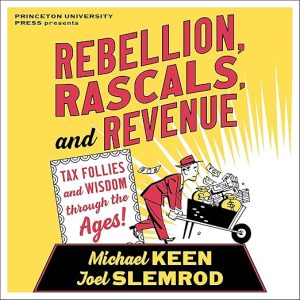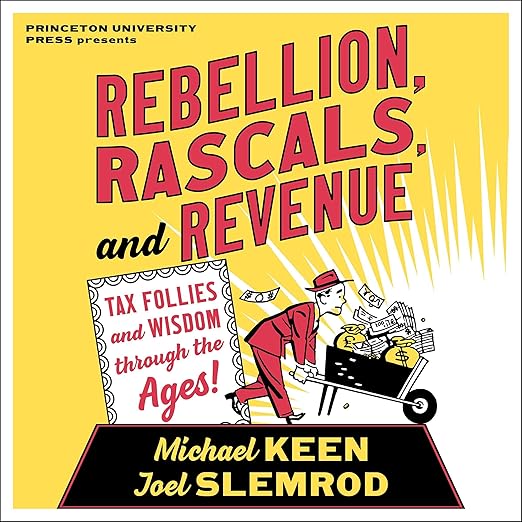
In 1898, a British tax on huts in Sierra Leone sparked a rebellion so fierce that the soldiers sent to put it down ended up burning the very huts they were supposed to be taxing. That's the kind of story that fills this audiobook, an entertaining tour through centuries of governments trying, and often spectacularly failing, to take money from their citizens. Michael Keen and Joel Slemrod, the two tax economists behind Rebellion, Rascals, and Revenue, clearly know their archives, and narrator Walter Dixon treats the material with the dry, patient authority it needs.
Plunder, Beard Taxes and Panama Papers in One Sweep
The scope here is genuinely wide: plundering described by Herodotus, an Incan tax payable in lice, Georgian England's window tax, Tsar Peter the Great's tax on beards, the misremembered version of the Boston Tea Party, and the Panama Papers scandal, all covered in one continuous narrative rather than a dry chronological list. One reader summed up the tone nicely, admitting their first thought was that this was “not bad for two economists” and the book only “got better and better” as it went along.
That same reviewer flagged one honest weak spot: a stretch “toward the end of the book when they put their economists hats on” gets noticeably denser than the anecdote-driven chapters that came before it. It's a small dip in an otherwise consistently entertaining book, and worth knowing about going in so the shift in register doesn't catch you off guard partway through.
The book earns its subtitle honestly, giving real space to a colorful cast of tax rascals alongside a few genuine tax heroes rather than turning every historical figure into either a villain or a punchline. That balance is part of what keeps the anecdotes from feeling like a highlight reel of government failure alone.
The most contemporary reference point, the Panama Papers scandal, does real work anchoring the whole historical sweep to something recent and recognizable, a reminder that offshore tax avoidance isn't a modern invention so much as the latest chapter in a very old contest. That closing-era material bridges ancient plunder and a scandal most adult listeners remember firsthand, which helps the earlier centuries feel like chapters in one continuous story rather than disconnected trivia.
Peter the Great's Beard Tax Meets the Carbon Tax
What makes this more than a curiosity shelf book is the throughline Keen and Slemrod keep returning to: old tax systems have more in common with today's than you'd expect. The window tax was, in its own strange way, an ingenious method for judging wealth unobtrusively, and Peter the Great's beard tax aimed to nudge behavior in exactly the way a modern carbon tax does. One full, unclipped review captures the appeal directly: “entertaining, informative, covers different aspects of taxation,” and “should be read by every taxpayer.”
The book also earns its subtitle's promise of rascals and heroes both, resisting the temptation to make every tax collector a villain or every taxpayer a victim. Another reviewer summed up the whole book in two words: “highly recommended.” It's easy to see why once you're a few chapters in and the parade of oddball historical tax schemes starts to feel less like trivia and more like a genuine window into how governments actually function.
The Peter the Great comparison is worth sitting with a moment longer: a tax on beards, meant to shame Russian nobility into adopting a more modern, clean-shaven look, isn't really so different in mechanism from a modern carbon tax nudging behavior through cost rather than prohibition. Keen and Slemrod keep circling back to this idea, that the tools of taxation haven't changed nearly as much as the targets have, and it's a genuinely persuasive throughline rather than a one-off observation.
Filed Under Finance, Actually Tax History and Policy
At just over fourteen hours, this is a substantial commitment for narrative nonfiction, and the denser final stretch mentioned above means the back third asks more sustained attention than the anecdote-rich opening. If you're the kind of listener who drifts during policy-heavy passages, budget for that shift rather than expecting the same breezy pace straight through to the end.
It's also worth being clear about what this book is not: despite the finance shelf it sits on, this is tax history and policy, not a personal-finance guide or a how-to-lower-your-bill manual. Anyone hoping for practical filing tips or investment strategy will be disappointed, since Keen and Slemrod are interested in why tax systems work or fail, not in optimizing your own return.
Reviewers consistently gravitate toward the same handful of anecdotes, the window tax, the beard tax, the hut tax rebellion, which suggests the book rewards listening for specific standout stories as much as for a single continuous argument. That's a fair way to approach fourteen hours of material if the density in the later chapters starts to wear on you: treat individual chapters as self-contained rather than feeling obligated to absorb everything in one continuous sitting.
It's also fair to note the genre-crossing nature of the tags attached here, filed under finance with a taxation label, which could mislead a listener expecting practical guidance. Nothing about the packaging makes the historical framing obvious until you're already a chapter or two in, so this review exists partly to correct that expectation before you start rather than mid-listen.
History Buffs Get an Unshowy Guide in Dixon
History buffs, policy-minded listeners, and anyone who enjoys narrative nonfiction that uses anecdote to teach economics will find a lot to like here. It rewards the kind of curiosity that finds a beard tax or a window tax genuinely funny rather than merely footnote material.
Walter Dixon's steady, unshowy delivery matters more than it might seem for a book like this. Fourteen-plus hours of tax history could turn dry fast in the wrong hands, and his refusal to oversell either the jokes or the gravity is exactly what keeps a subject this potentially dull consistently listenable from the hut tax of Sierra Leone through to the Panama Papers.
Casual Listeners, Commutes, and a Worthwhile Replay
It should also appeal to listeners who don't normally reach for finance or economics titles at all, the kind of audience drawn to narrative nonfiction that turns policy history into genuinely entertaining anecdote rather than academic listeners specifically seeking out tax theory.
For long-drive or daily-commute listening specifically, the anecdote-driven structure works in the book's favor, since each historical episode largely stands on its own even within the denser final stretch, making it easy to pick back up after a break without losing track of an ongoing argument.
Replay value is worth mentioning too. Given how anecdote-dense the book is, it holds up reasonably well to a second partial listen months later, dipping back into a favorite chapter, the beard tax or the hut tax rebellion, without needing to reabsorb the entire argument from the beginning.