Quick Take
- Narration: Dr. Bill Creasy reads his own work, and the self-narration is a genuine advantage, this is a distillation of decades of live teaching, and his classroom-honed pacing and engagement are present throughout.
- Themes: The Bible as unified literary work, genre and storytelling in Scripture, the drama of redemption
- Mood: Warm and intellectually energizing, a gifted teacher making difficult material feel accessible
- Verdict: The most thorough literary guide to the Bible available in audio format, equally useful for serious believers and curious secular readers.
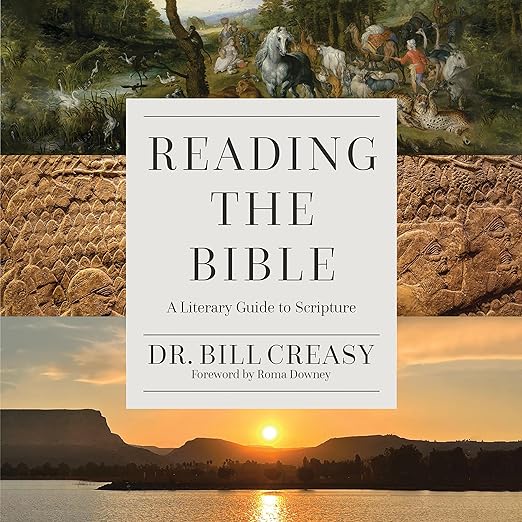
I have a complicated relationship with biblical scholarship in audio format. A lot of it is either devotional, warm and faith-affirming but thin on intellectual substance, or academic in a way that forgets it is speaking to human beings rather than a conference. Dr. Bill Creasy’s Reading the Bible is neither. I came to it knowing Creasy’s reputation from his UCLA course The English Bible as Literature, and the audiobook is essentially a 22-hour distillation of that course: scholarly, accessible, and delivered by someone who has spent decades figuring out how to make ancient texts come alive for people who did not grow up inside them.
The book covers the entire Bible, from Genesis through Revelation, treating each book as a distinct literary unit with its own genre, conventions, and relationship to the larger whole. Creasy’s central argument, that the Bible is not a flat anthology but a collection of what he calls little books, each warranting its own approach, is one that sounds obvious once stated and yet contradicts how most people were taught to read Scripture. Leviticus and Chronicles bog people down not because they are inherently boring but because they are being read with the wrong expectations. Creasy gives you the right ones.
Our Take on Reading the Bible
The 22-hour runtime sounds formidable, but it does not feel that way in practice. Creasy moves briskly through narrative sections and slows down for the parts that require more excavation, the prophetic literature, the wisdom books, the structure of Paul’s letters. One reviewer who attended his live classes at the Crystal Cathedral describes the audio as capturing the immediacy of those sessions, which is a remarkable thing for any recorded course to achieve. What Creasy has figured out is that engagement is not just about information delivery but about creating a sense of shared exploration, the feeling that you and the teacher are discovering something together rather than being instructed from above.
Why Listen to Reading the Bible
The self-narration is the right choice for this material. Creasy’s teaching style depends on timing and on the particular quality of a voice that has learned, through years of live teaching, when to pause and when to push forward. A professional narrator reading his text would lose that quality. Reviewers consistently describe finding this hard to stop, an outcome you do not expect from a 22-hour biblical commentary. One reviewer specifically notes that the book made her lose the dauntingness she previously felt about the prophetic books, which is precisely the kind of practical effect good scholarship should have. Zondervan’s publication of this course in audio format is a genuine service to anyone who has ever found the Bible difficult.
What to Watch For in Reading the Bible
A companion PDF with reference material and bibliography is available as a download with the audiobook. Creasy references specific texts and ancient Near Eastern contexts throughout, and having the ability to look up what he mentions enriches the experience. Listeners who come hoping for devotional warmth exclusively may find the literary-analytical approach cooler than they want, Creasy treats the Bible with the same rigor he would bring to Homer or Shakespeare, which is a feature for some listeners and a disorientation for others. He is clearly a person of faith, but he is doing literary scholarship, not pastoral care.
Who Should Listen to Reading the Bible
Anyone who has tried and failed to read the Bible cover to cover should try this first. Creasy gives you the map before you start the journey, and that changes the experience fundamentally. Secular readers curious about the literary and historical foundations of Western culture will find this the most intellectually honest guide available, Creasy treats non-believing readers as people who deserve the same rigorous engagement as committed Christians. The rating of 4.9 across 80 reviews is unusually high for a long-form scholarly audio course and reflects a work that delivers on its specific promise to every audience it addresses.
Frequently Asked Questions
Is Reading the Bible appropriate for someone who is not religious?
Yes. Creasy approaches the Bible as literature with the same rigor he would apply to any major text of Western culture. He is a person of faith, but the course is built for anyone who wants to understand the Bible as a literary and historical document. Multiple reviewers describe it as accessible to skeptics and scholars alike.
Does the audiobook cover the entire Bible from Genesis to Revelation?
Yes. The 22-hour course moves through every book of the Bible, treating each as a distinct literary unit with its own genre and conventions. Creasy spends proportional time, narrative sections move more quickly, while complex books like the prophets and wisdom literature get deeper treatment.
What is the companion PDF and do I need it to get value from the audiobook?
The companion PDF contains reference material and bibliography. The audiobook works without it, but Creasy references specific ancient Near Eastern contexts and texts throughout, and having the ability to look up those references enriches the experience for listeners who want to go deeper.
How does Dr. Creasy’s self-narration compare to a professional narrator reading the same material?
For this specific book, self-narration is the right choice. Creasy’s teaching style developed over decades of live instruction, and his timing and pacing reflect that, the pauses and emphasis that make his classroom sessions engaging are preserved in the audio. A professional narrator reading his text would lose that quality.