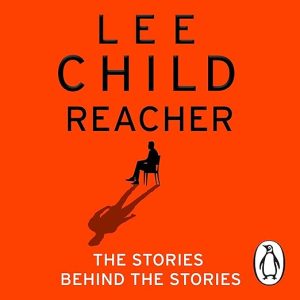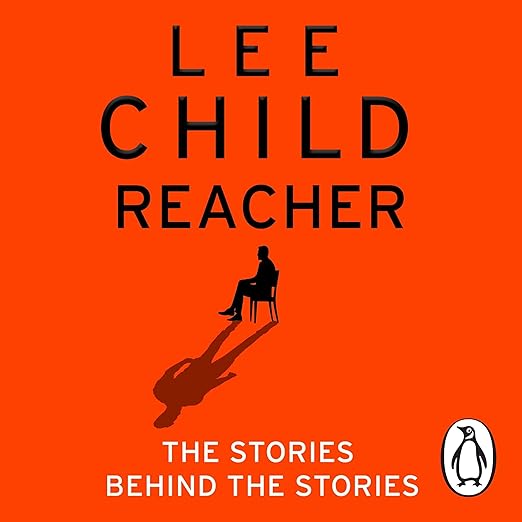
Lee Child narrates Reacher: The Stories Behind The Stories himself, and that decision is not incidental. This audiobook, a collection of twenty-four personal reflections on how each Reacher novel came to be, is fundamentally about the relationship between a writer and his work across nearly three decades, and Child's own voice, conversational and occasionally searching, is the most honest instrument available for telling it. At four hours and thirty-three minutes, it is compact by any measure, but it carries the weight of a much longer career. Child begins the collection at the dining room table on September 5th, 1994, with a pencil stub he still owns, writing the first chapter of Killing Floor.
Honest About Blue Moon, Starting With a Pencil
Child begins with the origin moment: September 5th, 1994, at the dining room table, writing Killing Floor in pencil on paper he still owns a stub of. That image establishes something important about what this collection is doing. These are not polished literary essays or promotional supplements; they are honest retrospectives on the psychological and physical circumstances of each novel's writing. Child examines where he was when he wrote each book, what pressures he was navigating, what questions he was trying to answer, and how he thinks those conditions shaped the result. His account of writing about New York just before and just after September 11 is the kind of piece that fans will return to repeatedly, not because it is harrowing, but because it demonstrates how a working novelist absorbs and processes the world through the specific lens of whatever character they are responsible for at the time.
The collection covers the full arc from Killing Floor through Blue Moon, and one of its most useful qualities is Child's willingness to identify when a book was a step back rather than a step forward. His candor about Blue Moon, which he describes as a title where he took a step back, is relatively rare in author-facing promotional material. Child knows the books he wrote under duress, the ones that came together unexpectedly, the ones where the character surprised him, and he talks about all of them with the same directness he brings to Reacher's own narration. This consistency of voice between the Reacher novels and the collection that explains them is one of the audiobook's quiet pleasures.
Even a Non-Audiobook Listener Got Absorbed
James Patterson calls this perfect for rabid fans and unabashed addicts, and that blurb is accurate in the sense that devotees of the series will find the contextual information here enriching. But it undersells the audiobook's value for a second audience: writers. Child's reflections on how he generates ideas, how he builds characters who are believable even when they are operating at the edge of human capability, and how he has sustained creative investment across twenty-four novels in the same world with the same protagonist are genuinely instructive. The Sunday Times called it engaging and instructive, and that dual quality is the most honest description of what Child is doing here. Steve Cavanagh, who knows commercial thriller writing from the inside, described it as a unique and fascinating insight into the creative and personal journey of one of the world's finest authors.
One reviewer noted that they never normally seek out audiobooks, having listened to this one through their library because the Kindle version was unavailable, and found it unexpectedly absorbing enough to complete without distraction. That testimonial from a self-described non-audiobook listener is meaningful here, because it suggests Child's delivery holds attention even without the action and pace that make the Reacher novels themselves so gripping in audio form. The listening experience here is closer to a long, careful conversation than a performance, and that conversational quality is what the collection earns from its format.
Too Brief for Memoir, Too Deep for Newcomers
The collection is organized around the novels in sequence, which means that listeners who have not read the full Reacher catalog will encounter references to plot events and characters without full context. This is not a barrier to enjoying the reflections, but it is worth knowing that the experience deepens proportionally with familiarity with the source material. Child does not retell the plots; he discusses the conditions of their creation, so the emotional weight of certain entries assumes you know what happens in that book and why Child's state of mind during its writing is relevant to how it turned out.
At four hours and thirty-three minutes, this is one of the shorter audiobooks in Child's catalog, and some listeners may find themselves wanting more depth per novel. The format is memoir-adjacent without being a full memoir, so it sits between two categories: too personal and specific for casual Reacher newcomers, too brief and collection-structured for readers primarily interested in Child's life story. For the audience it is designed for, a reader who knows the novels and wants the backstory, the length is exactly right and the format serves the material well.
Series Veterans Get the Richest Companion
Reacher series veterans who want the backstory to their favorite novels are the clearest audience, and they will find this collection a rewarding companion to the full catalog. Writers interested in how a commercially successful author navigates the specific challenges of long-running series fiction will find this instructive beyond its fanbase framing. Newcomers to the Reacher universe should read or listen to at least a few of the novels first, not because this is inaccessible, but because the retrospective gains most of its meaning from familiarity with the material being discussed.
Key Details
- Narration: Lee Child narrating his own memoir is not a performance in the traditional sense, it is a conversation, and his unhurried, reflective delivery gives the material exactly the intimacy that a hired actor could not replicate.
- Themes: The craft of commercial fiction, authorial identity, reader relationship
- Mood: Conversational and warm, with flashes of quiet wit
- Verdict: Lee Child in his own voice, working through twenty-four novels in honest retrospect, is the most direct access Reacher fans will ever get to the intelligence behind the books.
A Few Questions About Reacher: The Stories Behind The Stories
Does Lee Child narrating his own audiobook make a difference to the experience?
Substantially. This is a memoir-adjacent collection of personal reflections, and Child's voice, unhurried, occasionally amused, and genuinely reflective, provides an intimacy that a professional narrator could not replicate. The conversational delivery is the content's best complement.
Do I need to have read all the Reacher novels before listening to this audiobook?
You do not need to have read all of them, but the experience is richer the more familiar you are with the series. Child discusses the circumstances of each novel's creation without retelling the plots, so knowledge of the books provides emotional context for his reflections.