The Short Version
- Narrator: Lauryn Allman reads with warmth and honesty, handling the more difficult passages with appropriate directness and without over-inflecting the emotional content.
- Subjects: Hidden brain injury and behavior, caregiver burnout and strategy, the gap between expectation and neurological reality
- Tone: Compassionate and practical, honest about difficulty without dwelling in despair
- Bottom line: One of the most useful and clearly grounded audiobooks available for caregivers of children with FASD, written from inside the experience rather than observing it.
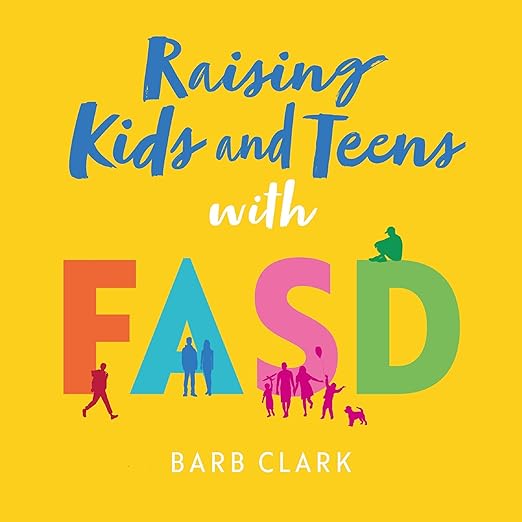
What do you do when the parenting strategies you were raised with, the ones that work in most households, consistently make things worse? That question sits at the center of Raising Kids and Teens with FASD by Barb Clark, and it is why this audiobook has found such a devoted readership among parents, caregivers, foster families, and educators. Fetal alcohol spectrum disorder affects up to one in twenty people, and its expression as a hidden brain injury means that the children it affects are often misread as defiant, lazy, or manipulative when they are actually doing their best within neurological constraints most adults around them do not understand. Clark, who raised a child with FASD and writes from that specific, hard-won experience, is not theorizing from the outside.
How Does My Child's Brain Actually Work
The book's structure is practical and chronological. Clark moves through plain-English explanations of what FASD actually is as a brain injury, not a behavioral choice, before addressing the specific strengths and challenges that tend to accompany it, and then moving into strategies for daily caregiving. That sequence matters because many caregivers arrive at books like this one having been given behavioral modification frameworks that assume executive function, impulse control, and working memory that kids with FASD often simply do not have. Clark's contribution is to shift the explanatory frame from 'why won't my child behave' to 'how does my child's brain actually work,' and from that shifted frame, different and more effective responses become possible.
The personal stories Clark shares about her own daughter are the emotional engine of the book. Reviewers note consistently that these stories are 'deeply relatable and heartfelt,' and that the combination of specific experience and practical advice makes the book feel like a conversation with someone who has been exactly where the reader is now. That combination is rare in disability and parenting literature, which tends to either be clinically rigorous or personally raw without managing both at once. Clark manages both.
Listening While Driving or Doing Tasks
Lauryn Allman's narration is well-suited to this material. She reads with warmth and directness, and her handling of the more difficult passages, the ones where Clark describes her own mistakes or the moments of genuine despair that accompany caregiving without adequate support, is appropriately honest. The audiobook format works particularly well for this content because many of the caregivers who need it most are listening while driving, doing household tasks, or waiting in school pickup lines, precisely the situations where sitting down with a book is not possible.
A retired special education teacher who reviewed the book notes wishing she had it earlier in her career, and specifically praises the connection Clark draws between brain differences and the behaviors visible in classrooms. That dual application, for parents at home and educators in professional settings, is one of the book's structural strengths. It does not assume that the reader is a specialist, but it does not condescend to one either. Clark writes for the intelligent non-expert who needs practical tools, not clinical jargon.
At seven and a half hours, the audiobook is long enough to cover the ground with genuine depth but short enough that caregivers under time pressure can work through it over a week of commutes and quiet evenings. The chapter structure makes it easy to return to specific sections when a particular challenge is acute rather than requiring a full re-listen to find what you need.
Keeping Your Head Above Water
The book is written primarily for caregivers rather than clinicians. Those in professional roles, pediatricians, therapists, social workers, will find it useful as a caregiver-perspective resource, but they should not expect clinical depth or research citation at the level of an academic text. Clark is explicit about her position: she is a parent who got things wrong, learned what works, and is sharing that learning. The appropriate comparisons are with caregiver memoirs and practitioner guides, not diagnostic manuals.
The focus is also specifically on FASD. Caregivers raising children with other neurodevelopmental conditions may find some overlap with their experience, particularly around executive function challenges and the inadequacy of consequence-based discipline, but Clark is not writing a general neurodiversity guide. The specificity is a strength for the intended audience and a limitation for those hoping it will cover adjacent conditions.
The audiobook also handles the subject of caregiver burnout with unusual honesty. Many parenting guides in this space focus almost entirely on strategies for the child while leaving the caregiver's experience largely unaddressed. Clark devotes genuine attention to keeping your head above water, as she puts it, which acknowledges that caregivers who are depleted cannot implement any strategy effectively. That realism about the sustainability of caregiving is one of the most practically useful contributions the book makes. Lauryn Allman's narration of these sections carries particular warmth, as if she understands that the person listening may be in exactly the exhausted state Clark is describing and needs to feel accompanied rather than instructed.
Allman Makes the Format a Genuine Asset
This audiobook is essential listening for parents and foster carers raising children with FASD or suspected FASD. It is valuable for educators, school counselors, and special education teachers who work with this population. And it is a useful read for anyone who wants to understand how hidden brain injuries shape behavior in ways that conventional parenting frameworks are not equipped to address.
Lauryn Allman's narration makes the format a genuine asset rather than a compromise. This is a book that works well in audio because it is written to be clear and accessible, and a thoughtful narrator makes that accessibility even more immediate. For families who are exhausted and looking for something that will actually help rather than add guilt, this audiobook is one of the most practically grounded resources available in this space.
Frequently Asked Questions
Is this audiobook useful for educators and professionals, or is it primarily for parents?
Both. Multiple professional reviewers, including a retired special education teacher, describe it as essential for classroom contexts. Clark's explanations of how brain differences manifest as behavior are directly applicable to educational settings, not only home caregiving.
Does this audiobook cover the full spectrum of FASD or focus on specific presentations?
It covers FASD as a category including the range of presentations, with particular focus on the behavioral and cognitive patterns that tend to make traditional parenting strategies ineffective. Clark does not limit her discussion to one specific diagnosis within the spectrum.
How does Lauryn Allman's narration handle the personal and emotional sections of the audiobook?
With care and directness. She does not over-perform grief or struggle, which allows Clark's personal stories to carry their own weight. The warmth in her delivery makes the more difficult passages feel supported rather than exposed.
Is this audiobook useful for someone who suspects their child has FASD but does not yet have a diagnosis?
Yes. Clark addresses the pattern of misdiagnosis and the difficulty of getting an FASD assessment, and many of the strategies she recommends are based on observable behavior rather than requiring a formal diagnosis. The audiobook is practical regardless of where a family is in the diagnostic process.