Quick Take
- Narration: Daniel Henning handles the breezy, pre-code Hollywood register well, lending Whitey’s drifter-reporter voice the right mix of detachment and observation without flattening the period color.
- Themes: Hollywood mythology, moral vacancy, the observer’s complicity
- Mood: Cynical and fast-moving, with a period-piece time-capsule quality
- Verdict: A genuinely important Hollywood novel and a fascinating historical document, though its irreverence and period assumptions require a listener willing to meet the text on its own pre-code terms.
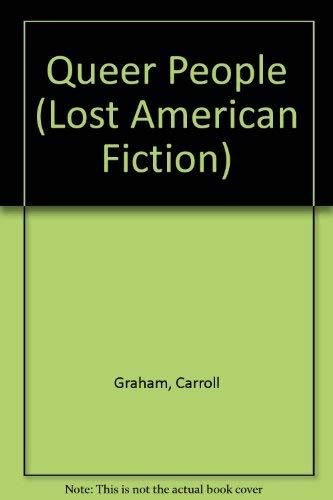
I first encountered the names Carroll and Garrett Graham in a footnote to a book about Nathanael West, which is roughly how most people discover this title. Queer People, originally published in 1930, is one of those recovered classics that arrives with an asterisk and a set of questions about what it means to revisit a book designed to be scandalous precisely because the era that surrounded it is now entirely gone. Budd Schulberg’s description of it as a racy testament to an era as totally vanished as the civilization of the Aztecs is both accurate and slightly undersells the book’s continuing relevance as a record of how early Hollywood actually worked. Or, more precisely, how the people who worked there actually behaved when no one was writing it down. Except the Grahams were.
Daniel Henning voices Whitey, the archetypal newspaper reporter protagonist, with a laconic quality that fits the character’s essential detachment from everything he observes. Whitey does not want to be corrupted by Hollywood. He is simply noting it carefully while it happens to him.
The First Hollywood Novel and Its Literary Heirs
The novel’s significance in the literary genealogy of Hollywood fiction is hard to overstate once you understand it. Reviewer MiscellaneousMedia correctly identifies this as effectively the first Hollywood novel, the book that pre-dated The Day of the Locust, What Makes Sammy Run?, and The Last Tycoon by years, and planted seeds that those later, better-known works grew from. Reading Whitey as a precursor to Fitzgerald’s Pat Hobby, a comparison Schulberg makes and which the publisher repeats, is illuminating. Hobby is the broken version of Whitey, the same archetype after Hollywood has finished with him rather than while he is still observing it with some ironic distance. The Grahams wrote this from inside the industry, and that proximity gives the novel a texture of specificity, the story conference, the three-day party, the titans and the moguls, that West and Fitzgerald were writing more obliquely.
What Pre-Code Actually Means Here
The novel is openly amoral in ways that later Hollywood fiction is not, and that amorality is part of its documentary value. The Grahams are not interested in judging the behavior they describe. They are interested in rendering it accurately. The murder that ends the novel’s central interlude arrives with the same casual quality as everything else in Whitey’s experience of Hollywood, which is precisely the point. Howard Hughes, as reviewer Brenda Del Rio notes, wanted to make a film of it and decided the industry would reject it. That refusal is itself a document. The book that could not be filmed about the industry that would not film it is its own kind of Hollywood story.
Listening to 1930 from Today
There are elements in this novel that a contemporary listener will have to consciously contextualize. The word choice, the casual assumptions about race and gender, the particular texture of pre-code Hollywood’s relationship to its labor force and its women, all of these require a willingness to encounter the past as the past rather than as a comfortable mirror. This is not a flaw in the novel so much as a condition of engaging with it honestly. Reviewer Johnny Mack Hood’s observation, made from the vantage point of someone who carries personal memory of those days, that the book simply could not be written today, is accurate as description if not as value judgment. Henning’s narration does not editorialize or soften, which is the correct approach. The text should be allowed to be what it is.
Who Should Listen and Who Should Pass
Listeners with an interest in Hollywood history, the literary genealogy of the American comic novel, or the social history of early studio culture will find this indispensable. Those looking for a breezy comedy that ages gracefully will be better served elsewhere. This is a historical document in the form of a very funny, very cynical novel, and it rewards the listener who approaches it that way.
Frequently Asked Questions
Why is this 1930 Hollywood novel called Queer People, and what does the title mean?
The title uses ‘queer’ in its original 1930 sense of strange, odd, or eccentric, referring to the unusual characters Whitey encounters in Hollywood. The novel predates the word’s modern usage by decades. Reviewer Johnny Mack Hood specifically addresses this in his notes on the recording.
Is Queer People part of a series, or does it stand alone?
It is a standalone novel. Carroll and Garrett Graham did not produce successful sequels, and the book stands as their primary literary legacy. Reviewer MiscellaneousMedia notes that their follow-up work was not as successful as this debut.
How does this relate to other classic Hollywood novels like The Day of the Locust or What Makes Sammy Run?
Queer People preceded both and is considered a seed text for the Hollywood novel genre. The publisher and Budd Schulberg both make this case explicitly. Readers who loved West or Schulberg will find the Grahams’ work historically illuminating as an earlier, rawer version of the same cultural critique.
Is this suitable for listeners who are sensitive to period language and attitudes?
The novel is an authentic document of 1930 Hollywood and contains period attitudes toward race, gender, and labor that modern listeners will find uncomfortable in places. Henning’s narration does not editorialize or sanitize. Listeners who prefer historical fiction with contemporary framing should be aware of this before starting.