Something is off in the description on this page, and a buyer should know it before anything else. What sits where publisher copy normally goes is not a blurb at all. It is a critical analysis of the book, organized under emoji-marked headings that run from Purpose and Thesis through Structure and Key Strengths to a section headed Critical Reflection, which lists what the book does badly. It even closes on a different title, calling "Project 2025 and the Religious Right" more than a book. Whether that is this audiobook under an earlier name or a cataloging slip, nothing on the page resolves it.
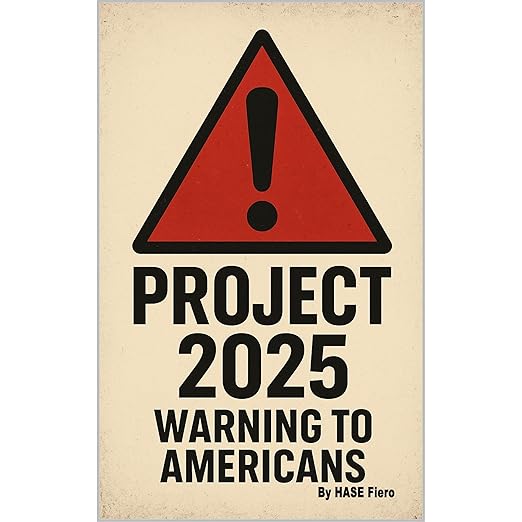
Read past that and the summary is genuinely informative. HASE Fiero has written what the text calls "a moral and civic wake-up call", arguing that Project 2025 is "not merely a policy proposal but a theological and authoritarian blueprint designed to subvert pluralistic democracy". The recording runs two hours and ten minutes, is published by Intellectual Enlightenment Press LLC, prints Virtual Voice where a reader's name belongs, and is filed as the second entry in something called the Dark Enlightenment Book Series.
Four Pillars, Three Parts, No False Balance
The architecture described is clean, and clarity of structure is the thing most books in this space lack. Part one traces the religious right from post-Scopes withdrawal to political engagement, with the claim that "segregation, not abortion, catalyzed evangelical political mobilization" and that moral conservatism later fused with economic libertarianism. Part two treats the Mandate for Leadership as the operational root and sets out a four-pillar strategy by name: Mandate for Leadership 2025, Personnel Vetting Infrastructure, Leadership Academies and a Day One Playbook. Part three turns to resistance, offering scenarios "ranging from authoritarian implementation to civic renaissance".
That is a lot of ground, and the book does not pretend to stand outside it. The description reports the work as self-described "unapologetically democratic", notes that "It makes no claim to neutrality", and files it as "advocacy scholarship". My view is that this transparency is worth more than a pose of balance would be. A reader knows exactly what kind of document has been handed to them, can weigh the argument on its own terms, and can go to the sources rather than the tone. The same passage concedes the risk, warning that an urgent register may polarize.
Machine Narration Keeps the Names, Loses the Heat
Getting a mapped argument in one sitting is the practical value here. Political material of this kind usually arrives either as a thousand-page primary document nobody finishes or as fragments in a feed. A short, deliberately structured account that names its parts, defines its terms and tells you where it stands is a useful middle object, and audio suits it: you can hear the whole shape of a case in an afternoon and know afterwards which chapters you want in print. Part three helps here as well, since a book that ends on grassroots, legal and faith-based responses gives a listener somewhere to put the alarm it has just raised.
How a machine handles this text is the open question. Virtual Voice means no performer is credited, and this is a text whose described power is rhetorical: the summary calls the tone passionate, credits the book with "impassioned prose", and describes a conclusion built as a call to civic arms. Rhetoric is carried by emphasis, and emphasis is exactly what a machine reading does not supply. The flip side is that this book's spine is nomenclature, and the pillars, the mechanisms and the named documents will come through a synthetic reading intact. Expect the taxonomy to survive and the heat to flatten.
What the page accidentally gives you counts in its favor too. Because the description is an analysis rather than a sales pitch, it names the book's weaknesses out loud, including a lack of comparison with theocratic or illiberal regimes elsewhere. Buyers almost never get that from a product page. Whatever went wrong in the cataloging here has left a browser better informed than a marketing paragraph would have. The one thing it cannot tell you is how the book reads aloud, since the analysis was plainly written about the book itself and not about this recording.
Two Hours Can't Hold the Promised Bibliography
Duration is the flag I would weigh hardest. That running time is very short for a book the description credits with "a detailed bibliography and appendices" alongside a three-part historical argument stretching from the Scopes era to the present. Something has to give in that arithmetic. Either the treatment is far more compressed than the summary implies, or the apparatus sits outside the recording, which is the usual answer. Neither is a scandal, but anyone expecting the documentation the description praises should assume it is not being read aloud.
Beyond the description, this page offers very little. Two ratings stand behind a 5.0 average and no written response exists at all, so nothing whatever tells you how this lands with a listener. The series label compounds it: a second entry in a book series is a promise about a first entry, and the listing names neither the earlier volume nor what connects them. And on subject matter, this is one side of a live political argument, presented as such. Listeners who want the opposing case will need to go and find it themselves.
Useful as a Map, Never the Territory
Listeners who want a compact, mapped orientation to a contested policy program are the clear audience. Teachers, organizers, journalists and civically engaged listeners who need the vocabulary fast will get the most out of it, since the book's own strength is naming things: pillars, mechanisms, documents, the personnel machinery behind them. Anyone who has heard the phrase Schedule F without knowing what it does will finish knowing, since the description flags it as a central legal mechanism in the book's account. The closing turn toward civic literacy, institutional reform and interfaith solidarity also makes it more constructive than most alarm-raising in this genre.
Nobody looking for a neutral referee will be served here, because the text says plainly that it is not one. Listeners after the primary documents rather than a reading of them should treat this as a guide to the map rather than the territory, then go to the sources it points at. Taken on its stated terms, it is a brisk, well-organized argument with an unusually honest label on the tin, sold on a page that badly needs fixing.
Key Details
- Voice: Virtual Voice replaces a performer outright, a stated fact on the page rather than a judgment about any reading.
- Big ideas: Religious-right political history, institutional capture, authoritarianism, civic resistance
- Atmosphere: Urgent, structured, openly partisan
- Worth it?: A compact and well-mapped argument that names its own bias, let down by a product page carrying the wrong copy.
Questions Listeners Ask
How long is the Project 2025 Warning To Americans audiobook?
Just over two hours. For a work whose own summary praises a detailed bibliography, appendices and a historical arc reaching back to the Scopes trial, that is a very compressed treatment, and the supporting apparatus almost certainly sits outside the recording.
Is this audiobook neutral on its subject?
No, and it says so. The description calls the work unapologetically democratic in its own words, notes that neutrality is never claimed, and labels it advocacy scholarship. That transparency is useful, but listeners wanting the opposing argument will have to source it separately.
Do I need the first book in the series?
Impossible to say from the listing. It sits second in the Dark Enlightenment Book Series, yet neither the earlier volume nor any connection between them is named. The summary describes a self-contained three-part argument, so it reads as standalone.