Quick Take
- Narration: Cyndi Thomason reading her own book brings an authority and directness that generic narration couldn’t replicate; she knows exactly which numbers to emphasize.
- Themes: Cash flow discipline for inventory-heavy businesses, debt avoidance, the specific financial traps of online selling
- Mood: Direct and practical, methodical without being dry
- Verdict: A targeted adaptation of the Profit First methodology that solves problems specific to ecommerce that the original book doesn’t fully address.
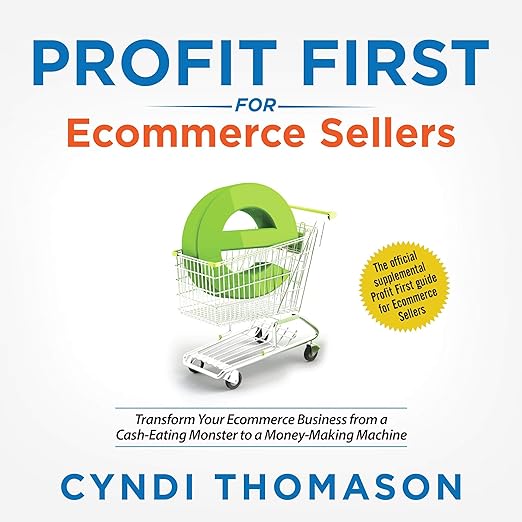
Business finance audiobooks are a particular challenge to review fairly because their value is almost entirely determined by how specifically they address the listener’s actual situation. A book about financial fundamentals for general small business owners may be technically sound and practically useless for an Amazon FBA seller trying to figure out why their bestselling product is draining their cash account. Profit First for Ecommerce Sellers, written and narrated by Cyndi Thomason, is targeted at exactly the right person: the online seller who is moving product, watching revenue numbers climb, and still struggling to understand why there is never any money at the end of the month.
Thomason is a bookkeeper who works extensively with ecommerce clients and who is a practitioner of Mike Michalowicz’s Profit First methodology. She is not adapting a framework she encountered at a seminar. She is adapting a framework she has implemented for real clients with real inventory problems. That grounding shows in the specificity of the advice, particularly in the third chapter, which multiple reviewers singled out for its focus on stopping what Thomason calls inventory insanity.
The Four Problems This Book Is Actually Solving
The book is organized around four specific struggles: managing inventory, relying on debt, understanding financial data, and maintaining focus. Each of these sounds like a generic business problem until Thomason explains how they manifest specifically in ecommerce contexts. Inventory is not just a cost; it’s a cash trap that behaves differently from other business expenses. You pay for it before you sell it, and if you’re growing, you pay for more of it every cycle. The standard Profit First bank account structure doesn’t account for this properly, and Thomason’s adaptation adjusts the allocation percentages specifically for businesses that carry inventory.
The debt reliance chapter is similarly targeted. Online sellers who use credit lines to fund inventory during Q4 rush or to cover platform fees during slow periods are in a different risk category than service businesses using debt for expansion. Thomason addresses the specific feedback loop where debt enables growth that requires more inventory that requires more debt, and she does so with the clinical clarity of someone who has watched that loop close on clients before.
Hearing the Author Read Her Own Numbers
Thomason narrating her own material is the right call for this kind of book. She is not a professional voice actor, and the reading is functional rather than polished. But when she reaches the sections on bank account allocations, percentage targets, and the specific adjustments for ecommerce, her authority is unmistakable. She knows these numbers. She has argued about these numbers with clients. When she says something is a common mistake, you believe her immediately in a way that you might not with a professional narrator who has only encountered the concept on the page.
One reviewer specifically noted using this book alongside their own bookkeeping practice to better understand client concerns, which speaks to the level of practical specificity Thomason achieves. The book is short, just under four hours, which is appropriate. It doesn’t inflate itself with background on financial history or motivational material. It covers its four problems, proposes solutions, and ends. That discipline is its own form of respect for the listener’s time.
The Honest Limitations
One reviewer noted that the book is primarily oriented toward Amazon sellers and that some sections don’t translate directly to non-Amazon ecommerce. That’s a fair observation. The inventory management discussion is clearly shaped by FBA logistics, and some of the platform-specific guidance presupposes a seller working within Amazon’s ecosystem. If you sell through your own Shopify store or primarily through Etsy, the core cash management principles still apply, but you’ll need to adapt some specifics yourself.
The book also assumes basic familiarity with the original Profit First methodology. If you haven’t read Michalowicz’s book first, the allocation percentages and bank account structures will make sense in outline but may feel underexplained in certain specifics. Reading or listening to the original book first will make this adaptation considerably more useful.
Who Should Listen and Who Should Look Elsewhere
This free audiobook is correctly targeted at Amazon sellers, FBA operators, and ecommerce entrepreneurs who are profitable on paper but perpetually short of cash. If you recognize yourself in that description, the return on three hours and forty-five minutes is substantial. If you are a general small business owner looking for financial management guidance, the original Profit First will serve you better. If you are already deep into the ecommerce finance world and have established systems, you may find this covers ground you’ve worked out independently. But for anyone still stuck on why revenue growth isn’t producing cash comfort, Thomason’s analysis of the inventory trap and debt feedback loop will likely name something you’ve been living with but haven’t had language for.
Frequently Asked Questions
Do I need to read the original Profit First by Mike Michalowicz before listening to this?
The book assumes some familiarity with the Profit First methodology. While Thomason explains the core concepts, listeners who have already read or listened to the original will find this adaptation significantly more useful and immediately applicable.
Does the advice apply to sellers outside the Amazon platform?
The core cash management principles translate to any ecommerce business, but some specifics are shaped by Amazon FBA logistics. Shopify, Etsy, or multi-channel sellers will need to adapt certain sections, particularly around inventory cost timing and platform fee structures.
Is this useful for someone just starting an online business, or is it more for established sellers?
Both, though in different ways. New sellers benefit from setting up the right financial structure from the beginning. Established sellers who are already struggling with the four problems Thomason identifies will find it most immediately actionable.
What makes the ecommerce version of Profit First different from the general version?
The primary differences are in the bank account allocation percentages, adjusted for inventory-heavy businesses, and the specific treatment of inventory as a cash management challenge rather than a simple expense. Thomason also addresses ecommerce-specific debt patterns and seasonal cash flow complexity.