Quick Take
- Narration: Randy Hames delivers the instructional content with a conversational authority that suits the peer-to-peer teaching style Phillips employs throughout.
- Themes: Passive income through private lending, risk assessment and borrower qualification, the gap between traditional financing and real estate investor needs
- Mood: Practical and confidence-building, with specific enough detail to feel actionable
- Verdict: A focused, well-organized introduction to private mortgage lending that delivers genuine education within its scope, best suited to listeners who have capital to deploy and are exploring alternatives to conventional investment vehicles.
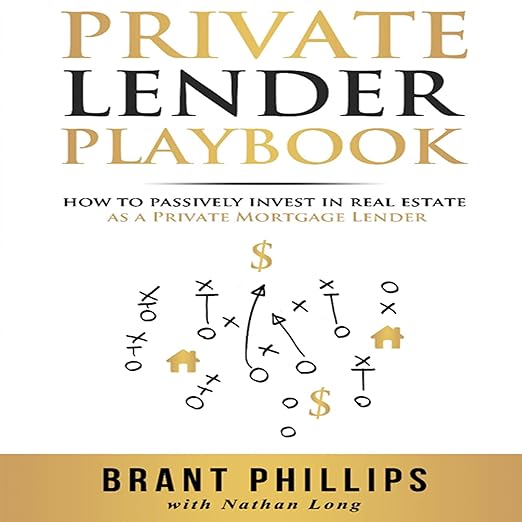
Private Lender Playbook arrived in my listening rotation during a stretch when I was thinking through investment vehicles that operate outside the conventional market. The pitch that Brant Phillips makes, that you can earn predictable monthly income secured by real property without managing tenants, vacancies, or renovations, sounds almost too clean. What makes this book worth five hours and fourteen minutes of your time is that Phillips earns the premise rather than just asserting it.
The private mortgage lending market exists because traditional lenders will not touch certain categories of real estate investment. Properties requiring significant renovation, non-standard structures, or complex ownership arrangements fall outside what conventional mortgage lenders are designed to handle. That gap is real and it has always been filled by private capital. What Phillips is doing here is teaching listeners how to be on the lending side of that equation rather than the borrowing side.
Our Take on Private Lender Playbook
The book earns its credibility through specificity. Phillips does not simply assert that private lending is lucrative. He walks through borrower qualification, deal analysis, interest rate and fee determination, loan documentation, and investment security in enough detail that listeners come away with a working framework rather than a motivational claim. One reviewer noted finishing the book feeling ready to execute on the strategy immediately, which is the right benchmark for a practical finance title. Another noted using it actively to structure acquisition loans with a real estate attorney, which suggests the conceptual framework transfers to real-world application.
The distinction between this and the broader motivational real estate investing genre is instructive. Where books built around proof-of-concept investor stories cover portfolio building through inspiration, Private Lender Playbook is narrower and more operationally specific. That difference means the book has a shorter shelf life if the regulatory or market environment for private lending shifts, but it has more immediate operational value for listeners who are ready to act now.
Why Listen to Private Lender Playbook
Randy Hames is a reliable narrator for technical financial content. He does not perform the material in a way that feels like a sales pitch, which is important for a book that is making an implicit case for a specific investment strategy. His pacing is measured enough that listeners who are taking notes, which I recommend for this type of content, can stay current without constantly rewinding. The five-hour runtime is appropriate for the scope. Phillips does not pad the content with filler chapters or unnecessary stories beyond what illustrates the framework.
Phillips does reference his own business and real estate investment background throughout, which one reviewer noted as illuminating rather than promotional. The business references tend to appear as concrete examples of the principles being taught rather than as advertisement. That is a meaningful distinction and keeps the book from feeling like a sales tool for his services.
What to Watch For in Private Lender Playbook
The book addresses self-directed IRA lending, which is an area where regulations and custodian practices evolve. Listeners using this as a current guide should verify specific IRA-related procedures with their custodian and a qualified tax professional, as the publication date of 2018 means some details may have shifted. The foundational lending framework is durable, but the specific institutional mechanics around self-directed retirement accounts benefit from current verification.
Listeners who are complete beginners to real estate investing will need more foundational context before this book becomes fully actionable. Phillips assumes familiarity with real estate transaction basics, lending vocabulary, and investment evaluation principles. Those without that background will absorb the broad strategy but may need supplementary reading before the specific operational guidance is useful.
Who Should Listen to Private Lender Playbook
Best suited to listeners who have capital ready to deploy, are familiar with real estate investing at a basic level, and want to explore passive income through lending rather than direct property ownership. Also useful for active real estate investors who want to understand what their private lenders are evaluating when reviewing their deals. Less suited to beginners who need foundational real estate education first, or to investors primarily focused on equity ownership strategies.
Frequently Asked Questions
How much capital do I need to start private mortgage lending?
Phillips discusses this within the book, and the answer varies by market and deal structure. He covers how to think about minimum investment thresholds and how to structure loans at different capital levels, but specific figures will depend on the real estate market you are lending in and the types of borrowers you are working with.
Is the self-directed IRA lending content current, given the book was published in 2018?
The strategic framework for lending from a self-directed IRA is sound, but specific custodian rules, prohibited transaction guidelines, and IRS regulations in this area evolve. Listeners planning to act on this content should verify current details with a self-directed IRA custodian and a tax professional familiar with this area.
How does this book compare to general real estate investing audiobooks focused on direct ownership?
Phillips focuses on a very specific niche: being the lender rather than the property owner or operator. Where books covering direct rental ownership focus on portfolio building through acquisition, Private Lender Playbook is narrower and more operationally specific. The two approaches serve different investor profiles and different capital situations.
Does Phillips explain how to evaluate whether a borrower and deal are creditworthy?
Yes, and this is one of the book’s stronger sections. He covers borrower qualification criteria, deal analysis methodology, and the documentation required to secure the loan against the property. Listeners specifically interested in risk assessment will find this content the most detailed and immediately applicable.