Quick Take
- Narration: Virtual Voice narration is functional but flat, it handles dense esoteric terminology without stumbling, though the meditative passages suffer from the lack of a human presence.
- Themes: Western esoteric tradition, elemental balance and correspondence, ceremonial ritual practice
- Mood: Scholarly and methodical, with moments of genuine mystical depth
- Verdict: An unusually well-researched elemental magic reference that rewards patient, serious practitioners, not a title for casual dabblers or beginners expecting spellcasting basics.
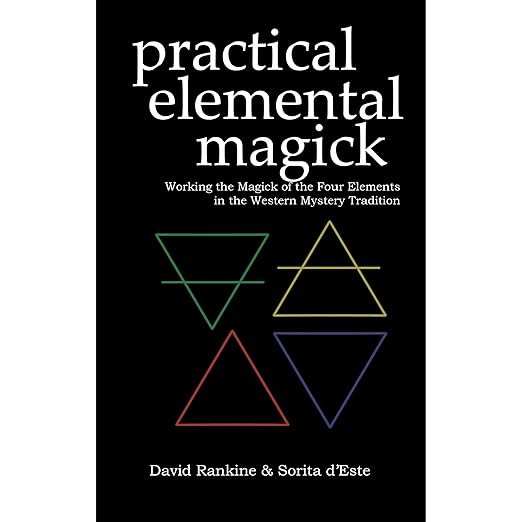
I tend to approach occult audiobooks with a particular kind of wariness. The genre has a long tradition of surface-level content dressed up in serious-sounding language, and the sheer volume of beginner-oriented material available makes it genuinely hard to find something that treats the subject with scholarly rigor. Practical Elemental Magick by Sorita d’Este landed on my radar through a chain of recommendations from readers who kept describing it as the reference they wished they had found years earlier. I finally sat down with it on a gray January afternoon, and by the end I understood exactly what they meant.
The book’s foundation is in Empedocles and the formalization of the four elements in ancient Greece, but d’Este moves efficiently through the Qabalah, the grimoire traditions, and into modern ceremonial practice without losing the connective thread. This is not a historical survey that forgets to be practical, nor a practical guide that ignores its own lineage. It is genuinely both, and that balance is rarer than it should be.
Our Take on Practical Elemental Magick
What separates this from the crowded field of elemental magic guides is the depth of the correspondence work. D’Este covers the Sylphs, Salamanders, Undines, and Gnomes not as decorative mythology but as functional components of a coherent system. The elemental archangels, the elemental tides, and the specific tools associated with each element are all handled with the same methodical attention. The inclusion of original ritual material, the Unification Rite, the Elemental Pyramids, the Elemental Magick Circle, gives the practitioner something to actually work with rather than merely contemplate.
One reviewer described the book as being at a higher level than they had assumed from the word “practical” in the title, and that matches my experience. The word here signals applicable rather than simplified. Experienced practitioners will find material they have not encountered elsewhere; newer practitioners will find it dense in places but ultimately more useful than gentler introductions that leave important gaps.
Why Listen to Practical Elemental Magick
The audiobook format presents both advantages and genuine limitations for this kind of material. D’Este’s prose is clear and structured, and the logical progression from historical foundations through ritual technique comes through well in audio. The correspondence tables, elements and minerals, elements and plants, elements and animals, are presented as spoken lists, which work better than you might expect when you have time to let each entry settle.
The Virtual Voice narration is the obvious caveat. For dense esoteric terminology it is serviceable, managing words like Empedocles, Salamanders, and Elemental Tides without garbled pronunciation. The problem surfaces in the meditative and ritual passages, where a human voice would bring presence and pacing that no synthetic narrator currently replicates. Listeners planning to use the meditative content practically may want to supplement the audio with the text for those sections specifically.
What to Watch For in Practical Elemental Magick
The table of contents is extensive, and the audiobook covers it all: from elemental interaction and the Pentagram to dealing with vexatious elementals and names of power. This is a feature, not a flaw, but it does mean the listening experience rewards revisiting. Some chapters, particularly those on the Elemental Deities and the comparison of three-plus-one versus four-element systems, are dense enough that a first pass gives you orientation and a second pass gives you retention.
One reviewer with years of crystal and elemental work found the book filled in gaps that earlier reading had left, including areas where confusion had persisted for years. That is the practical test of a reference work: it does not just cover ground you already know, it resolves things that were previously unclear. By that standard, this book performs well above its category average.
Who Should Listen to Practical Elemental Magick
The primary audience is practitioners with some grounding in Western esoteric tradition who want a serious, research-backed guide to elemental work. It will also serve academics and students of comparative religion who want to understand how the four elements moved from ancient Greek philosophy through medieval magic and into contemporary pagan and ceremonial practice. The historical thread is rigorous enough to satisfy that audience.
It is a harder recommendation for absolute beginners, not because the writing is inaccessible but because it assumes a framework of practice that complete newcomers have not yet established. Those who want a genuine foundation in the classical sources and are willing to work through dense material will find it more rewarding than any entry-level alternative. Those expecting a spell book or quick-start guide should look elsewhere.
Frequently Asked Questions
Is Practical Elemental Magick suitable for someone who has never practiced magic before?
It is better suited to intermediate or serious beginning practitioners than to complete newcomers. Reviewers consistently note it fills gaps that other books leave rather than providing a starting point from scratch. D’Este assumes some familiarity with the broader Western esoteric tradition, so a grounding in basic magical philosophy will make the material far more accessible.
Does the Virtual Voice narration affect the meditative and ritual content?
Noticeably, yes. The synthetic narration handles expository and historical content well, but the meditative passages and ritual instructions benefit from a human voice’s pacing and presence. Listeners who intend to use the meditative material in practice may want to follow along with a text version for those sections.
How does this book differ from general Wiccan or pagan introductions to the four elements?
Significantly. D’Este traces the elements from Empedocles through the Qabalah, grimoire traditions, and ceremonial magic into modern practice. The approach is historical and scholarly rather than devotional, and the ritual material, including the Unification Rite and Elemental Pyramids, is original rather than drawn from standard Wiccan sources.
Is the accompanying PDF companion useful for the audiobook version?
Yes, particularly for the correspondence tables and ritual structure sections. The audiobook format handles linear content well, but visual reference material like elemental correspondences is easier to absorb and retain in written form. Audible includes the PDF in the library alongside the audio.