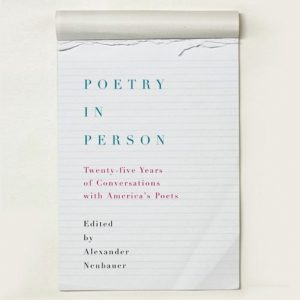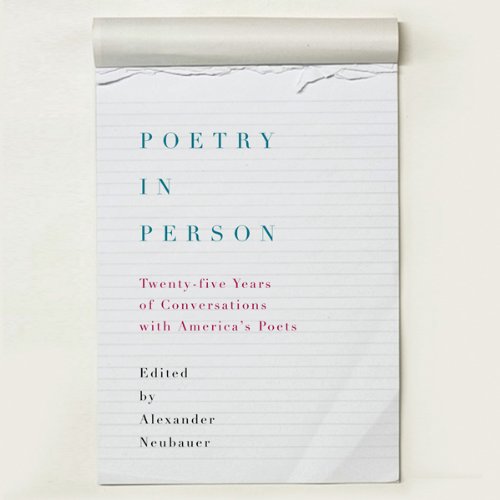
Three boxes of cassette tapes sat in a closet for years after Pearl London's death in 2003 before anyone found them, and this audiobook is built from eight conversations pulled out of that collection. London ran a legendary workshop at The New School in Manhattan's Greenwich Village from 1973 to 1998, inviting poets to bring in drafts, worksheets, and doodles so her students could watch a finished poem get made in real time rather than just read the polished result. The eight poets included here are Robert Pinsky, James Merrill, Lucille Clifton, Edward Hirsch, Paul Muldoon, Muriel Rukeyser, Eamon Grennan, and William Matthews.
This listing credits Lucille Clifton as the sole author, which undersells what this actually is. Clifton is one of the eight poets recorded in conversation with London, not the person who selected, edited, or assembled these tapes into a listenable audiobook. One reviewer, posting as Amazon Customer, thanks 'Alexander Neubauer for this selection and these editings of the conversations between Pearl and individual poets on their craft and artistry,' which lines up with Neubauer's own role as narrator and confirms he is the actual editorial hand behind this collection, working from a book first published by Knopf in 2010.
Neubauer Narrates the Tapes He Also Chose
Alexander Neubauer narrates his own editorial selections, and that dual role matters here in a way it would not for a straightforward nonfiction read. He is not performing someone else's manuscript; he is guiding listeners through tape he personally chose out of a hundred recorded conversations, and that closeness comes through in how carefully he handles transitions between London's questions and each poet's often meandering, thinking-aloud answers. Audio production is credited to Jonathan Binzen, and the mix stays clean enough that London's original classroom recordings, decades old and never intended for commercial release, sit comfortably alongside Neubauer's connective narration without a jarring quality shift.
Reviewer Leisha Douglas, in a review titled 'An M.R.I of Poetic Process,' writes that if you want to 'inhabit a poem and feel its texture against your psyche,' these dialogues are invaluable, and that framing captures what makes this different from a standard poetry anthology audiobook. You are not just hearing finished poems read aloud. You are hearing Pinsky or Rukeyser talk through a specific line they could not get right, in their own unrehearsed classroom voice, decades before either professional recording equipment or podcast culture made that kind of process-focused conversation common.
Eight Poets Caught Revising in Real Time
The book's premise, that watching revision happen teaches you more about a poem than reading only its final form, is genuinely rare material to have preserved in audio at all. London's class ran for twenty-five years and drew Nobel laureates, Pulitzer winners, and multiple U.S. Poets Laureate, according to the synopsis, and this represents a meaningful cross-section of that run: mid-century modernists like Rukeyser and Merrill sitting alongside the tradition of formalists and Language-adjacent poets like Muldoon. Reviewer John Michael Albert, who identifies himself as a working poet, describes approaching the book warily, 'as one would one's Saturday night dose of castor oil,' before being won over, which is a funny and honest way to admit this material sounds more intimidating on paper than it turns out to be in practice.
For anyone who studies or teaches creative writing, hearing an actual working poet get gently pushed by an instructor to explain a word choice is a different kind of pedagogy than any craft book on the market can replicate secondhand. The audio format is not incidental here; it is the entire point, since London's original class depended on tone of voice, hesitation, and the give-and-take of live discussion in ways a transcript alone would flatten.
The eight poets featured are not minor names padding out a syllabus. Muriel Rukeyser, James Merrill, and Robert Pinsky each hold significant places in twentieth-century American poetry, Pinsky served as U.S. Poet Laureate, and hearing any of them work through a real manuscript problem in conversation rather than deliver a polished reading is a genuinely uncommon kind of access. The New School itself, where London taught for a quarter century, has a long history as a home for exactly this kind of informal, high-caliber literary gathering in Greenwich Village, which gives the classroom setting its own quiet historical weight beyond just being a convenient backdrop.
Restoring Decades of Hiss and Tape
This audiobook runs just under six hours and covers only eight of the roughly one hundred conversations London recorded over twenty-five years, so treat it as a curated selection rather than a comprehensive archive. Listeners hoping for a specific favorite poet not on this list of eight will not find them here, and the book's tight focus on craft-level manuscript discussion means it assumes real prior interest in poetry as a discipline rather than functioning as a general introduction to any of these eight writers' larger bodies of work.
Because these are decades-old classroom recordings rather than studio-produced content, expect some of the rawness that comes with that origin: pauses, tape hiss in places, and poets thinking aloud rather than delivering polished soundbites. That authenticity is the whole appeal for the right listener, but anyone expecting a slickly produced literary documentary should recalibrate expectations before starting, since Neubauer and Binzen have clearly preserved the texture of the original tapes rather than smoothing it away.
Restoring decades-old cassette recordings for commercial release is its own quiet technical achievement, one the listing does not dwell on but that audio producer Jonathan Binzen clearly had to solve before Neubauer's narration could ever be layered around it. Tape recorded in a New York classroom in the 1970s and 1980s was never meant to survive being played back on modern equipment, let alone mixed cleanly against new narration decades later, and the fact that London's original voice and her students' questions come through as clearly as they do here is easy to take for granted until you stop to think about what that restoration actually required.
Poetry Teachers Get More Than Casual Listeners
Poets, poetry students, creative writing teachers, and anyone who has ever wanted to watch a great line get built rather than just admire it finished are the clearest audience here, and Neubauer's careful, informed narration will feel like being handed a personal tour through material he clearly loves. Fans of any of the eight named poets, especially Pinsky, Merrill, or Clifton, will get a rare glimpse of them off the page and mid-thought.
General audiobook listeners without an existing interest in poetry craft or classroom pedagogy are likely to find six hours of manuscript-level discussion slower going than they expect, since this is closer to an oral history archive than a conventional narrative nonfiction book. If your interest in poetry stops at reading a finished collection rather than picking apart how it got written, a different title might serve you better than this one.
A Few Questions About Poetry in Person
How many poets are featured in this audiobook?
Eight poets are included: Robert Pinsky, James Merrill, Lucille Clifton, Edward Hirsch, Paul Muldoon, Muriel Rukeyser, Eamon Grennan, and William Matthews, selected from roughly a hundred conversations Pearl London recorded.
Is this Poetry in Person audiobook a good introduction to poetry for beginners?
Not especially. It assumes real interest in craft and revision at a level closer to a graduate seminar than a general audience introduction, since the conversations focus on manuscript-level decisions rather than broad appreciation.
Does the audiobook sound like a polished studio production or raw classroom recordings?
It preserves the texture of the original decades-old cassette recordings, including some tape hiss and pauses, rather than smoothing everything into a slick studio finish.