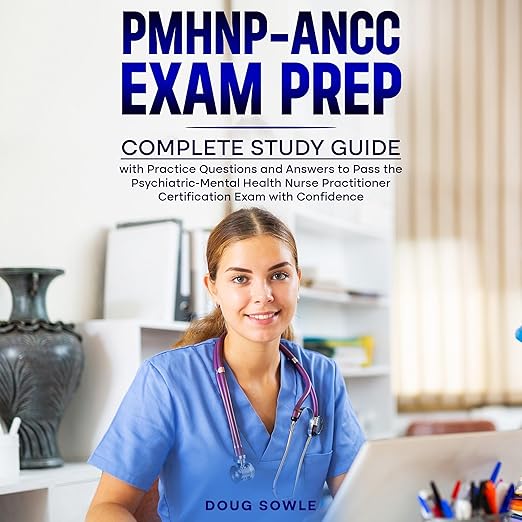
A PMHNP candidate running through psychopharmacology content during a lunch break is exactly the listener Doug Sowle built this study guide for. This audiobook, narrated by Lisa Miller across seven hours and thirty-seven minutes, structures itself as a roadmap through every ANCC domain a Psychiatric-Mental Health Nurse Practitioner exam actually tests: nursing theory, evidence-based practice, neurobiology, assessment and diagnosis, psychotherapeutic interventions, and care across the full age spectrum. What separates it from a lot of certification-prep audio is how much explanatory depth sits underneath the test-taking strategy; this isn't a book of bare facts read aloud, it's an attempt to build the same diagnostic reasoning a working PMHNP needs on the job.
Psychopharmacology Gets the Exam's Most Careful Treatment
Sowle's structure is the strongest thing about this guide, and it survives the shift to audio better than most exam-prep material does. Instead of a loose stack of facts organized by chapter number, the content moves domain by domain the way the ANCC itself organizes the exam, which means a candidate can track weak spots against the guide's own table of contents rather than reverse-engineering where a given topic fits. Psychopharmacology gets particularly careful treatment, medication classes, mechanisms, and the reasoning behind prescribing decisions rather than a bare list of drug names to memorize, which matters given how much of the real exam leans on applied clinical judgment rather than simple recall.
Realistic case studies and scenario-based practice questions, explained in enough depth to double as teaching material rather than just an answer key, are what push this guide past a typical cram sheet. The synopsis promises coverage of professional practice collaboration, cultural competence, ethics, prescriptive authority, and legal considerations alongside the core clinical content, and that breadth is a genuine differentiator from narrower PMHNP prep resources that focus almost entirely on psychopharmacology or diagnostic criteria alone. A candidate using this as a primary study format, not just a supplement to a textbook, is asking something reasonable of the material, since the explanatory depth genuinely supports that use.
The stakes behind this material are real and the guide treats them that way. Passing the PMHNP-ANCC exam is the actual gateway to prescribing authority and independent psychiatric practice in most states, not just a credentialing formality, and Sowle's guide reflects that weight by spending real time on prescriptive authority and legal considerations rather than treating them as a footnote to the clinical content. That framing gives the material a sense of practical consequence beyond just passing a test, a meaningful difference from guides that treat certification purely as an academic hurdle to clear.
Miller Stays Clear Through Dense Psychopharmacology Sections
Lisa Miller's narration is the reason this holds together as a listening experience rather than a slog. Pacing through psychopharmacology sections in particular, where a single mispronounced drug name or a rushed transition between mechanism and indication could genuinely confuse a listener studying for a licensing exam, Miller stays clear and unhurried without dragging. Medication names and diagnostic terminology come through cleanly enough that a candidate reviewing while driving or exercising can follow along without needing to rewind constantly, which is not a small thing for material this dense.
A perfect five-point rating across fifty-two ratings is a strong signal on its own, even without individual written reviews attached to the listing to quote from directly. For a niche certification-prep title in a specific clinical subfield, that kind of consistent score suggests the guide is reaching its intended audience and doing right by them, rather than accumulating praise from casual browsers without the background to judge accuracy. Test-taking strategy content (covering multiple-choice and scenario-based question formats, managing test anxiety, and time management specifically) adds a layer most competing guides treat as an afterthought.
Candidates already juggling clinical rotations, a day job, or family responsibilities will likely find the audio format's flexibility genuinely useful here, fitting review sessions into commutes or exercise time that a textbook can't occupy the same way. That practical fit between format and audience, busy working nurses who need to study in the margins of an already full schedule, is worth weighing alongside the more analytical case for the guide's actual content quality.
Rewinding a Case Is Clumsier Than Flipping Back
Audio has real limits for scenario-based practice questions specifically. Working through a case study in print lets a candidate pause, jot down a differential diagnosis, and check their own reasoning against the explanation at their own pace; audio pushes forward in real time, and rewinding to re-hear a case's specific details is a clumsier process than flipping back a page. Candidates who learn best by writing out their own answers before checking them should treat this as a review and reinforcement layer alongside a print or digital companion, not necessarily their only study format heading into exam day.
The absence of written listener reviews on this listing leaves no reviewer language available to quote on how well the guide matches the actual exam's difficulty or question style, only the numeric rating itself. Anyone weighing this against a more established PMHNP prep brand should treat that rating as a meaningful but incomplete signal, and pair it with whatever sample preview is available before committing to the full seven-and-a-half-hour runtime.
Because the guide organizes itself by ANCC domain rather than by a looser thematic structure, candidates should expect a fairly dense, exam-focused listen from the opening minutes rather than a gentle on-ramp; this isn't background listening material for someone just curious about psychiatric nursing as a career path, it's built for someone already committed to sitting the exam and wanting focused, structured review.
Re-Listening Costs Nothing Extra the Second Time
Nurse practitioner students actively preparing for the PMHNP-ANCC certification exam (particularly ones who already have some clinical exposure to draw on while listening to the case studies) are the obvious audience. The domain-by-domain structure also makes this a reasonable refresher for practicing PMHNPs who want a high-yield review before recertification, even if that isn't the primary use case the guide was built around.
Candidates who process dense material best through repetition will likely get the most out of this format specifically, since re-listening to a single psychopharmacology chapter during a second commute costs nothing extra the way re-buying a study guide or re-photocopying notes might. That kind of low-friction repeat access is one of audio's genuinely underrated advantages for exam content built around memorization-heavy domains like medication classifications and diagnostic criteria.
Total beginners to psychiatric-mental health nursing with no prior coursework in the subject may find the pace assumes more background knowledge than they currently have, since Sowle is clearly building toward exam-day recall rather than teaching underlying concepts from zero. Pairing the audio with a written practice-question bank, worked through under real exam conditions, will serve most candidates better than treating this guide as a complete, standalone preparation system on its own.