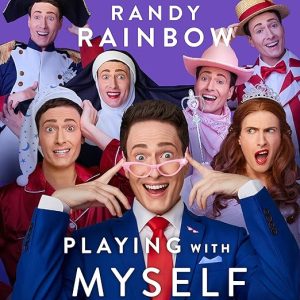
Randy Rainbow narrating his own memoir Playing with Myself is not a formatting decision but an inevitability. Rainbow built his entire public persona through the medium of his own voice, his own delivery, his own timing. The three-time Emmy-nominated musical comedian whose parody songs turned political horror into Broadway-inflected catharsis for millions of people during an especially turbulent period of American public life could not have been served by anyone else reading these pages. The audiobook is, by every measure, the right format for this particular story.
The memoir covers Rainbow's life from childhood through the creation of the comedy persona that made him famous, organized in chapters whose titles alone capture his sensibility. Pajama Bottoms, about the childhood habit of wearing pajamas on his head to approximate Dorothy's pigtails from The Wizard of Oz, and Yes, It's My Real Name, Shut Up! which requires no explanation, and Pink Glasses, the rose-colored homage to his most identifiable physical accessory. These chapter titles are not cutesy marketing hooks. They are accurate descriptions of the book's emotional and tonal range, which moves between self-deprecating humor, genuine vulnerability, and the specific pride of someone who figured out who they were at great personal cost and then built something remarkable from it.
Our Take on Playing with Myself
Reviewer pbmiller describes this as one of the most enjoyable reads they have had in a long time, noting that it is both funny and genuinely emotional, and that Rainbow comes across as an absolutely beautiful person. That captures something real about the memoir's texture. Rainbow is not performing relatability. The story of the over-imaginative, often misunderstood little boy who carried a purse in second grade is not a redemptive arc toward acceptance so much as a portrait of someone who was always entirely himself, even when the world around him found that uncomfortable. The comedy persona that emerged from that self-knowledge is continuous with the child, not a departure from him.
The political dimension of Rainbow's work is acknowledged but not allowed to overwhelm the personal memoir. Reviewer Lord Knows frames his contribution as holding the hearts and sanity of millions of people while, as they put it, a madman tried to destroy America. That context is present in the book, and Rainbow's account of creating his parody videos during the Trump years, including A Spoonful of Clorox and Cover Your Freakin' Face, situates them in the personal psychological landscape that produced them. He is not primarily a political commentator; he is a musical theater devotee with a gimlet eye who happened to find the perfect comedic register for a specific historical moment. The memoir is about who he was before that moment made him famous, and why that moment found him ready.
The special appearance from Rainbow's mom is one of the audiobook's genuine pleasures. It is not a stunt. Their relationship is one of the emotional throughlines of the memoir, and hearing her voice alongside his adds a dimension that print cannot replicate. The production is a Macmillan Audio release from St. Martin's Press, which means the audio quality is professional, and Rainbow's comfort in front of a microphone, earned through years of video production, translates into narration that feels unforced rather than self-conscious.
At 7 hours and 2 minutes, this audiobook fits comfortably across a few sessions or a weekend afternoon. The pacing reflects the memoir's own rhythms: the childhood chapters move quickly through material Rainbow has clearly processed thoroughly, the Broadway obsession sections carry genuine nerdy enthusiasm that most theater kids will recognize in themselves, and the account of his creative process in building the parody video format is specific enough to be genuinely interesting to listeners curious about how comedy gets made.
What to Watch For in Playing with Myself
Rainbow's humor requires some familiarity with Broadway musical theater to land at full force. The references accumulate: The Wizard of Oz, Hooters as an ironic first job in the theater district, the specific cultural register of the gay theater kid whose education was conducted primarily through cast recordings. Listeners who share that cultural vocabulary will find the jokes funnier and the emotional beats more resonant. Those who do not have that background will still follow the memoir's arc but may miss some of the specific pleasures that his core audience brings home immediately.
The memoir's framing of comedy as a form of political and emotional survival is implicit rather than argued. Rainbow does not make a sustained case for political satire as a civic practice; he simply shows, through his own account of creation and reception, how it functions in the lives of people who need it. That restraint is one of the book's better instincts. The fans who found his videos during the years he describes will not need the function explained to them. They already know what those songs were for.
Who Should Listen to Playing with Myself
Playing with Myself rewards Rainbow's existing fans most directly. People who have watched his YouTube videos, attended his live performances, or found themselves humming his parody lyrics at unexpected moments during the Trump years will find this audiobook an intimate expansion of the persona they already love. The self-narrated format means the experience of listening is genuinely close to having Rainbow in the room with you, which is the specific pleasure his audience has always sought. Listeners new to Rainbow who appreciate LGBTQ+ memoir, backstage Broadway content, or the specific comedy of someone who weaponized show tunes against political absurdity will also find a great deal here. The only listeners who may find it less rewarding are those who came primarily for extended political content rather than the personal and theatrical story that the memoir actually tells.
- Read by: Randy Rainbow self-narrates with the comic timing and theatrical sensibility that made his YouTube videos viral phenomena, and his mom's special appearance adds a genuine warmth the memoir earns.
- At its heart: Broadway obsession, LGBTQ+ identity, internet comedy as political satire
- Vibe: Warm, funny, and occasionally genuinely moving
- Short version: Rainbow's memoir rewards his existing fans enormously, and the self-narrated audiobook is the format it was always meant to exist in.
Good to Know
Is the audiobook version of Playing with Myself significantly better than reading the print version?
For this particular memoir, yes. Rainbow's comic timing and theatrical delivery are central to his persona, and hearing him perform his own material carries a quality that a printed page cannot replicate. The special appearance from his mom also adds a dimension that exists only in this format. Fans of Rainbow specifically should prioritize the audiobook over the print edition.
Does the audiobook spend most of its time on political satire, or is it more of a personal memoir?
Primarily personal. The political videos are present as part of Rainbow's story, but the memoir's focus is his childhood, his Broadway obsession, his development as a comedian, and the personal journey that preceded and produced the viral fame. Listeners hoping for a deep political commentary will find a richer personal memoir than they expected.
How much Broadway knowledge do you need to fully enjoy this audiobook?
Some familiarity with musical theater, particularly the classic Broadway canon, will enhance the experience considerably. Rainbow's humor frequently operates through the specific vocabulary of Broadway fandom, and those references reward listeners who share that background. That said, the memoir's emotional arc and comedic sensibility are accessible even to listeners without deep musical theater knowledge.