Quick Take
- Narration: Brian Nishii brings patience and cultural familiarity to Lowry’s Japan-set memoir; well-suited to the reflective pace of the material.
- Themes: Teacher-student lineage, cultural crossing in martial tradition, the meaning of inheritance
- Mood: Contemplative and richly textured
- Verdict: Essential for serious martial artists and readers drawn to memoir about tradition and belonging; start with Autumn Lightning first.
I first heard of Dave Lowry through his long-running column in a martial arts publication, and his particular way of engaging with Japanese budo tradition, deeply respectful, historically grounded, occasionally elitist in ways he seems half-aware of, has always fascinated me. Persimmon Wind arrived in my queue during a stretch when I was thinking about the relationship between teacher and student, about what it means to inherit a lineage from someone who has returned to their own country. The book is precisely about those questions, and it answered some of them in ways I didn’t expect.
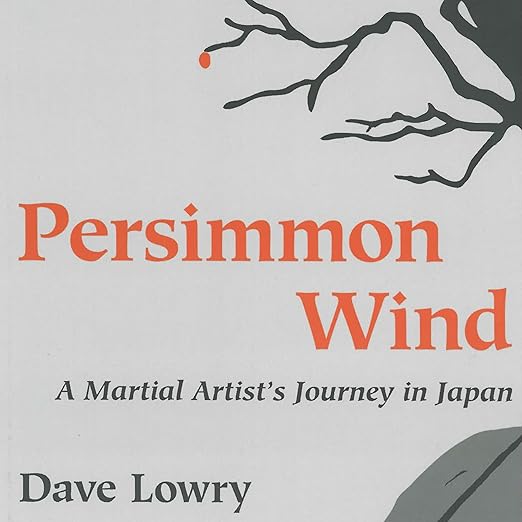
Part travelogue, part memoir, part martial arts history, Persimmon Wind follows Lowry’s journey to Japan to visit his sensei, walk the graves of his martial lineage, and do the work of understanding what the swordsmanship tradition he carries actually means in the country where it originated. Brian Nishii narrates, and the choice is significant.
Our Take on Persimmon Wind
Lowry writes about Japan the way someone writes about a place that has shaped their inner life rather than their travel itinerary. The distinction is audible throughout. His visit to Kyoto’s Daitokuji, the Temple of Great Virtue, the experience in the bathhouse, the small dojo where he and his sensei practice iaido, these are rendered with an attention to sensory and philosophical detail that makes them feel like significant encounters rather than tourist observations.
The Shinkage-ryu, one of Japan’s oldest schools of classical swordsmanship, is the through-line. Lowry uses his investigation of its history to examine what happens when a tradition crosses cultural borders, what survives the crossing, what gets lost, and what the Western practitioner owes to the lineage they’ve entered. Those are genuinely difficult questions, and Lowry doesn’t simplify them, even when his answers reveal the limits of his own position.
Why Listen to Persimmon Wind
Brian Nishii’s narration brings an appropriate quality to the Japanese cultural material. His reading has the patience that Lowry’s prose demands, the willingness to stay with a description of a tea house or a graveyard visit long enough for the place to register. At eleven hours and sixteen minutes the book does not rush, and Nishii doesn’t hurry it. One reviewer who has been reading Lowry’s martial arts books for years places this in their top five, specifically because it is biographical rather than technical. There is not a technique in the book, and that restraint is part of what makes it work.
The ghostly encounters Lowry mentions are handled lightly, consistent with how the Japanese ryokan tradition treats such experiences, matter-of-factly and without sensationalism. That tone is representative of the whole book. Lowry is not trying to create a mystical document; he is recording an encounter with a culture and a tradition that has been central to his adult life.
What to Watch For in Persimmon Wind
One reviewer, a veteran martial arts scholar, noted Lowry’s occasional elitist and condescending attitude. That is a fair observation. Lowry writes from a position of significant investment in traditional Japanese budo, and his implicit hierarchy between the authentic classical tradition and more popular forms of martial practice surfaces periodically. For readers inside the martial arts world, this is a known and debated quality of his writing. For readers coming from outside, it is worth knowing in advance rather than discovering as an irritant.
The book reads best as a companion to Lowry’s earlier memoir Autumn Lightning, which establishes the relationship with the sensei that Persimmon Wind explores. Several reviewers recommend reading that title first, and the advice is sound. The emotional weight of the Japan visit depends on understanding how that teacher-student relationship was built.
Who Should Listen to Persimmon Wind
Martial artists who have studied for long enough to have experienced the complexity of the teacher-student relationship, or who have had to leave a school or sensei and carry something forward without the original context. Japan travelers interested in a layer of cultural engagement below the surface of conventional tourism. Readers drawn to memoir that treats tradition and inheritance as genuinely difficult problems rather than sources of comfortable nostalgia. Those who find elitist framing in nonfiction a dealbreaker may find Lowry’s occasional condescension more noticeable than the work’s substantial merits.
Frequently Asked Questions
Should listeners read Autumn Lightning before Persimmon Wind?
It is strongly recommended. Persimmon Wind is the sequel and refers to the teacher-student relationship established in Autumn Lightning. The Japan journey carries much more weight with that foundation in place.
Does Brian Nishii’s narration handle the Japanese cultural vocabulary and place names effectively?
Yes. Nishii’s patience with the material and his familiarity with the cultural register make him a well-suited choice for Lowry’s text. The Japanese terms and place names are handled without the awkwardness that can arise when a narrator lacks cultural familiarity.
Is Persimmon Wind valuable for readers who practice martial arts other than kenjutsu or sword arts?
Yes. The questions Lowry examines, about lineage, about the teacher-student relationship, about what a Western practitioner inherits from an Asian tradition, are relevant across martial arts. The Shinkage-ryu specifics are detailed but not exclusionary.
How does Lowry handle the cultural gap between his American background and the Japanese tradition he has spent his life studying?
With honesty and some difficulty. Lowry does not pretend the gap is fully bridgeable, and the book’s most interesting passages are the ones where he examines what that gap means for his practice and his relationship with his sensei.