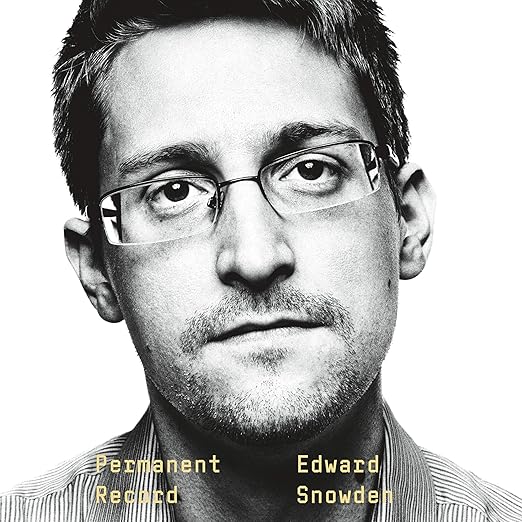
Picture a 29-year-old in a Hong Kong hotel room with four journalists, a stack of encrypted hard drives, and the knowledge that what happens in the next 72 hours will determine whether the most significant leak in NSA history becomes news or disappears quietly. Edward Snowden's audiobook memoir opens toward that moment and then pulls back to explain how a kid from a family of government employees in the Beltway suburbs became the person sitting in that room. Narrator Holter Graham is an excellent guide through this story: his voice carries a controlled urgency that suits both the quieter biographical sections and the escalating tension of the 2013 leak itself.
The Verdict, Briefly
Snowden is a better writer than most political memoir subjects, and this audiobook demonstrates why. He has an engineer's instinct for explanation: complex technical systems are rendered accessible without condescension, and the architecture of the NSA's mass surveillance apparatus is explained with enough precision to be genuinely illuminating. The PRISM program, XKeyscore, and the broader infrastructure of bulk data collection that Snowden helped build are described from the inside, by someone who understood what he was building and eventually could not continue building it.
The biographical sections are equally strong. Snowden writes about his childhood in the Beltway suburbs with specificity: the particular culture of families whose livelihoods depend on government security clearances, the unspoken rules about what you discuss and with whom. His account of his early enthusiasm for government service, his genuine belief in the mission of the intelligence community, is necessary context for understanding what it cost him to conclude that the mission had been betrayed.
Graham's narration handles both registers effectively. The quiet passages about Snowden's childhood and his relationship with Lindsay Mills, his partner, are read with genuine warmth. The sections describing the surveillance infrastructure are read with the measured precision they require. The Hong Kong sequences, which are written as close to thriller pacing as the book gets, are delivered with appropriate tension without overplagying it.
What Makes Permanent Record Worth Hearing
One reviewer described the book as written 'as adventure, moving through events and experiences leading to a courageous act,' and that framing is accurate. Snowden structures the memoir to build toward the 2013 disclosure as a narrative climax, which works because Snowden establishes what he believed before he changed his mind. The arc from true believer to whistleblower is the book's subject, and he traces it honestly rather than retrospectively flattening himself into a hero who always knew what he would eventually do.
Another reviewer, who described having been in a whistleblower position personally, noted that 'some give one star because they've never challenged the system.' That observation points to something real in the book's reception: it is a Rorschach test for how you think about government authority, individual conscience, and the limits of legal obligation. Snowden makes his case for what he did with care and without self-pity, and he leaves room for readers to disagree with his conclusion while understanding his reasoning.
The surveillance material in the book remains relevant and in some respects more urgent than when Snowden published it. The programs he described have been confirmed, partially reformed, and in some cases expanded. Listening to his account of how the architecture was built and what it was designed to collect gives citizens tools for evaluating the ongoing debate about surveillance and privacy that no secondary account fully provides.
Points to Consider
Snowden's account of his own motivations and reasoning is necessarily self-presenting. He is explaining why he did what he did, and readers should engage with his account as the primary source it is rather than a neutral history. He addresses the critiques of his decisions directly in several places, but he is not a disinterested narrator of his own story.
The book also has structural asymmetries that some listeners will notice. The biographical sections leading up to Snowden's CIA and NSA career are detailed and specific. The post-disclosure period, including his current life in Russia, receives less narrative attention than the build-up to the leak. This is defensible as a narrative choice, but listeners expecting equal treatment of Snowden's entire life will find the balance weighted toward the earlier sections.
Graham's narration is strong throughout, but the technical sections on surveillance architecture, while rendered clearly, do require sustained attention. This is material that benefits from replay in audio format; listeners who want to follow the technical argument carefully may find themselves backing up more than with typical memoir narration.
Who Should Listen to Permanent Record
Anyone who uses the internet, carries a smartphone, or has any interest in the relationship between government surveillance and individual privacy should consider this audiobook essential. Snowden is not an abstract figure in these debates; he is the person who built some of the systems being debated and then disclosed their existence at considerable personal cost. His account of what those systems do and why he could not continue participating in them is primary source material.
Listeners interested in the ethics of whistleblowing, the culture of the American intelligence community, or the technical infrastructure of mass surveillance will find this audiobook more substantive than most journalistic accounts of the same events. Holter Graham's narration makes the technical material accessible and keeps the narrative momentum through the biographical sections that might otherwise slow a less patient reader.