Quick Take
- Narration: Peter Hessler narrating his own work is an essential quality here, his unhurried, observational delivery captures the exact patience with which he approaches his subjects.
- Themes: China’s generational transformation, education as social mirror, the ethics of long-term observation
- Mood: Reflective and quietly profound, with the slow accumulation of a long friendship
- Verdict: Hessler’s return to Sichuan is one of the finest pieces of China writing in years, a master of long-form observation at the full extent of his powers, made more intimate by his own narration.
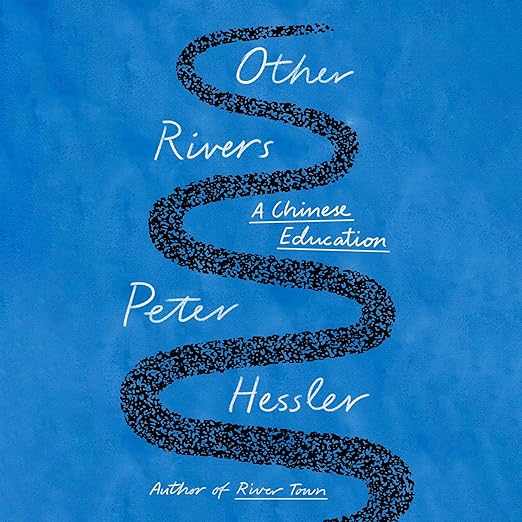
I spent most of a Sunday afternoon with Other Rivers, pausing it twice to look something up and once just to sit with a passage that had landed harder than I expected. Peter Hessler is the kind of writer who earns that kind of attention, not through pyrotechnics or provocation but through an accumulation of observed detail so precise and so patient that you eventually realize you have been given something closer to understanding than information. Other Rivers is the capstone of his China trilogy, and at 13 and a half hours narrated by Hessler himself, it is the most ambitious and most fully realized entry in the sequence.
The architecture of the book is built on return. Hessler first taught English in Sichuan Province in the mid-1990s, an experience he wrote about in River Town. The people he taught then, first-generation college students from large rural families, navigating a brand-new economic world without guidance, became correspondents, then friends, sustained over decades. When he returned to Sichuan University in 2019 to teach the next generation, he brought that comparative framework with him: the Reform generation now in their forties, and their children’s generation coming up in a China those parents could not have imagined.
Our Take on Other Rivers
What distinguishes Hessler from most China correspondents is his refusal to write about the country as a geopolitical abstraction. Other Rivers is built from specific people: the students who wrote him letters in the 1990s, the young undergraduates now navigating an educational system of almost incomprehensible competitive pressure, and his own twin daughters enrolled in a local state elementary school where they were the only Westerners. The daughters’ experience is one of the book’s most unexpectedly resonant threads, the bureaucratic and human texture of a Chinese public school classroom seen through the eyes of children who simply attend it and report back without ideological filter.
One reviewer who spent eleven years in China and was married to a Chinese national describes the book as capturing something that existing literature had not. A Chinese reader notes that Hessler is able to document the contradiction of an education system that has barely changed while the students within it have transformed almost beyond recognition. Those convergent testimonies from people with deep personal knowledge of the country are meaningful validation for a book that claims to show China “from the inside out and the bottom up.”
Why Listen to Other Rivers
Hessler’s self-narration is, simply, the only way to hear this book. His voice has the quality of his prose, unhurried, attentive, slightly amused, capable of genuine emotion without sentimentality. He does not perform the material; he recalls it, and the distinction is audible. A reviewer who describes him as their favorite author and reads everything he produces is not engaging in fan hyperbole, there is a consistency to Hessler’s output, both written and performed, that is rare in the contemporary nonfiction space.
The 13-hour runtime reflects the book’s scope accurately. Hessler covers 25 years of Chinese history through the lens of his students’ lives, alongside the COVID pandemic’s disruption of his second stint at Sichuan University. The pacing never rushes. There are chapters that function almost as extended essays on a single theme, college entrance exam pressure, the psychological impact of the one-child policy’s long shadow, and they benefit from the audio format’s demand for patience from both reader and listener.
What to Watch For in Other Rivers
Listeners who have not read River Town will miss some of the comparative resonance that gives Other Rivers its structural power. The emotional weight of reconnecting with the Reform generation students is fully comprehensible without the earlier book, but richer with it. If you have not read Hessler before, River Town is the natural starting point, Other Rivers rewards the investment in sequence. The book was written largely before and during the COVID lockdowns in China, and some of the political context, the increasing restriction on foreign presence in Chinese institutions, became sharper in the years after publication. Hessler is careful and measured in his treatment of Chinese government policy, which is appropriate given his sustained access to the country but may frustrate readers seeking more explicit political commentary.
Who Should Listen to Other Rivers
Anyone with serious interest in contemporary China, its education system, generational change, or the experience of raising children across cultural borders, will find this essential. Readers of Hessler’s earlier China books should hear this one as the completion of a twenty-five-year project. General readers interested in the best long-form narrative nonfiction of the past year will find it rewards the time. Those seeking a journalistic account of Chinese politics and government, rather than the texture of individual lives, will want to look elsewhere.
Frequently Asked Questions
Do I need to have read River Town before listening to Other Rivers?
Not strictly, but it adds considerable depth. Other Rivers frequently reconnects with students Hessler taught in the 1990s, and knowing who they were and what their lives were like when he first met them makes the reunion threads significantly more affecting. River Town is worth reading first if you have the time.
Does Peter Hessler’s self-narration affect the listening quality, is he a trained audiobook narrator?
He is not a professional narrator, but his background in radio and long-form journalism means he reads well. The quality most reviewers respond to is authenticity: he reads like someone recounting experiences he lived rather than performing a text. That quality more than compensates for any lack of formal narration training.
How does Other Rivers handle the political dimension of China, does it take a clear stance?
Hessler is characteristically measured. He documents restrictions on foreign academics, the psychological effects of the gaokao exam system, and the way students navigate government ideology with private equanimity, but he does not write polemically. The book’s political perspective is implicit in its humane attention to individuals caught in large systems rather than stated as explicit argument.
Does the book cover the COVID pandemic in China, and if so, how?
Yes. Hessler’s second stint at Sichuan University overlapped with the COVID lockdowns, and the book documents that experience from inside a Chinese city during the early pandemic period. This is one of the more intimate first-person accounts of early COVID in China written in English, seen through the lens of an ongoing teaching relationship rather than a crisis dispatch.