Quick Take
- Narration: Tom Weiner delivers a meticulous reading well-suited to dense archival material, steady, authoritative, never sensationalized.
- Themes: Cold War intelligence, government secrecy, assassination history
- Mood: Dense and methodical, with a slow-building unease
- Verdict: Essential for anyone serious about the documentary record surrounding the Kennedy assassination, less so for casual listeners looking for a narrative read.
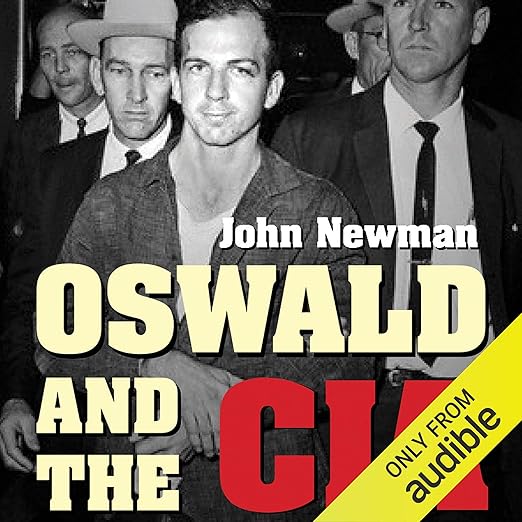
I started Oswald and the CIA on a Wednesday evening thinking I had a passing interest in JFK history. Seventeen hours later, I had something closer to a low-grade obsession with file numbers, document redactions, and a man named James Angleton. John Newman does that to you. He is not a storyteller in the conventional sense, he is an intelligence analyst who writes like one, marshaling evidence with precision and letting the accumulation of documented facts speak at a volume that theory-first writers rarely achieve.
Newman is a former Army intelligence officer with a Ph.D. in history, and his methodology throughout this book is to work exclusively from primary sources: declassified CIA and FBI files, testimony from former officials, and the organizational charts of Cold War intelligence operations. He makes clear from the outset that his interest is not in answering who killed Kennedy, but in mapping what the CIA knew about Lee Harvey Oswald before November 22, 1963, and why significant portions of that file were tampered with or disappeared entirely.
Our Take on Oswald and the CIA
The central revelation of Newman’s research is structural rather than conspiratorial: Oswald’s CIA file was being actively managed by counterintelligence in ways that were, to put it charitably, irregular. The why of that management is what Newman spends the bulk of the book examining. His answer is careful and damning: the file’s configuration suggests Oswald was being used as part of a sensitive intelligence operation, and the subsequent cover-up of that relationship extended to the highest levels of CIA leadership, including James Angleton’s counterintelligence shop.
One reviewer notes that the first edition of the book, published in 1995, builds toward conclusions that feel somewhat tentative. That observation is fair. Newman is scrupulous about distinguishing what the documents show from what can reasonably be inferred, and in the original text he pulls punches he later stops pulling. The 2008 epilogue, which appears near the very end of the audiobook, is where the book becomes genuinely shocking. Newman integrates declassified materials that were not available for the first edition, and the picture that emerges is considerably more alarming than what the earlier chapters suggest.
Why Listen to Oswald and the CIA
Tom Weiner’s narration is exactly what a book like this requires. He reads with a measured, almost bureaucratic calm that never tips into dramatization, which is precisely correct, because Newman’s argument is strongest when it is presented without editorial heightening. The document-heavy passages, the organizational histories, the chains of authority within Cold War-era CIA, Weiner navigates all of it without losing the thread, and at seventeen hours, that is no small achievement.
For listeners already familiar with the JFK assassination literature, this book represents the most rigorous treatment of the documentary paper trail available in audio form. Newman does not speculate. He traces custody chains. He identifies which officers had access to the Oswald file and when. He notes precisely where entries were altered and what the original text is thought to have said. It is the kind of work that makes most JFK books look like journalism and this one look like scholarship.
What to Watch For in Oswald and the CIA
The book is dense. Newman assumes a certain baseline familiarity with Cold War intelligence structures and the major players in the Kennedy assassination literature. Listeners coming in cold may find the first several hours slow-going as Newman establishes the organizational context necessary for his later arguments. The reward for that patience is substantial, but it is earned rather than given.
The 2008 epilogue is the place where Newman names names with a directness absent from the earlier text. If you are going to listen to this book, do not stop before you get there. It reframes everything that precedes it.
Who Should Listen to Oswald and the CIA
This is for listeners who take the documentary record seriously and are willing to put in the work a seventeen-hour archival investigation demands. It is ideal for anyone who has read the primary Warren Commission volumes or Gerald Posner or James Douglass and wants the most forensically grounded account of what the intelligence community knew and when. It is not for listeners who want a narrative thriller or a clear, emotionally satisfying resolution.
Frequently Asked Questions
Does Oswald and the CIA conclude that the CIA was directly responsible for Kennedy’s assassination?
Newman stops short of that claim. His argument is that the CIA had an undisclosed operational relationship with Oswald before the assassination, that this relationship was concealed from the Warren Commission, and that the cover-up implicates senior counterintelligence officials. He presents documented evidence, not a verdict.
How important is the 2008 epilogue, and does it significantly change the book’s conclusions?
It is very significant. Multiple reviewers single it out as the most consequential portion of the book. It incorporates declassified materials unavailable for the original 1995 edition and advances Newman’s conclusions considerably. Plan to listen through to the end.
Is Tom Weiner’s narration suited to this kind of archival, document-heavy material?
Yes. Weiner reads with the kind of precise, controlled delivery that suits a text built on file numbers and organizational hierarchies. He does not dramatize, which is exactly right for Newman’s evidence-first methodology.
Do I need to have read other JFK assassination books before approaching this one?
Not strictly required, but some familiarity with the basic facts of the case and major figures, Angleton, Dulles, the Warren Commission’s structure, will make the early chapters considerably more accessible.