Quick Take
- Read by: Jeffrey Ito's calm, unhurried delivery lets each epigram land without over-selling the punchline, ideal for aphoristic material.
- At its heart: wit and satire, individuality and intellectual courage, social hypocrisy exposed through humor.
- Vibe: Playful, sharp, endlessly quotable.
- Short version: A strong pick in short, dip-in doses for Wilde fans, though the brief runtime and lack of narrative arc call for real expectation-setting first.
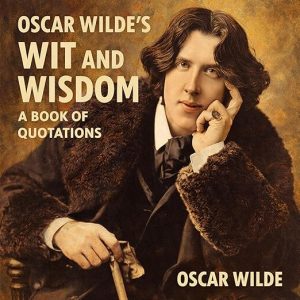
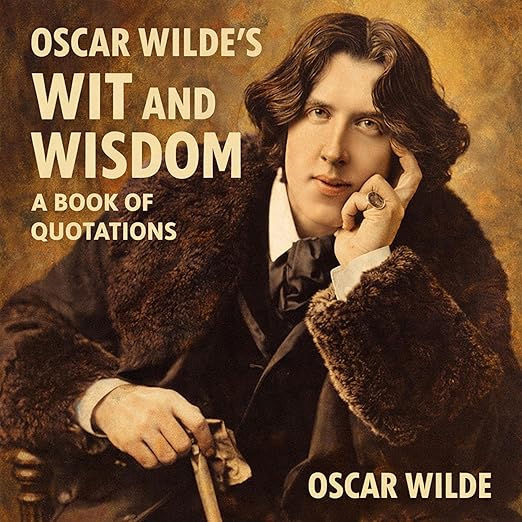
Wilde's epigrams work best as small, sharp jolts rather than a continuous stream, and that is exactly the tension at the center of this audiobook. Wit and Wisdom of Oscar Wilde gathers the sharpest lines from his plays, essays, letters, and lectures into a single collection with no plot, no chapters in the traditional sense, and no throughline beyond Wilde's own recurring obsessions: hypocrisy, beauty, ambition, and the art of living well. At one hour and forty-one minutes, narrator Jeffrey Ito moves through dozens of one-line observations and paradoxes compiled from across Wilde's whole public-domain output, never a novel, never a single essay, just concentrated aphorism after aphorism. Listened to start to finish in one sitting, it can start to blur. Listened to in five-minute doses, the way the synopsis itself suggests, it is closer to keeping Wilde in your pocket.
Letting the Silence After a Good Line Work
The strength of this collection is its range. Pulling from Wilde's plays, including The Importance of Being Earnest and Lady Windermere's Fan, his essays, his private letters, and even his public lectures means the material never settles into a single register for long. One moment lands as a drawing-room jab about marriage or fashionable society, the next as something closer to genuine philosophy about individuality and intellectual courage. That range is the appeal of a quotations book done well, resisting the flattening effect of leaning too hard on Wilde's most famous handful of lines. Jeffrey Ito's calm, unhurried delivery, familiar from his work reading Sun Tzu and Seneca, treats each line as a complete thought rather than rushing toward the next punchline, which matters more here than in almost any other format.
What makes Ito's reading work is restraint. Aphorisms die fast when a narrator over-sells the joke, landing the punchline with a wink that tells the listener how to react before they have had a chance to react themselves. Ito does not do that. He reads each line straight, lets the silence after a good line do the work, and moves on, which is precisely the register Wilde's own dry theatrical instincts reward. A few of the darker or more cynical lines about human folly benefit from that same flatness; played too broadly, they would tip into cruelty rather than mischief. Compiled from public-domain sources, this edition preserves the original spirit of the lines rather than modernizing or softening them, worth knowing going in if you expect a contemporary gloss on Wilde's actual language.
It also helps that the collection is organized loosely by theme rather than strict chronology, so a run of observations about love gives way to a run about ambition, then morality, then beauty, each cluster building a kind of accumulated portrait rather than a random grab bag. A listener who pays attention to those groupings gets something closer to a philosophy than a highlight reel: Wilde circling the same handful of questions about how to live honestly inside a dishonest society from a dozen different angles, refusing to settle on a single tidy answer.
A Half-Second Pause Only Ito Delivers
Quotation books are an unusual case for audio, since most readers use them by flipping open at random rather than reading start to finish, and that browsing instinct does not translate directly to a linear listen. What does translate is comic timing, something the printed page cannot supply at all. A line like his famous observation on cynics knowing the price of everything and the value of nothing reads as clever on paper; heard aloud, with the right half-second pause before the second half lands, it reads as genuinely funny in a way that requires a human voice to execute. That is the actual argument for choosing this over the print or ebook edition: not convenience, but comic delivery. Ito understands where Wilde's sentences turn, and he lets that turn breathe instead of rushing past it toward the next line in the collection.
The reception backs this up. A 4.5 rating across more than eight hundred ratings is a strong number for a compiled-quotations release, and the attached reviews describe exactly the kind of relationship people want with this material: one reviewer calls it a book she keeps handy specifically to look up quotations and lend out to friends, treating it less as a single narrative and more as a reference she returns to. Another describes buying it as her third or fourth copy of some version of Wilde's collected wit, evidence that this is a genre readers restock rather than read once and shelve. That pattern, a title people own across multiple editions and formats, says more about lasting appeal than any single five-star review could on its own.
Your Grandfather's Guilty Pleasures, One Reviewer Warns
Go in expecting a reference collection, not a book with momentum. Nothing here builds toward an ending, no character develops, no argument accumulates across chapters the way it would in a Wilde biography or a full performed reading of one of his plays. At one hour and forty-one minutes, this sits closer to a long-form podcast episode than a typical audiobook, and listeners expecting substantial narrative depth for that runtime will be disappointed regardless of how strong the individual lines are. One reviewer, tellingly titled his notice 'Your grandfather's guilty pleasures,' flags this directly: the appeal here is nostalgic and referential, a book you already suspect you will enjoy before pressing play, not one that surprises you with a new discovery.
Because the lines are pulled from wildly different sources and eras of Wilde's writing life, without dates or original context attached to each one, this is not the audiobook to reach for if you want scholarship or biography alongside the wit. A line from an early essay sits next to a line from a late letter with no signal of which is which, fine for casual enjoyment but a real limitation for anyone studying Wilde's development as a writer. If you want that deeper context, pair this with a proper biography rather than expecting the collection itself to supply it; as a pure delivery mechanism for the material at its best, though, it succeeds.
Commuters and Dog-Walkers in Small Chunks
This is a strong pick for anyone who already loves Wilde and wants his best lines delivered with proper comic timing rather than read cold off a page. It also works well as introductory listening for someone who knows Wilde by reputation, the wit, the trials, the aphorisms quoted everywhere without attribution, but has never actually sat with his own words. Commuters and dog-walkers looking for something to dip into in small chunks, rather than commit to across a long runtime, are exactly the audience this format serves best. Fans of aphoristic audio in general, the kind of listener who already owns a Marcus Aurelius or Seneca collection, will feel at home here.
Skip it if you want a single sustained argument, a biography of Wilde's actual life, or his complete plays performed in full rather than excerpted into single lines. Listeners hoping for a long, full-length audiobook experience given the modest price should also recalibrate before buying, since this measures closer to ninety minutes of concentrated material than a typical eight- or nine-hour nonfiction listen. For the right listener, in the right small doses, it earns its brief length easily.
Questions Listeners Ask
Does this audiobook include Wilde's full plays, or only short quotations?
Only quotations and short passages pulled from his plays, essays, letters, and lectures, not full performances of works like The Importance of Being Earnest. Listeners wanting complete Wilde plays should look for dedicated dramatized audiobook adaptations instead.
How long is this audiobook, and is that runtime worth the price?
It runs one hour and forty-one minutes, short by audiobook standards but appropriately priced for a compiled quotations collection rather than a full-length narrative work. Treat it as a browsable reference, not a single long listen.