Quick Take
- Narration: Janet Song brings the material’s range of emotional registers, from policy analysis to intimate personal testimony, with a consistency that honors both dimensions of Fong’s reporting.
- Themes: State reproductive control, demographic consequence, the human cost of population engineering
- Mood: Measured and humane, with grief running under the reportorial surface
- Verdict: The most thorough English-language account of China’s one-child policy and its human consequences available in audio, essential for anyone trying to understand contemporary China’s demographic predicament.
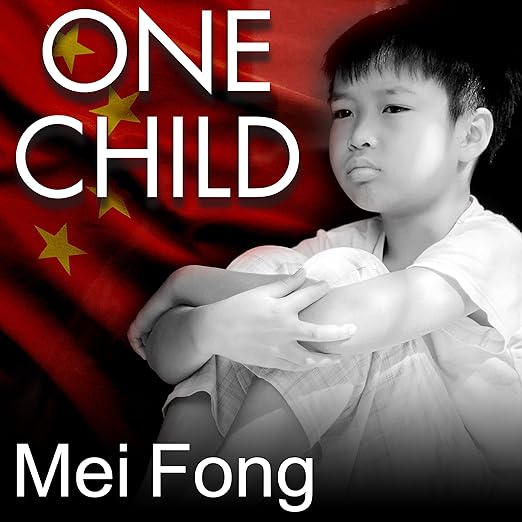
I had been following coverage of China’s demographic crisis for months when I finally came to Mei Fong’s book, and I was struck almost immediately by how much the policy journalism I had been reading had abstracted the story. The numbers were there, the aging population projections, the gender imbalance statistics, the labor force trajectories, but the human beings inside those numbers were largely missing. Fong puts them back in.
Fong spent years documenting the consequences of the one-child policy as a journalist in China before writing this book, and the authority she brings is the authority of sustained, on-the-ground reporting rather than academic synthesis. She traveled across China to meet the people whose lives were most directly shaped by the policy, and what she found was not a simple story of state oppression and individual suffering, though it contains that, but a more complex picture of how a massive social intervention ricochets through a society in ways its architects could not predict and refuse, for a long time, to acknowledge.
The Unexpected Shapes of Policy Consequence
The most striking material in the book is not what you might expect. The forced sterilizations and abortions are documented and are genuinely harrowing, but Fong is equally attentive to consequences that operate through slower, less visible mechanisms. The villages full of bachelors with no prospect of marriage, produced by the combination of son preference and the one-child limit, are documented with specific faces and specific stories. The unauthorized second children who exist outside the state’s recognition, unable to access education, healthcare, or legal employment because they were never registered, form a shadow population Fong documents with unusual specificity. The adoption market that funneled Chinese children, predominantly girls, into families across the world is examined with the complexity it deserves, including the fraud and coercion that ran through parts of it.
The book’s frame around the policy’s end, announced in 2015, gives Fong’s analysis a retrospective quality that allows her to draw conclusions rather than merely document ongoing events. The question she is asking is not simply what happened but what three and a half decades of this policy did to a society, and what the society that emerges from it will look like when a quarter of the population is over 65 and there are fewer young workers than at any point in modern Chinese history.
The Generation That Grew Up Alone
The section on what Fong calls the Little Emperor cohort, the generation of only children who grew up as the sole focus of two parents and four grandparents’ attention and expectations, is among the more nuanced treatments of that stereotype I have encountered. Fong does not simply accept the popular Chinese characterization of these young people as spoiled and entitled. She examines the specific psychological pressures that accompany being the single point of familial hope in a system that provides essentially no state support for aging parents, and the way that pressure shapes personality, risk tolerance, and relationship formation.
One Audible reviewer expressed frustration with the policy’s implications for reproductive rights more broadly, projecting concerns about American policy onto the Chinese situation. Fong herself is focused on what actually happened in China rather than on comparative policy arguments, and her restraint in not editorializing toward obvious conclusions is one of the book’s strengths as journalism. She trusts the evidence to make the argument.
What Janet Song Adds to the Material
Song’s narration is well-matched to the dual register of the book, which moves between policy analysis and intimate personal testimony. She handles both without making the transitions feel jarring, which is not a small feat given how abruptly Fong sometimes moves from demographic data to individual stories. The Chinese names and terms are rendered with appropriate care. The moments of highest emotional weight in the survivor testimonies are treated with restraint rather than performance, which is the right call for material that does not need a narrator’s help to land.
At seven and a half hours the runtime leaves room to breathe without overstaying. The book covers an enormous amount of ground, both geographically and analytically, and the pacing reflects Fong’s discipline as a journalist who knows which details carry the story and which do not.
Why This Book Belongs on Every China-Watcher’s List
Anyone trying to understand contemporary China’s demographic situation needs to listen to this book. The one-child policy’s consequences are not historical artifacts; they are shaping Chinese economic and social development right now, and Fong’s account provides the essential human context for understanding what the numbers actually mean. General listeners with no prior knowledge of China will find this accessible. Those with deep expertise in Chinese demographics may find the journalistic approach less analytically rigorous than they want, but will find material here that supplements the quantitative literature.
Frequently Asked Questions
Does the book cover the policy’s eventual repeal and what replaced it?
Fong’s book was published in 2015, the year China announced the end of the one-child policy and the shift to a two-child limit. The book addresses the policy’s end and its demographic rationale, though subsequent developments including the move to a three-child policy are not covered.
How does Fong treat the Chinese government’s perspective on the policy?
With journalistic fairness. She presents the demographic and economic rationale that Chinese Communist Party leaders used to justify the policy while documenting its human costs extensively. She does not characterize the policy as purely malevolent but is unsparing about its consequences.
Does the book address the international adoption market for Chinese children?
Yes, in considerable depth. Fong examines the global adoption market that emerged from the combination of son preference and the one-child limit, including the fraud, coercion, and genuine tragedy that ran through parts of it. This is one of the book’s most carefully documented sections.
Is this primarily a policy analysis book or a human interest story?
It is genuinely both. Fong’s journalism training means she builds from specific human stories to structural analysis rather than from theory to illustration. The policy analysis is embedded in and earned by the individual portraits she constructs.