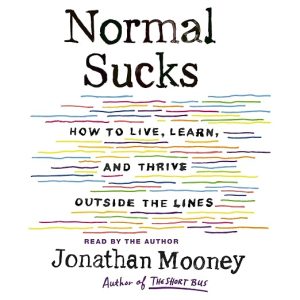
Jonathan Mooney didn't learn to read until he was twelve years old, diagnosed along the way with both dyslexia and ADHD, and this audiobook is built entirely around what happened after he stopped believing that made him the problem. Normal Sucks blends memoir, expertise, and confessional humor into an argument that the real defect isn't neurodiverse brains and bodies, it's the concept of 'normal' itself and the systems built to enforce it. Mooney narrates his own material, and the book doubles as a direct personal address to his own children as much as it is a survival guide for anyone who has ever been told, subtly or directly, that they are the problem.
Moving From Fix People to Empowering Them
What keeps this from reading as a straightforward inspirational memoir is how directly Mooney engages with the mechanics of exclusion, not just his own story but the broader history of how 'normal' got defined and enforced in schools and institutions. One reviewer writes plainly, 'the mentioned history of eugenics is interesting,' and adds that the book left them wanting to research it further, a sign that Mooney treats the historical material as substantive rather than a passing reference.
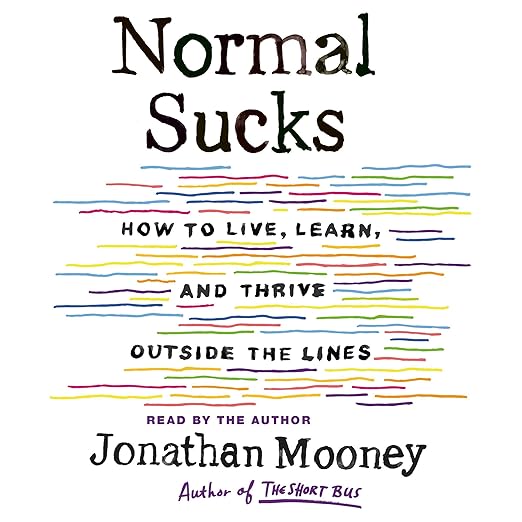
The title itself functions as the book's thesis stated in two blunt words, and it's worth noting how deliberately confrontational that choice is for a book ultimately about compassion and empowerment. Mooney isn't easing listeners into his argument; he's leading with the provocation that the entire concept people spend their lives measuring themselves against is the actual problem, not the neurodivergent brains and bodies told they fall short of it. That directness sets the tone for everything that follows.
The core reframe Mooney is pushing, moving from trying to 'fix people' toward 'empowering them to succeed,' sounds like a simple swap of verbs but actually demands a much harder shift in practice: it means treating a kid's dyslexia or ADHD as a difference the environment needs to adapt to, not a deficit located entirely inside the child that therapy or discipline is supposed to correct. That distinction runs underneath nearly every anecdote and argument in the book, not just its stated thesis.
Mooney Narrates With Live-Presentation Energy
Mooney has spent nearly two decades as a public speaker, and that platform experience is audible from the opening minutes. This isn't a first-time author working through an unfamiliar recording booth; the pacing across five hours has the shape and rhythm of live presentation energy, timed pauses, natural emphasis, the kind of delivery that comes from having told parts of this story out loud to real audiences many times before. For a book this personal, that matters enormously, since a hired narrator reading Mooney's account of not reading until twelve would be performing empathy rather than actually possessing the lived authority he brings to every page.
Reviewer John Zoetebier calls the book 'way better than I anticipated,' crediting Mooney for drawing on both his own experience and broader literature to show 'how difficult life can be if you are just a tiny bit outside what society considers as being normal.' Daniel Franklin, Ph.D. echoes that assessment from a different angle, describing the book as 'fun, rollicking, and informative' and praising Mooney's 'whole-hearted embracing of diversity and differences' throughout. Both reviews land on the same underlying point: this manages real substance without ever feeling like a lecture.
Framing the whole book as a letter to his own young sons, mentioned explicitly in the synopsis, changes the emotional register in a way worth naming specifically. This isn't advocacy pitched at an anonymous general reader; it's a father trying to give his own kids language and permission he didn't have access to at their age, which adds a layer of personal stakes to material that could otherwise read as purely academic or purely motivational. Listening to Mooney narrate that address in his own voice makes the framing land with real weight rather than as a structural gimmick.
Confessional and Often Hilarious at Once
This is confessional memoir woven with expertise and advocacy, not a straightforward chronological life story, so listeners expecting a tidy narrative arc from childhood diagnosis to adult success should expect a looser, more thematic structure instead. Mooney moves between his own story, interviews with parents and educators, and broader historical and systemic analysis, which gives the book real range but occasionally means a listener has to track several threads rather than one clean throughline. Given the five-hour runtime covers all of that ground, some individual threads move faster than a reader hungry for deep detail on any single one might want.
One reviewer's short response, simply titled 'reassuring! thank you,' captures something worth naming directly: this book connects most powerfully with listeners who already recognize themselves somewhere in Mooney's account of being labeled, shamed, or told they were the problem. Listeners without that personal frame of reference will still find the historical and systemic material genuinely interesting, but the emotional register throughout is calibrated for readers seeking validation as much as information, which is a different experience than a purely academic treatment of neurodiversity would offer.
The synopsis calls the book 'confessional and often hilarious,' and holding those two qualities together across five hours is a real balancing act worth naming. Mooney isn't using humor to deflect from the harder material about shame and exclusion; the comedy and the confession run alongside each other throughout, which is a genuinely different tonal choice than either a purely comedic memoir or a purely earnest advocacy book would make, and it's part of why reviewer Daniel Franklin's description of the book as 'rollicking' sits comfortably next to its more serious historical and systemic content.
Nearly two decades of paid public speaking before this book existed means Mooney tested this material live, in front of real audiences, long before it was ever recorded for audio. That track record matters for a self-narrated memoir specifically, since the pacing and emphasis choices audible throughout aren't first-draft instincts, they're the product of years spent learning which parts of this story actually land with a room full of strangers.
Part Memoir, Part Manifesto to His Sons
Neurodivergent listeners, parents of neurodivergent kids, and educators looking for a framework that moves past simple accommodation toward genuine empowerment are the clearest audience for Normal Sucks. Mooney's own story, not learning to read until twelve and building a life and a public voice from there, gives the advocacy real weight, and his public-speaking background means the audiobook format plays to his actual strengths rather than working against them.
Clinical detachment has no place in this book's approach to dyslexia and ADHD; it stays personal and narrative-driven throughout rather than textbook-structured, so anyone wanting a purely academic treatment should look elsewhere. Anyone approaching the book expecting a single tidy redemption arc should also be ready instead for something closer to an ongoing argument, part memoir, part manifesto, addressed as much to Mooney's own sons as to any general reader trying to understand what 'normal' actually costs the people who don't fit it.
Common Questions
Is Normal Sucks a memoir, a self-help book, or an advocacy book?
It's a blend of all three: Jonathan Mooney weaves his own story of dyslexia and ADHD together with interviews, historical research, and direct advocacy, rather than sticking to one single format.
Does Jonathan Mooney's self-narration work well for this kind of personal audiobook?
Yes, notably well. His nearly two-decade public speaking career gives the five-hour narration a live-presentation pacing and energy that a hired narrator reading his personal history would be unlikely to replicate.
Do I need to be neurodivergent myself to get value from this audiobook?
No. While the book resonates most directly with listeners who share Mooney's experience of being labeled outside of 'normal,' parents, educators, and general listeners interested in disability advocacy and systemic critique will also find real substance here.
How much of this audiobook is history versus personal memoir?
The book leans primarily on Mooney's own story and voice, but includes meaningful historical material, including the history of eugenics, that at least one reviewer specifically singled out as interesting enough to research further.