Quick Take
- Narration: Jonathan Welton reads his own work with the authority and direct engagement of a teacher rather than a performer; the delivery is conversational and confident throughout.
- Themes: Supernatural faith as baseline Christian expectation, restoration of apostolic practice, dismantling theological filters acquired through church history
- Mood: Challenging and energizing, pitched at Christians who feel something is missing from their church experience
- Verdict: A stimulating provocation for believers open to examining inherited assumptions about what Christian life is supposed to look like; less useful as an entry point for skeptics or those outside the faith tradition.
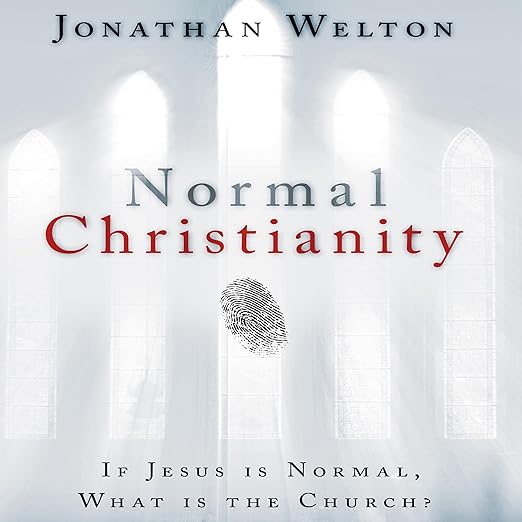
I came to Normal Christianity from the outside of its intended audience, which is the honest place to start this review. Jonathan Welton is writing for Christians who already believe in the foundations of the faith but who have, in his framing, been operating with diminished expectations about what that faith can and should look like in practice. The central argument is delivered in the book’s most direct question: if Christians say they want to live like Jesus, why does that get limited to moral character when Jesus’s life included multiplying food, healing the sick, walking on water, and raising the dead? Why has the supernatural been screened out of what counts as Christian living?
That is a genuinely interesting theological question, and Welton is not the first to ask it. The charismatic and apostolic renewal movements have been raising versions of it for over a century. What Welton brings is a specifically pedagogical approach, drawing on his Welton Academy teaching background, that frames the problem as historical and correctable rather than fixed. His concept of theological filters, interpretive frameworks acquired through centuries of church history that block direct engagement with scripture’s supernatural claims, is the organizing idea the book builds on.
Our Take on Normal Christianity
Welton’s argument is that Christians in the Western church have inherited a version of Christianity that was shaped by specific theological controversies and institutional decisions that progressively narrowed what was considered normative. His position is that going back to Jesus and the Book of Acts as the standard of normal Christian life requires removing those accumulated filters. This is not a particularly radical claim within charismatic or Pentecostal traditions, but Welton presents it with enough clarity and pedagogical structure that reviewers describe it as foundational rather than repetitive, even for believers who have encountered similar arguments before.
The book addresses topics including revival, resurrection, and what Welton calls the New Age, meaning practices and experiences that might be dismissed or feared rather than engaged theologically. He is specifically addressing Christians who have been taught to regard supernatural experience as dangerous or aberrant, and arguing that this fear is itself a theological filter rather than a biblical stance. One reviewer highlighted this as the book’s most useful contribution: helping newer believers avoid common false teachings by giving them a framework for evaluation rather than simple prohibition.
Why Listen to Normal Christianity
Author-narrated theology has specific advantages that this book takes full advantage of. Welton reads with the cadence of someone teaching rather than reciting, and the difference matters over seven hours. When he asks rhetorical questions, they land as questions rather than printed text. When he makes a provocative claim, the conviction in his voice tells you something about how seriously he believes it. For listeners who have encountered Welton at Welton Academy or in teaching contexts, the familiar delivery will be reassuring. For new listeners, the approachability of the reading style lowers the entry barrier to what is, at its core, a substantive theological argument.
At seven hours and six minutes, this is appropriately sized for its content. It is a focused argument rather than a comprehensive systematic theology, and the length reflects that discipline. Welton covers enough ground to make his central case while acknowledging, as one reviewer noted, that other books offer more practical guidance on how to actually walk in the supernatural experience he is advocating for. This positions Normal Christianity as a diagnostic and orienting book rather than a manual.
What to Watch For in Normal Christianity
One reviewer, while broadly positive, noted that the book makes its case for the supernatural as a normal Christian expectation without providing detailed practical guidance on how to move from intellectual agreement to lived experience. That is an accurate characterization of the book’s scope. Welton is more interested in convincing you that healing and miraculous experience should be part of normal Christian life than in telling you what to do on Monday morning to get there. For listeners who want the bridge between conviction and practice, he points toward Welton Academy resources and other works rather than providing that bridge within this book itself.
The theological position Welton occupies is distinctly charismatic and continuationist, meaning he holds that the gifts described in the New Testament remain available and normative today rather than having ceased with the early church. Listeners from cessationist traditions, or from mainline denominations that have not engaged significantly with charismatic renewal, will find the core premise challenging. Whether that challenge is productive or simply frustrating will depend on how open the listener is to having inherited assumptions interrogated.
Who Should Listen to Normal Christianity
This book is specifically useful for Christians who are already believers but who feel that their church experience has not matched what they read in the New Testament, and who want a theologically grounded framework for understanding that gap. It is also valuable for new believers who want to start with a foundation that takes supernatural experience seriously rather than screening it out. Less useful for listeners who want practical instruction rather than theological reframing, or for those outside the Christian faith tradition looking for an objective account of what charismatic Christianity involves.
Frequently Asked Questions
Is Normal Christianity specifically charismatic or Pentecostal in its theology, or is it accessible to Christians from other traditions?
The book operates firmly within a continuationist and charismatic theological framework, meaning Welton argues that supernatural gifts like healing and prophecy remain normative today. Christians from cessationist or more liturgical traditions will encounter the book’s core premise as a challenge to inherited assumptions rather than as validation of existing belief.
Does Welton provide practical guidance on how to pursue supernatural experiences, or is this primarily a theological argument?
Normal Christianity is primarily a case for why supernatural experience should be considered normal Christian life, not a how-to manual. Several reviewers note this as a limitation and point to Welton Academy resources as the practical complement. The book is more diagnostic than instructional.
Is Jonathan Welton’s self-narration a strength or a limitation for this audiobook?
For listeners already familiar with Welton’s teaching style, the self-narration will feel natural and authoritative. For new listeners, the conversational, teacher-to-student delivery makes the theological argument more accessible than a produced narration by an actor unfamiliar with the material would likely be.
What does Welton mean by theological filters, and is this concept introduced early in the book?
Welton uses the term to describe interpretive frameworks built up through church history that narrow what Christians consider possible or normative. The concept is central to his argument and is introduced and explained early, with the rest of the book unpacking specific filters and arguing for their removal.