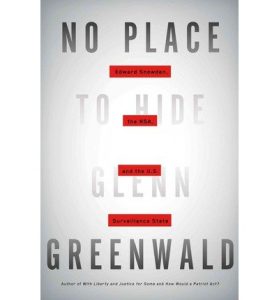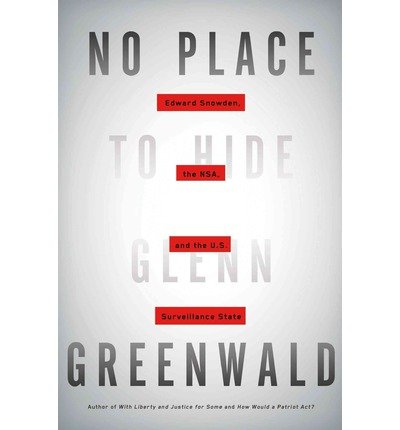
Glenn Greenwald's account of the eleven days in Hong Kong with Edward Snowden in May 2013 is one of the more remarkable documents in recent American journalism, and the audiobook version narrated by L.J. Ganser retains the quality that distinguishes Greenwald's reporting from most national security coverage: the willingness to state plainly what the evidence shows rather than softening the implications for readers conditioned to expect official sources to have the last word. No Place to Hide carries that directness across nearly ten hours of listening, and Ganser's narration serves it without apology.
The book operates on three distinct levels. The first is narrative: the eleven-day period in Hong Kong during which Greenwald, filmmaker Laura Poitras, and Guardian journalist Ewen MacAskill met with Snowden in his hotel room, evaluated the documents, and began the process of publishing them. Greenwald is a gifted narrative journalist, and these sections read with the propulsion of a thriller. The encrypted communications, the careful logistics of moving between locations, the process of deciding what to publish and how, for listeners familiar with the story primarily through the Citizenfour documentary (which won the Academy Award for Best Documentary and for which Greenwald is prominently featured), this account adds significant texture to the events that film depicts.
The second level is analytical: Greenwald's examination of what the Snowden documents actually revealed about the NSA's architecture of surveillance. The PRISM program, the bulk collection of phone metadata, the cooperation of major technology companies in providing government access to user data, these are explained with the clarity of someone who spent months reading and understanding the source documents. The book does not assume prior knowledge of the surveillance systems it describes, which makes it accessible to listeners who came to this story without a background in intelligence or technology policy.
Why Listen to No Place to Hide
L.J. Ganser is one of the more accomplished narrators working in nonfiction audio, and his delivery of Greenwald's prose respects the material's argumentative density. The book is not a neutral document. Greenwald has a clearly stated position on government surveillance and press freedom, and Ganser reads the more openly polemical passages with an intensity that suits the text without tipping into performance. The nearly ten hours of listening pass more quickly than the page count might suggest, partly because Greenwald's narrative control keeps the material moving and partly because Ganser's pacing is calibrated to the complexity of each section.
The third level of the book, and in some ways its most durable, is a defense of journalism itself, specifically the idea that the role of a free press is to hold power accountable even when doing so creates friction with official narratives and legal risk for the journalists involved. Greenwald is explicit about his view of what journalism is for, and his account of the pressure he faced from both the British and American governments during and after the Hong Kong trip provides a firsthand account of what government information suppression looks like from inside an investigation. The Snowden archive from which Greenwald works, and which is described in considerable detail, is the evidentiary foundation that separates this from advocacy without evidence.
What to Watch For in No Place to Hide
Greenwald's perspective on the Snowden revelations is clearly sympathetic to Snowden, and this shapes the framing throughout. The book presents the NSA's surveillance programs as a fundamental violation of democratic principles and treats the government's national security justifications for those programs with consistent skepticism. Listeners who believe those surveillance programs were legally and ethically justified, or who view Snowden's disclosure as a betrayal of classified obligations rather than a democratic service, will find this a frustrating rather than persuasive read. Greenwald does not build the most charitable possible version of the counterargument before refuting it.
The documents themselves are described and quoted in detail, but the audiobook format does not allow for the visual reproduction of the NSA slides and internal communications that appeared in the print and digital editions. Listeners who want to see the primary sources alongside Greenwald's analysis of them would benefit from having the print edition alongside the audiobook, at least for the sections dealing with the specific programs the slides illustrate.
Greenwald's account of the physical experience of breaking the Snowden story is one of the book's most arresting sections. The practical difficulties of secure communication, of establishing that Snowden was who he claimed to be before flying to Hong Kong, of coordinating publication with editors who were simultaneously navigating legal pressure, are described with a granularity that demystifies the process of national security journalism. Listeners who think of investigative reporting as primarily an intellectual exercise will find in this account a vivid picture of the logistical reality: the encrypted laptops, the in-person-only conversations, the constant awareness of surveillance directed at the journalists themselves. Ganser's narration of these sections is the audiobook at its most propulsive.
Who Should Listen to No Place to Hide
This audiobook is essential for anyone interested in the history of digital surveillance, the Snowden case, or the politics of national security journalism. Listeners with a background in civil liberties, technology policy, or press freedom issues will find Greenwald's account rich with detail they may not have encountered in news coverage at the time. Those coming to the story fresh will find it an excellent entry point, particularly in combination with the Citizenfour documentary. Listeners who want a balanced, both-sides account of the surveillance debate should look elsewhere, Greenwald makes no pretense of neutrality, which is either a strength or a disqualification depending on what you are looking for in nonfiction audio.
Questions Listeners Ask
Does No Place to Hide audiobook work for listeners who have already seen the Citizenfour documentary?
Yes, and adds significant value. The book covers more of the pre-Hong Kong encrypted communication between Greenwald and Snowden, provides deeper analysis of the specific surveillance programs the documents revealed, and includes material about subsequent government pressure on the journalists involved that the documentary does not address in comparable depth.
Is the No Place to Hide audiobook still relevant given how much has happened in surveillance policy since 2014?
The core revelations about NSA surveillance architecture remain foundational to any understanding of digital privacy debates since 2013. The specific programs described have evolved, some have been curtailed legally, and the technology has changed, but Greenwald's account of how mass surveillance was built and justified is still the essential primary source for understanding how the infrastructure came to exist.
Does the audiobook include the NSA documents and slides that appear in the print version of No Place to Hide?
No. The audiobook describes and quotes the documents in detail, but the visual materials, the NSA internal slides and classified presentations, cannot be reproduced in audio format. Listeners who want direct access to the primary source documents alongside Greenwald's analysis would benefit from the print or digital edition as a companion.