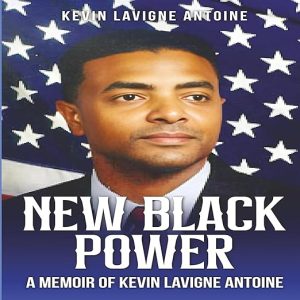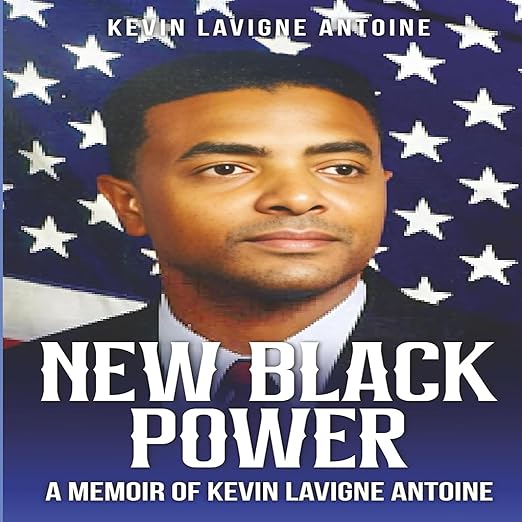
The First African American Nominated in the District
Kevin Antoine's 1996 Mississippi congressional primary campaign is not a story most political audiobook listeners will know, and that obscurity is precisely what gives New Black Power its documentary value. Antoine ran as the Democratic nominee in Mississippi's majority-white 4th Congressional District, making him the first African American nominated by either major party in that district's history. His campaign defeated a long-time white city councilwoman from Jackson despite both the Mississippi Democratic Party and the National Democratic Party openly backing his opponent. Jamal West narrates this account with the gravity and forward momentum a story this specific and this politically significant deserves.
The audiobook sits at the intersection of political memoir, Mississippi civil rights history, and structural critique of party politics. Antoine, writing about himself through much of the framing in a documentary third-person register, creates a texture that distinguishes New Black Power from more conventional political autobiography. The craft here lies in the specificity: this is not an argument about Black political power in the abstract. It is an account of one campaign, one district, and one set of strategic decisions made by a political newcomer who read his historical moment with uncommon clarity.
West's Pacing Keeps the Runoff Tense and Taut
The story Antoine tells has layers that reward careful listening. The surface narrative is the campaign itself: how a 37-year-old with no political background outmaneuvered establishment candidates in a state with one of the most complicated racial political histories in America. The deeper narrative is about what happens when Black voters and candidates operate within, around, and sometimes against party structures that were not designed with their advancement in mind. The Mississippi Democratic Party's active opposition to Antoine's candidacy, despite the party's deep reliance on Black Democratic voters, is the kind of political friction that rarely surfaces in conventional party histories.
Reviewer 'alfretta antoine' notes the book is 'captivating' and 'took me inside U.S. politics where I have never been before,' while reviewer 'e dubya' describes it as 'a great documentation of Mississippi's history and the key players within the state's political power structure.' Both responses identify what Antoine does well: he makes local political history feel both historically significant and personally immediate. The characters who populate this story, lawmakers, party operatives, community supporters, campaign workers across county lines, are rendered with enough specificity to feel real rather than illustrative. This is reported history told by one of its protagonists.
Jamal West's narration is well-cast. Political memoir benefits from a voice that conveys authority without false elevation, and West manages that balance across the book's five-plus hours. The material includes genuinely tense moments, particularly the primary runoff dynamics and the maneuvering around party endorsements, and West's pacing through those sequences keeps the listening experience taut rather than procedural. He understands that this story has stakes beyond the outcome, that the significance lies in the process, and his narration reflects that understanding.
Writing About Himself in the Third Person
At five hours and forty-one minutes, New Black Power is a compact audiobook for its subject matter. That compression is both a strength and a limitation. The campaign's strategic dimensions are conveyed with clarity and forward momentum, but some listeners may want more extended treatment of the historical context, particularly the specific demographics and political economy of Mississippi's 4th Congressional District in the mid-1990s, and how the 1965 Voting Rights Act's legacy shaped the field Antoine entered. The book is written for readers broadly engaged with American political history rather than for political scientists specializing in Southern electoral history.
The third-person authorial framing is worth noting. Antoine refers to himself as 'Kevin Antoine' through much of the text, which creates a slightly distancing documentary effect that some listeners will experience as formal while others will read it as an appropriate register for writing about one's own historically significant actions. Reviewer 'BR6' notes both laughing and crying at the 'trials this young Black Man had to endure,' suggesting the emotional range of the narrative comes through despite the more detached structural approach. The book earns its emotional moments through accumulated specific detail rather than rhetorical appeal to sentiment.
The book's larger argument, implicit rather than stated, is about the gap between party rhetoric and party action in a state where Black voters were essential to Democratic prospects but Black candidates were not similarly essential to party leadership. That gap is the structural reality Antoine's campaign forced into visibility, and it's the reason New Black Power functions as more than a personal success story. It's a case study in how institutional structures resist change even when individual actors within them might nominally support the values that change represents. Jamal West's narration gives that argument its appropriate weight without overstating it.
Political History Told From Uncommon Perspectives
This audiobook belongs to listeners with an appetite for American political history told from perspectives that don't typically appear in mainstream party narratives. If you've followed Mississippi's political evolution over the past three decades, or read accounts of Black political candidacy in majority-white districts, the specific campaign Antoine describes will feel both historically legible and freshly documented in a way that most broad-lens political histories don't provide. Listeners interested in the structural barriers Black candidates face within mainstream party organizations will find this one of the more granular first-person accounts available in audio form.
Skip it if you're looking for a wide-lens history of Black political power in America. Antoine's book is deliberately and productively focused on a specific time, place, and campaign. Its value is entirely in that specificity rather than in synthesis or theory, and listeners who need their political audiobooks to operate at a national scale may find the district-level focus narrower than they're looking for.
- Narrator: Jamal West narrates with authority and clear dramatic pacing, particularly through the tension of the primary runoff sequences and the party opposition dynamics.
- Subjects: Black political candidacy against party resistance, Mississippi's racial political history, the gap between party rhetoric and institutional action
- Tone: Documentary and driven, with real historical stakes beneath the procedural campaign narrative
- Bottom line: A precisely focused account of Kevin Antoine's historic 1996 Mississippi campaign, narrated with appropriate gravity, and valuable precisely because it documents political history that mainstream party narratives tend to omit.
Does this audiobook require prior knowledge of Mississippi political history?
Not extensively. Antoine provides enough context about the 4th Congressional District and the state's political landscape that listeners new to the subject can follow the campaign's stakes clearly. Familiarity with the broader arc of Southern political transformation adds depth but isn't required.
At under six hours, does this audiobook cover the campaign in sufficient depth?
The campaign's strategic arc is conveyed with real clarity and momentum. Some listeners may want more extended historical context about Mississippi's mid-1990s political economy, but Antoine's compression serves the narrative well and the runtime doesn't feel padded or rushed.