Quick Take
- Narration: Dr. Michelle Carabache brings nursing-professional authority to the material, her clinical background evident in the comfort and precision with which she handles pharmacology and physiological terminology.
- Themes: Practical nursing licensure prep, test-taking strategy, clinical competency across four client need categories
- Mood: Structured and methodical, designed for the busy student rather than the leisurely listener
- Verdict: A comprehensive audio review for PN candidates that covers all exam content areas, though it works best as a complement to active question practice rather than a replacement.
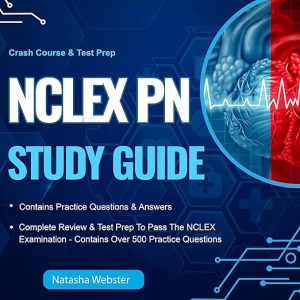
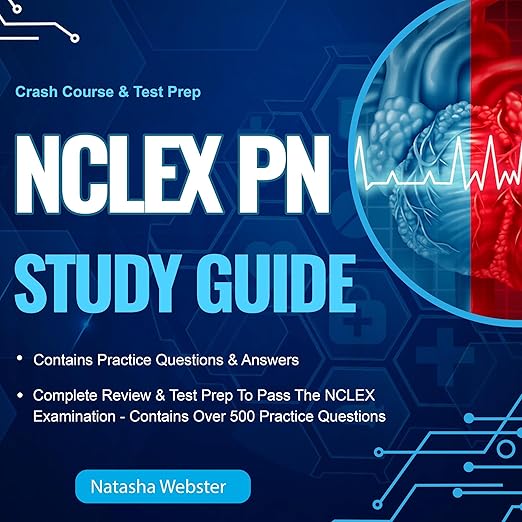
I spent some time talking with a practical nursing student a few years ago about how she studied, and one thing she said stuck with me: the problem was not content, it was time. She was doing clinical rotations five days a week, and the hours available for desk study were genuinely limited. She listened to review material on the bus, during meal prep, during any twenty-minute window she could find. That kind of fractured study schedule is exactly what the NCLEX-PN Study Guide by Natasha Webster, narrated by Dr. Michelle Carabache, is designed for. Fourteen hours and twenty-seven minutes of structured review, portable and resumable, organized around the full content blueprint of the PN examination.
Dr. Carabache is a particularly good fit for this material. She appears across a range of nursing and medical certification titles, and the confidence she brings to pharmacological and physiological content is the kind that comes from genuine domain familiarity. The terminology lands cleanly. The phrasing around drug mechanisms and clinical procedures has the cadence of someone who has taught this content rather than simply read it. For an exam prep audiobook, that matters more than it might seem. Mispronounced clinical terms in a study guide create the kind of memory interference that you do not want when you are sitting in front of an exam in three weeks.
The Four-Category Architecture of the NCLEX-PN
The NCLEX-PN content blueprint organizes all test questions into four major categories: Safe and Effective Care Environment, Health Promotion and Maintenance, Psychosocial Integrity, and Physiological Integrity. Webster structures the review guide to mirror this architecture precisely. Physiological Integrity, the most heavily weighted category, receives the deepest treatment, with subsections covering pharmacological therapies, reduction of risk potential, and physiological adaptation. The guide also addresses therapeutic communication and mental health concepts within the Psychosocial Integrity section, which is frequently underestimated by candidates who prepare primarily for the hard clinical content. At fourteen hours, there is enough runtime to give each category real coverage rather than cursory treatment.
How 500 Practice Questions Work in Audio
The headline feature of this guide is its 500-plus practice questions, distributed across all content categories. In audio format, practice questions function differently than they do in print or on a screen. You hear the stem, you hear the options, and then you hear the rationale. What you lose is the moment of independent retrieval, the cognitive work of forcing yourself to generate an answer before the correct one is revealed. That gap matters because active recall is the mechanism that actually builds durable memory. What you gain is a model of how to reason through question stems, how to use elimination, how to identify priority versus distractor options. The most effective approach is to use this audiobook for reasoning-process modeling and pair it with a digital question bank for the active recall work.
Test Strategy Alongside Content Review
One thing that distinguishes this guide from pure content review is its dedicated attention to test-taking strategy. Time management, elimination techniques, and approaches to differently formatted questions receive their own coverage. For candidates who have strong clinical knowledge but struggle with the exam’s particular question logic, this section may be the most valuable part of the audiobook. The NCLEX uses a decision model that rewards a specific kind of prioritization thinking, and understanding that model independently from content is a real skill that Webster addresses directly.
Who Should Listen, Who Should Skip
Listen if you are preparing for the NCLEX-PN and need a study format that fits around clinical rotations and irregular schedules. The audio format is genuinely suited to this use case. Listen if you appreciate having test strategy integrated with content review in a single resource.
Skip if you are expecting this audiobook to function as your only study resource. Twenty-six reviews suggests an established track record, but no single prep guide should stand alone for a licensure exam. Combine this with a current question bank and your nursing school’s review materials for the most complete preparation.
Frequently Asked Questions
Does this guide cover the NCLEX-PN specifically, or is it interchangeable with an NCLEX-RN prep guide?
This guide is specific to the NCLEX-PN examination, which tests practical and vocational nursing licensure. The content scope and question complexity differ from the RN exam. Do not use an RN prep resource as a substitute for PN preparation, or vice versa.
How does listening to 500 practice questions work in audio format?
Each question is read aloud with its answer options, followed by the correct answer and a rationale. You do not have the option to pause and generate your own answer before hearing the solution, as you would with a print question bank. This format is useful for learning reasoning patterns and understanding rationales, but active recall practice still requires a digital or print supplement.
Is Dr. Michelle Carabache accurate with clinical and pharmacological terminology?
Yes. Carabache narrates multiple clinical certification titles and handles medical terminology with the precision and familiarity of someone with domain expertise. This is particularly important for pharmacology content, where accurate pronunciation affects memory retention.
At 14 hours and 27 minutes, can this audiobook realistically be completed during an active study period?
At 1.5x speed, the runtime drops to around ten hours. Breaking it into daily 45-minute sessions over two weeks is entirely manageable alongside clinical rotations. The structured chapter format allows you to focus review sessions on specific content areas without needing to listen sequentially.