- Narration: Chödrön is teaching, not reading, so the timing is hers; one written entry reports other voices reading passages at the retreat, none of whom appear in the credit line.
- Themes: Guarding alertness (sheshin), taming the mind, the bodhisattva vow, facing difficulty and death.
- Mood: Unhurried, warm, occasionally funny, built for repeat listening.
- Verdict: Buy it as a recorded retreat rather than a book read aloud, and the eight hours make sense.
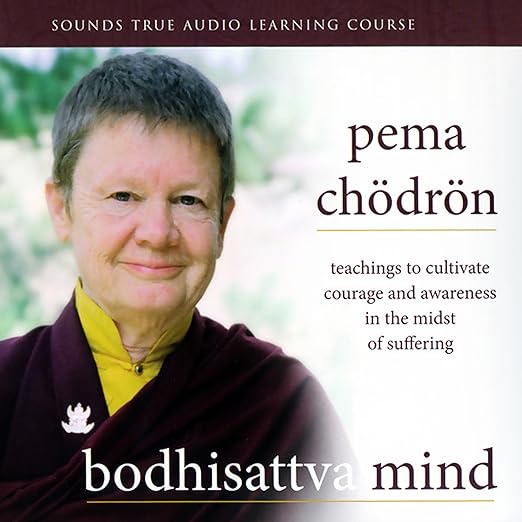
Eight hours and six minutes of teaching recorded in front of an audience, not a manuscript read into a booth, is what this audiobook actually is, and the publisher's copy never quite says so. Sounds True released it in 2006 as a practicum of insights and meditations from a cherished teacher, which is accurate and also carefully vague. Pema Chödrön is credited as both author and reader, and on a retreat recording that credit means something other than what it usually means: not a performance of a text, but the person who taught it, teaching.
Sheshin is the word the publisher's summary places at the center, translated as guarding alertness, and it names the discipline the whole set circles: noticing what your mind is doing while it is doing it. Around that sit the other qualities Chödrön treats as prerequisites for the bodhisattva path, which the copy defines simply as a life dedicated to the benefit of others. Her own framing is characteristically plain. We all have a consciousness that knows what helps and what causes harm, she says, and the same faculty that notices the difference can be used to tame the mind and pull us out of our own suffering. That is the entire argument, extended across eight hours and worked through instead of asserted.
Shelving is where this record goes wrong before you press play. The genre fields file it under health and wellness with a tag reading Alternative and Complementary Medicine, sitting beside Buddhism. Nothing in eight hours of Buddhist retreat teaching is medicine, complementary or otherwise, and a buyer arriving from that shelf expecting protocols for anxiety will be listening to something else entirely. The religion and spirituality classification next to it is the accurate one. Categories look like housekeeping until they set an expectation the content cannot meet, and this one promises relief from a teacher whose whole subject is facing difficulty squarely instead of escaping it.
Why Bodhisattva Mind Works as an Audiobook
Voice is the product here, which is unusual enough to be worth stating plainly. One five-star entry reports loaning the set to friends with no interest in meditating and hearing back that her voice alone brings about a good change, and describes returning to it whenever the heart has gone hard. An effect like that is not something I can confirm for anybody else. What I can say is that this recording removes the layer normally sitting between a teacher and a listener: nobody is interpreting the material, because the person who wrote it is the one talking, and the pauses, the asides and the sequencing are her decisions rather than a reader's reconstruction of them.
Retreat recordings carry things a studio pass drops. Teaching in a room runs on the room: a point gets made twice because it did not land the first time, a joke arrives to release pressure that has genuinely built, and the order follows the days and not a table of contents. Five stars from a listener holding almost the whole back catalog rate this one among the very best for that exact reason, crediting an easy-to-follow continuity through the philosophy and lectures that move at a good pace. On a subject that resists summary, an order you can follow beats an index. It also means eight hours are not evenly weighted, and anyone hunting one particular teaching will have to hunt.
Weak Spots in Bodhisattva Mind
Three stars sit beneath a description of the format that the publisher never supplies: a text read out in segments by numerous volunteers at the retreat, then interpreted by Chödrön. That listener was not impressed. Set the verdict aside and keep the information, because it changes what the credit line means. The narrator field on this record names one person. If other voices read passages aloud across those eight hours, they go uncredited, and a buyer expecting a single teacher speaking throughout is purchasing something structurally different from the thing they pictured. Nothing in the publisher's copy prepares anyone for a second or a third voice.
Provenance of the reception is the next thing to weigh. Physical discs turn up in three of the responses on this page, which fits a 2006 release and tells you this column was assembled by people who bought a box, not a download. The dates run from 2010 to 2016. That gap matters less for dharma teaching than it would for almost anything else, since none of the content expires, but it does mean the enthusiasm on display was written about a different object. The badge reads 4.7 across twenty-seven ratings, and the single dissent visible in writing does not dispute the teaching at all. It disputes the assembly.
Should You Listen to Bodhisattva Mind?
Anyone who already reads Chödrön should treat this as a distinct experience and not one more title. Five stars from someone who says they have studied with her for around eighteen years, and owns most of what she has put out, call the set a wonderful distillation of teachings and describe running it while working with their hands, painting or drawing. That is a real use for a retreat recording and a poor one for a dense book. Newcomers can begin here as well, provided they understand that the entry point is a teaching, not an explanation of Buddhism; terms arrive assuming a certain patience, and the payoff accumulates instead of landing chapter by chapter.
Look elsewhere if you need structure you can navigate. Eight hours without a searchable architecture makes a poor reference object, and a listener who wants Chödrön's arguments organized should reach for one of her written books first. Pass on it too if the sound of a live room bothers you, because a live room is exactly what a retreat recording is. And a buyer drawn here by that Alternative and Complementary Medicine tag should reset expectations completely: this is Buddhist practice, taught by a nun, on the assumption that you intend to sit with difficulty rather than dissolve it. Patience is the price of admission, and the teaching earns it.
Is this audiobook a reading of a book, or a recording of something else?
It is a recording of teaching delivered to a live room, not a studio reading of a manuscript. The publisher's own phrasing for it is accurate and completely uninformative. Expect the shape of a retreat: repetition where a point needs it, humor where the room needs it, eight hours that follow days instead of chapters.
Does the Bodhisattva Mind audiobook work as a first encounter with this teacher?
One written entry from a listener holding many of her titles calls this among the favorites, crediting her with getting to the heart of things and including everybody, which describes the entry point fairly. No prior Buddhist vocabulary is required, though patience is: the material teaches without pausing to introduce, and terms get used well before they are unpacked.
Does the audiobook assume any existing meditation practice?
Some, though less than the vocabulary suggests. Sheshin, rendered in the copy as guarding alertness, is introduced before it is put to work, and the instruction stays practical, never doctrinal. A listener who has never sat will follow the ideas. A listener who has will recognize what the instructions are asking for and take considerably more from the hours.