Quick Take
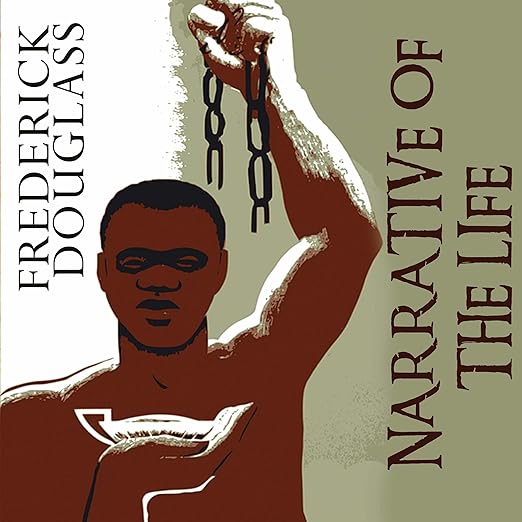
- Narration: Sarah Rife brings quiet dignity to Douglass’s 1845 text, her clear, measured delivery suits the formal abolitionist register without imposing modern inflection on nineteenth-century prose.
- Themes: Slavery and its psychological machinery, literacy as liberation, the gap between American ideals and American practice
- Mood: Measured and devastating, the controlled anger of a man who knows exactly what he is saying and why
- Verdict: At under four hours, this is one of the most concentrated and important documents in American literature, and the audio format makes its rhetorical architecture fully audible.
There is a particular experience of listening to the Narrative of the Life of Frederick Douglass that I had not anticipated when I first queued it up, and I had read it before, in graduate school, in a seminar on slave narratives. The difference between reading this text and hearing it is the difference between analyzing a speech and being in the room where it was delivered. Douglass was one of the great orators of the nineteenth century; his narrative was designed to be heard as well as read, to perform its own argument in its own rhetorical shape. Sarah Rife’s narration is not flamboyant, it is careful, measured, controlled, and that restraint is the right decision for a text that generates its power through precision rather than pyrotechnics.
The Narrative was published in 1845, during Douglass’s time in Massachusetts, and serves simultaneously as personal memoir, political argument, and legal testimony. Its eleven chapters cover his life from birth in Maryland through his escape to freedom in the North. The framing apparatus, the preface by William Lloyd Garrison and the letter by Wendell Phillips, both arguing for the book’s veracity and their author’s literacy, is worth attending to. They are not simply endorsements. They are a response to the active doubt that any account by a formerly enslaved person faced: the assumption, which Douglass confronts directly in his text, that the intellectual sophistication of the narrative is itself evidence that a Black man could not have written it.
The Literacy Argument at the Center of Everything
The most famous passage in the narrative, the section where Douglass describes how his enslavers attempted to prevent him from learning to read, and what his understanding of this prohibition taught him about the logic of slavery, is the argumentative engine of the entire text. Hugh Auld’s declaration that literacy would make Douglass unfit to be a slave becomes, in Douglass’s telling, the precise moment he understood what freedom required. Rife handles this passage with the attention it deserves, letting the argument breathe without rushing toward the emotional culmination that lesser narrators might reach for. The recognition that literacy is not just a practical skill but a form of consciousness, a capacity to imagine one’s condition differently, is one of the most important arguments about education and power in American literature, and it lands with appropriate weight in audio.
The Controlled Rhetoric of Witness
What makes the Narrative so formally remarkable is its management of emotion. Douglass describes atrocities, the whipping of his Aunt Hester, the murder of Demby, the systematic brutality of the Covey period, with a precision that refuses sensationalism while making the facts impossible to misread. This is deliberate. He is writing for an audience that includes slaveholders and their sympathizers, readers who would dismiss any text that seemed to appeal to sentiment over evidence. His strategy is to give them the evidence so clearly that the appeal to sentiment is unnecessary. Reviewer Jerrod Murr’s insistence that the book demands annotation captures this quality: the text rewards active attention in a way passive consumption doesn’t fully honor.
Why Audio Suits This Text
The argument for the audio format of the Narrative is stronger than for most texts. Douglass was trained as an orator; his prose has the rhythms and structures of prepared speech. The parallelisms, the strategic repetitions, the controlled irony, these are features that become audible when read aloud in a way they can remain inert on the page for an inattentive reader. The accompanying reference material noted in the product listing adds context without interrupting the text itself. At under four hours, this is one of the most concentrated important documents in American literary and political history, and the brevity means there is no excuse for not encountering it.
Who Should Listen, Who Should Skip
There is no meaningful case for skipping this text. It is foundational American literature and one of the most important firsthand accounts of slavery in English. Students encountering it for the first time will find the audio format, with Rife’s clear and careful narration, an excellent primary encounter. Listeners who have read it will find new dimensions in the rhetorical structure when they hear it read aloud. The only caveat is for listeners looking for comprehensive biography: this covers only Douglass’s early life through his escape to freedom. His two subsequent autobiographies, My Bondage and My Freedom and Life and Times, extend the account through his later career and are worth following up with.
Frequently Asked Questions
Is this the complete text of the Narrative, or an abridged version?
At just under four hours, this appears to be the complete 1845 text, the Narrative is a relatively short book by modern standards, and the runtime matches a complete reading. The product listing also mentions accompanying reference material available in your library, which suggests scholarly apparatus beyond the text itself.
Why does the book begin with prefaces by William Lloyd Garrison and Wendell Phillips rather than Douglass himself?
These were a standard feature of antebellum slave narratives, designed to authenticate the account for skeptical white readers who might otherwise doubt that an enslaved person could have written so sophisticated a text. Douglass addresses this dynamic directly in the narrative itself, the very need for authentication is part of what he is arguing against.
Does Sarah Rife’s narration suit a nineteenth-century formal text?
Yes, her measured, dignified delivery suits the formal abolitionist register of Douglass’s prose without imposing contemporary inflection that would feel anachronistic. She doesn’t attempt to dramatize the more harrowing passages, which is the correct approach: the text generates its power through precision, and Rife respects that.
Is this a good introduction to Douglass’s broader work, or should I start with one of his longer autobiographies?
Start here. The 1845 Narrative is the foundational text, the most concentrated and rhetorically focused of his three autobiographical works. My Bondage and My Freedom (1855) and Life and Times (1881/1892) extend the story and add retrospective reflection, but they build on the foundation the Narrative establishes.