Quick Take
- Narration: Virtual Voice narration keeps the content accessible but undercuts the personal, confessional quality that pilgrimage memoir depends on.
- Themes: Aging and physical limitation, the purpose of modern pilgrimage, solitude and unexpected companionship
- Mood: Honest and quietly reflective, occasionally self-critical
- Verdict: An earnest and useful Camino memoir with genuine practical value for anyone planning the Portuguese route, though the AI narration will limit its emotional reach.
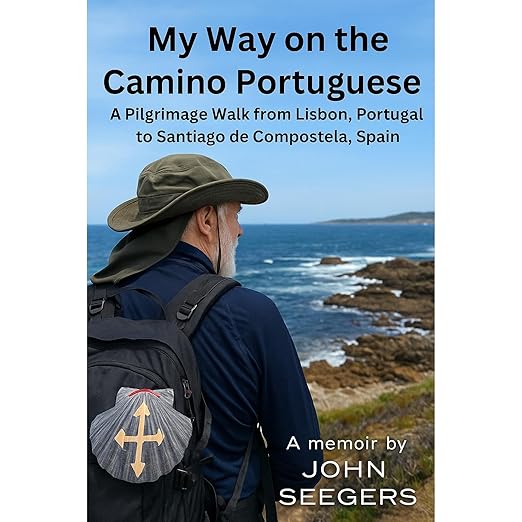
There is a particular kind of Camino book that appeals to people who are already planning the walk, a book that is less about literary revelation and more about the texture of the experience, the daily routine, the other walkers, the knee pain, the moments when you want to stop. John Seegers is writing that book, and he is writing it honestly. My Way on the Camino Portuguese is the account of a man who has done the Camino before, who walks the Portuguese route from Lisbon to Santiago de Compostela, and who discovers that experience does not protect you from the fundamental difficulties of covering that distance on an aging body with a bad knee.
The book is part of a series called The Camino de Santiago Chronicles, and it carries the accumulated knowledge of someone who has done this before while remaining alert to the ways the Portuguese route differs from the routes Seegers has previously walked. The daily structure, how far he covers, where he stops, who he meets, gives the memoir a rhythm that mirrors pilgrimage itself, repetitive and cumulative in ways that are either meditative or monotonous depending on your tolerance for that kind of pacing.
Our Take on My Way on the Camino Portuguese
Seegers writes with honesty about his limitations. The knee pain is not a minor subplot but a persistent companion that reshapes every day’s planning and every hour’s progress. He underestimated how much the leg pain would affect his stamina on uneven terrain, and the book does not spare that acknowledgment. One of the more perceptive reviews called this “a candid journal revealing the comfort and sting of walking the Camino in an aging body,” and that captures exactly what is most valuable about it. Seegers is not selling pilgrimage romanticism. He is telling you what it is actually like when your body does not cooperate with your intentions, and what it means to keep walking anyway.
Why Listen to My Way on the Camino Portuguese
Multiple reviewers who are actively planning their own Camino walks cited this as practically valuable, particularly for the Portuguese route, which gets less coverage than the Frances. The first-hand descriptions of towns, terrain, and logistical realities have direct utility for anyone preparing to walk. One reviewer was preparing to start in Porto and found the specific information genuinely invaluable. That practical dimension is real, and it distinguishes this from more purely literary pilgrimage memoirs. The book is also part of a series, and readers who have followed Seegers across his previous Camino accounts will get more from the comparative dimension, what is different here, what has changed.
What to Watch For in My Way on the Camino Portuguese
A minority reviewer noted that the book is “very linear without depth” and that too many paragraphs and sentences begin with the word “I.” That is a fair stylistic critique, and it reflects the book’s origins as a journal. Seegers is a reliable chronicler but not a literary stylist, and readers who come to pilgrimage memoir for the Cheryl Strayed-level of psychological excavation will find less of that here. The Virtual Voice narration is also a limitation. Pilgrimage memoir is among the most personal of travel writing forms, and the mechanical quality of AI narration strips out the emotional texture that makes the material resonate. If you are planning a walk and want practical information with human context, the content delivers. If you want to be genuinely moved, the narration limits what is possible.
Who Should Listen to My Way on the Camino Portuguese
Listen to this if you are planning the Portuguese Camino and want a realistic account from someone who has actually walked it with aging knees and genuine fatigue. Listen if you have done previous Camino routes and are curious how this one compares. This is a practical companion first and a literary experience second. If you are expecting the kind of transformative personal narrative that the more famous pilgrimage memoirs deliver, adjust your expectations. But for what it sets out to do, which is honest documentation of one man’s walk, it delivers on its terms.
Frequently Asked Questions
Is this book primarily practical or primarily personal memoir?
Both, but the practical dimension is stronger. Seegers documents the daily experience of the Portuguese route with enough specificity to be genuinely useful for anyone planning the same walk, particularly from Lisbon.
Does Virtual Voice narration significantly affect the listening experience for this genre?
More than for informational content. Pilgrimage memoir depends on intimacy and personal voice, and AI narration removes the emotional quality that makes confessional writing resonate. The content is still accessible, but the experience is flatter than it would be with a human narrator.
How does this Camino account handle the spiritual dimension of pilgrimage?
With restraint. Seegers reflects on aging, resilience, and the meaning of the walk in practical rather than religious terms. The book is more about physical and psychological endurance than spiritual transformation.
Is this a good read for someone who has never walked any Camino route?
Yes, though experienced Camino walkers who can compare routes will get more from it. For newcomers to Camino literature, it is a grounded, realistic introduction to what the experience involves.