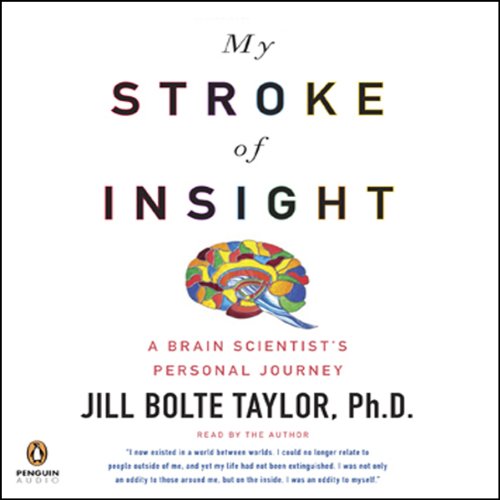
My Stroke of Insight came to me through a circuitous route. I had watched Taylor's TED talk years before, the eighteen-minute version that became one of the most shared science presentations in that platform's history, and found it genuinely affecting. Then I kept putting off the full book, assuming the talk had covered the essentials. A colleague who works in neurological rehabilitation finally sat me down and told me I was wrong about that. She was correct.
On December 10, 1996, Jill Bolte Taylor, a thirty-seven-year-old Harvard-trained brain scientist, woke up to find she was having a stroke in the left hemisphere of her brain. Over the following four hours, she observed her own neurological deterioration with the detachment and attention of the scientist she was while simultaneously experiencing what she could only describe as a profound shift in her sense of self. The left hemisphere, which handles sequential logic, language, and linear time, was failing. The right hemisphere, which handles spatial awareness, emotional interconnection, and the present moment, was becoming primary. Taylor experienced both as a scientist watching data and as a consciousness undergoing transformation.
The Verdict, Briefly
The book operates on two levels simultaneously. The first is the medical memoir: the morning of the stroke, Taylor's attempt to call for help despite losing the ability to recognize phone numbers or understand spoken language, her hospitalization, and the eight years of recovery that followed. This is itself a remarkable narrative. The second level is the neurological analysis: Taylor using her professional expertise to explain what was happening in her brain at each stage of the stroke, what the different hemispheres contribute to consciousness, and what her experience revealed about the architecture of subjective experience.
These two levels do not compete. They illuminate each other. Understanding what the left hemisphere does makes Taylor's description of losing it progressively more vivid. Understanding what the right hemisphere provides makes her descriptions of the euphoria she felt during certain moments of the stroke legible rather than mystifying. One reviewer, a medical professional who recommended the book at the suggestion of their neurologist, found it the clearest account of stroke recovery from the patient's perspective they had encountered.
Why Listen to My Stroke of Insight
Taylor narrating her own book is not simply a marketing choice. It is the correct artistic decision. Her voice has the combination of scientific precision and spiritual openness that the book itself embodies, and those qualities are not easily separated. When she describes the moment she realized she was having a stroke and had to decide whether to surrender to the right-hemisphere experience or fight to retain enough left-hemisphere function to summon help, the conflict in her voice is real. A professional narrator reading the same words would be performing an experience. Taylor is reporting one she has been through.
The book's central argument, that stepping to the right of our left brains can unlock access to states of well-being that the internal monologue usually drowns out, is not easily summarized. It needs to be developed across five hours and forty-three minutes. Taylor takes the time the argument requires without padding, and her narration moves between scientific vocabulary and accessible explanation with the ease of someone who has given this material to non-specialist audiences many times.
Points to Consider
Some readers and listeners have noted that the book's spiritual claims, particularly Taylor's description of the right-hemisphere experience as a form of enlightenment or interconnection with something larger than individual consciousness, may sit uncomfortably with strictly materialist frameworks. Taylor is not arguing for anything supernatural. She is a neuroscientist and her account stays within that discipline. But she is also describing experiences that have the quality of what contemplative traditions call enlightenment, and her willingness to engage that language seriously may challenge listeners who want strictly empirical reporting.
The recovery section is also more extended than the stroke event itself, which is appropriate given that full neurological recovery took eight years. Some listeners who came for the dramatic event may find the patient, year-by-year account of rebuilding language, memory, and motor function less immediately gripping. That section is, however, where the book's practical value for patients and caregivers becomes clearest.
Who Should Pick Up My Stroke of Insight
Healthcare professionals working with brain injury patients will find this an unusually clear patient-perspective account. Caregivers of stroke survivors will find Taylor's eight-year recovery timeline validating and instructive. General listeners interested in consciousness, neuroscience, and the nature of subjective experience will find the scientific framing makes the philosophical questions more tractable than most popular treatments of those subjects. Listeners who have had their own experiences with brain injury or recovery from serious illness will find something here that clinical accounts cannot provide.
- Performance: Jill Bolte Taylor narrating her own account creates an unusual intimacy. Her voice carries the conviction of someone who has been on both sides of the neuroscience she describes.
- What it covers: Left brain versus right brain consciousness, recovery as reinvention, finding peace through neurological understanding
- Feel: Meditative and revelatory, with occasional passages of genuine wonder
- Our call: The self-narration makes this essential in audio. Taylor's scientific expertise and personal experience cannot be separated, and her voice makes that fusion visceral.