Before You Press Play
- Read by: Chandrasekhar narrates his own memoir with comedian's timing and the candor of someone with nothing left to prove, making seven hours feel genuinely entertaining.
- At its heart: Outsider identity and creative self-determination, the economics of independent filmmaking, friendship as career strategy
- Vibe: Warm and funny, with unexpectedly sharp observations about race and the entertainment industry
- Short version: A memoir that earns its humor and its candor in equal measure, and one of the better accounts of what it actually looks like to build a creative career outside the studio system.
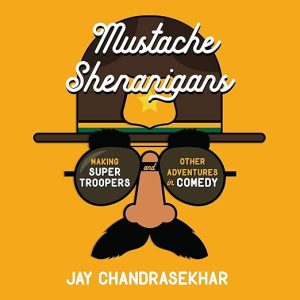
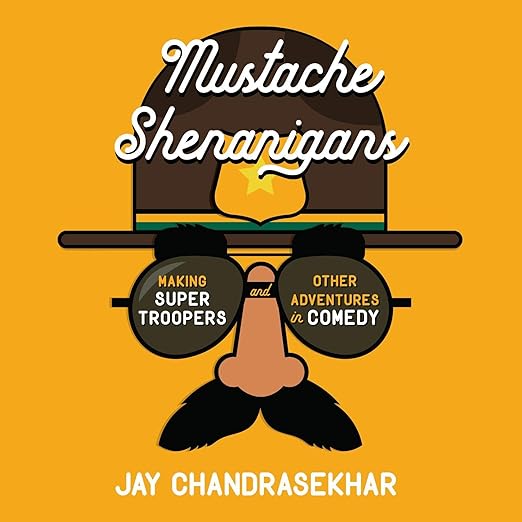
I listened to Mustache Shenanigans on a road trip, which felt appropriate given that the book is substantially about a group of friends driving their comedy into existence across two decades of rejection, modest success, and occasional triumph. Jay Chandrasekhar reads his own material with the ease of someone who has been performing versions of these stories at parties for years, and that ease is one of the audiobook's primary pleasures. By the time he gets to the maple syrup story, you have been with him long enough that it lands like a punchline from a trusted friend rather than a bit from a book you just picked up.
Chandrasekhar is the director, writer, and actor at the center of Broken Lizard, the comedy group responsible for Super Troopers, Beerfest, and Club Dread. He grew up Indian American in the suburbs of Chicago, took an outsider's path through the entertainment industry, and eventually produced one of the most-watched comedies of the early 2000s through a combination of genuine talent and aggressive creative self-determination. The book covers all of this, but it does something more interesting than simply retelling the Super Troopers origin story. It thinks seriously about what that path actually cost and required from the people who chose it.
First, the Big Picture
One of the things that distinguishes Mustache Shenanigans from comparable filmmaker memoirs is Chandrasekhar's honest engagement with race and identity. He grew up as one of very few South Asian kids in an environment that offered no template for what he wanted to be. He was not drawn to the traditional paths available to him, and the entertainment industry he wanted to enter had essentially no models that looked like him in the roles he was aiming for. He handled this by forming his own ensemble, writing his own material, and removing the structural need for someone else's permission to exist in the space he wanted to occupy.
Several reviewers note that the book contains insights about race, education, and the industry that go well beyond what they expected from a memoir about the Super Troopers guys. One described it as extremely well considered, well-paced, and thoughtful, with observations on life that genuinely surprised them. That response captures something real about the book's range. This is not a celebrity memoir that coasts on anecdotes. It uses the anecdotes to think about something larger.
The production history of Super Troopers is genuinely interesting to anyone curious about independent filmmaking economics and distribution realities. Chandrasekhar walks through the financing, the shooting, the distribution negotiation, and the slow build to cult status with enough detail that the story functions as a practical case study as well as a series of funny stories. The Burt Reynolds stories from the Club Dread period, mentioned in multiple reviews, are everything you would hope Burt Reynolds stories from any era would be. Reynolds as a character in someone else's memoir is rarely disappointing, and in Chandrasekhar's account he is particularly vivid.
One reviewer who attended the same college as Chandrasekhar noted that even knowing Jay personally, they learned things from the book about his Hollywood journey that had never circulated through other means. That speaks to how much of the professional detail and personal reflection is specific to the memoir rather than material already public through interviews or profiles.
What to Watch For in Mustache Shenanigans
Comedy memoirs are one of the few genres where self-narration is almost always the right choice, and Chandrasekhar confirms this case decisively. His timing is a professional comedian's timing, and the difference between his delivery of a punchline and what a professional audiobook narrator would produce is substantial and irreplaceable. He also knows which moments to let breathe and which to push, which comes from having performed versions of these stories in person for years across various contexts.
One reviewer described it as a total page turner, noting that they loved it and found the writing honest and funny. That response captures the specific combination that makes Mustache Shenanigans work: it is funny in the way a skilled performer is funny, but it also has the quality of genuine reflection that separates a good memoir from an extended comedy set.
The book's discussion of the Kickstarter campaign that funded Super Troopers 2 is one of the more interesting sections for anyone curious about how independent comedy navigates the current entertainment landscape. Chandrasekhar treats the campaign not just as a funding mechanism but as evidence of what the Broken Lizard audience actually wanted, and his analysis of that audience relationship is sharper than the anecdotal framing would suggest.
Is This One for You?
Essential for Broken Lizard fans who want the full story behind the films. Genuinely worthwhile for anyone interested in building a creative career outside the studio system. Available as a free audiobook through Audible membership. You do not need to be a Super Troopers devotee to enjoy the memoir, though you will likely want to revisit the film afterwards. Skip it if you require the depth and gravity of the great Hollywood memoirs. This is warmer and looser than that tradition, and intentionally so.
Frequently Asked Questions
How candid is Chandrasekhar about the difficulties of being Indian American in the entertainment industry?
More candid than the book's comedic framing might suggest. He addresses the absence of South Asian models in the roles he wanted and the strategic decisions he made in response. Reviewers consistently mention this as one of the book's unexpectedly substantive threads.
Is the audiobook substantially better for having Chandrasekhar narrate his own material?
Yes. His comedian's timing is the delivery mechanism for a significant portion of the humor. A professional narrator reading the same material would produce a noticeably different experience, particularly in the anecdote-driven sections where rhythm carries the punchline.
Does the book cover Chandrasekhar's TV directing work, or is it primarily about the Broken Lizard feature films?
The memoir focuses primarily on the formation of Broken Lizard and the Super Troopers production history. His TV directing work receives some attention but is not the primary focus. Super Troopers 2 is referenced as an upcoming project at the time of original publication.