Quick Take
- Narration: Peter Godwin reading his own memoir is the only version that makes sense, the wry, unsentimental intelligence he brings to his prose translates directly into his delivery, particularly in the war and post-independence journalism sections.
- Themes: White African identity, colonial decline, the cost of divided loyalties
- Mood: Intimate and clear-eyed, with an undercurrent of grief that never becomes self-pity
- Verdict: One of the finest memoirs of white African experience in the twentieth century, Godwin’s dual position as insider and outsider to the Rhodesian story gives the book a moral complexity that stays with you long after the final chapter.
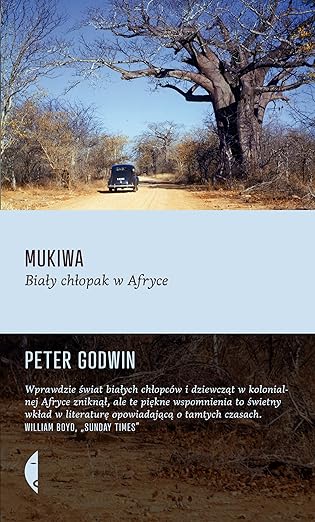
A note before anything else: the synopsis in the Audible listing for this edition of Mukiwa is in Polish, which suggests this is a Polish-market edition finding its way into English-language search results. The book itself, Godwin’s memoir of growing up white in Rhodesia and surviving its transformation into Zimbabwe, is written in English and narrated in English by Godwin himself. Everything that follows addresses the English-language audiobook.
I first encountered Mukiwa in a battered paperback that had passed through several pairs of hands before mine, its spine cracked at the chapter where Godwin describes his first encounter with a body on a bush war patrol. That image, the book itself passed around, annotated by strangers, felt appropriate for a memoir about a country and a history that was collectively processed by everyone who touched it. Coming back to it in audio, with Godwin’s own voice doing the narrating, was something different. It was sharper and, in some ways, more uncomfortable.
Growing Up Between Categories
Godwin was born in what was then Rhodesia in the late 1950s, the child of English parents who settled there during the postwar emigration wave. His childhood in the white middle class was insulated, comfortable, and, this is what Mukiwa keeps returning to, also genuinely African in ways that the political categories of the time refused to acknowledge. The Black servants and workers who surrounded his family’s household were not just backdrop; they were, in the way that children experience the world before ideology sets in, simply part of the texture of daily life. Godwin does not romanticize this. He is precise about the power dynamics, about what was taken for granted, about the things he understood only retroactively. But he also refuses to perform retrospective shame in ways that would falsify the actual experience of a six-year-old in 1964.
The memoir’s structure follows Godwin from that childhood through his mandatory service in the Rhodesian army during the bush war, a period that produced some of the book’s most psychologically complex material, and into his career as an investigative journalist exposing atrocities committed by the Zimbabwean security forces after independence. That final section is where the book becomes something beyond personal memoir. Godwin was documenting massacres perpetrated by the same government that had, in theory, liberated the country from white minority rule. The moral and political vertigo this produced, a white man documenting Black government atrocities in a newly independent African state, gives Mukiwa a particular kind of honesty that most memoirs about similar subjects can’t manage.
What Godwin’s Own Voice Adds to the Material
Self-narrated memoirs are a gamble. Writers do not always read well, and the particular skill of holding a listener’s attention over fourteen hours is not automatically present just because someone has the authority of lived experience. Godwin, however, is a genuinely accomplished reader. He has the journalist’s habit of clear enunciation and controlled pace, and more importantly he has the emotional intelligence to know which passages need space and which need to move. The war sequences benefit from his refusal to dramatize. He reads them with the same flattened affect that characterizes the writing, not because he is suppressing emotion but because that flatness is the point. That is what those events felt like from inside.
A Memoir That Functions as Foundation
Mukiwa sits as the first of three interconnected Godwin memoirs. When a Crocodile Eats the Sun covers his parents’ final years in Zimbabwe under Mugabe, and The Fear documents the 2008 violence. All three stand independently, but Mukiwa is where the emotional and biographical foundations are laid. Readers who enter the later books having heard this one will find them landing with considerably more weight. There are no reviews attached to this Audible edition, which may reflect the Polish-market metadata classification or simply an older listing without accumulated ratings. The print edition has a strong critical record.
Who Should Listen / Who Should Skip
Listeners with interest in Southern African history, colonial and post-colonial memoir, or the specific experience of white Africans navigating independence-era politics will find Mukiwa essential. Listeners who need a straightforward narrative arc or who find moral ambiguity in political memoir frustrating should know this book deliberately resists simple judgments about everyone involved, including, and especially, its narrator.
Frequently Asked Questions
Why does the Audible listing show a Polish synopsis for an English-language audiobook?
This appears to be a metadata anomaly, likely a Polish-market edition that has been indexed alongside the English-language listing, or a data error that pulled the wrong edition’s synopsis. The audiobook itself is narrated in English by Peter Godwin and is the standard version of his memoir.
Does Mukiwa cover the Zimbabwean independence period, or does it focus primarily on the Rhodesian bush war?
It covers both, plus Godwin’s childhood before the war. The memoir runs from the mid-1960s through the bush war of the 1970s and into his investigative journalism documenting atrocities by Mugabe’s Fifth Brigade in Matabeleland in the early 1980s. The post-independence section is shorter but arguably the most morally urgent part of the book.
Should listeners read or hear Mukiwa before the other Godwin memoirs?
Yes, Mukiwa is chronologically first and provides the biographical and emotional foundation for When a Crocodile Eats the Sun and The Fear. All three can stand alone, but the sequence deepens rather than confuses. Start here.
How does Godwin handle his own participation in the Rhodesian military system he is also implicitly critiquing?
With unusual directness. He does not absolve himself by claiming ignorance or youth, nor does he perform excessive guilt. He describes what he did and what he understood at the time, and he lets the listener sit with the discomfort. This is one of the qualities that distinguishes Mukiwa from more defensive or more self-flagellating memoirs on similar subjects.