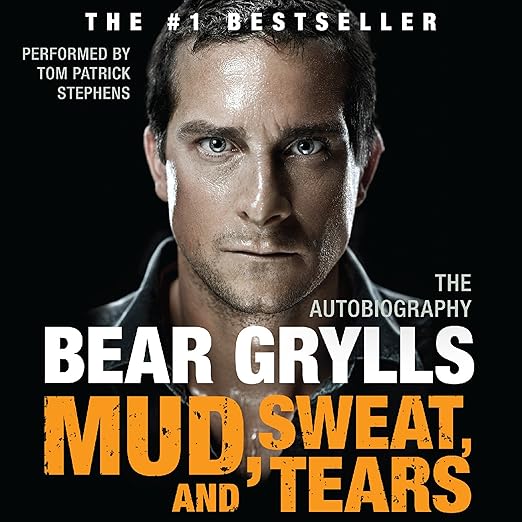
I was cynical going into Mud, Sweat, and Tears. The Bear Grylls television brand is so thoroughly constructed, so specifically designed around a certain kind of macho competence, that I expected the autobiography to be an extension of that brand rather than a departure from it. I was wrong, and a reviewer's observation that the TV persona is not the same guy Grylls sees in the mirror turned out to be one of the more accurate things written about this book. Grylls says this himself. The autobiography is a genuine attempt to explain the interior landscape that produced the exterior performance.
The book covers what you would expect: his childhood, his SAS training, his back injury during a military freefall accident that put him in rehabilitation for a year, and then his ascent of Everest at twenty-three. But the texture around those events is less expected. Grylls writes about faith consistently and without embarrassment, about his father and their relationship, about what it actually felt like to fail SAS selection initially and have to try again. The survival show is mentioned only glancingly. This is not Man vs. Wild in print form.
A Closer Look at Mud, Sweat, and Tears
The SAS training sections are the heart of the book and they are extraordinary. Grylls describes the selection process with a specificity that makes the reader understand not just what it demands physically but what it is designed to break psychologically, and what it selects for when it does not break a candidate. The back injury chapter, which covers the accident and the slow rehabilitation and the decision to attempt Everest anyway, is the book's emotional peak. The Everest climb itself is detailed and vivid, but it is the recovery narrative that makes the climb feel earned rather than inevitable. One reviewer who bought the book for a graduating teenager understood something about the book's appeal: this is fundamentally a story about refusing to accept limitation, and that argument is made with enough personal detail to carry actual weight.
What Bear Grylls Gets Right
Tom Patrick Stephens's narration is well matched to the material. The book has a confessional quality in its quieter moments, a willingness to admit doubt and difficulty that would be undermined by a narrator performing invulnerability, and Stephens resists that temptation. The nine-hour runtime covers a lot of ground without feeling rushed. Multiple reviewers noted that the book surprised them with its honesty; the Washington Post's description of Grylls as one tough, crazy dude turns out to be only half the story, and the half the book is most interested in is the other one. The philosophy Grylls articulates, chase the goal not the money, say yes when others say why, be the most enthusiastic person you know, reads as sincere rather than aphoristic because it is grounded in specific choices he made at specific costs.
Where Bear Grylls Loses Some Ground
Grylls's Christian faith is a consistent presence in the book, and the final chapters become explicitly devotional in their framing. One reviewer titled their response About the God angle, which signals that the faith content is significant enough to register and worth knowing about before listening. It is not proselytizing, but it is present and genuine, and listeners who find that register alienating should know what they are arriving for. The Man vs. Wild adventures receive minimal coverage; this is explicitly not that book. And a reviewer's note about the hotel controversy, which Grylls addresses obliquely, is the kind of media story that the book neither fully owns nor fully dismisses.
Who Should Pick Up Mud, Sweat, and Tears
Ideal for listeners interested in adventure memoir with a genuine interiority, particularly those drawn to military selection narratives or mountaineering accounts. Fans of David Goggins's Can't Hurt Me or Ranulph Fiennes's Mad, Bad and Dangerous to Know will recognize the territory. The faith dimension makes it particularly resonant for listeners who share that framework, but the core adventure and resilience narrative functions independently of it. Not the right choice for listeners who want extensive Man vs. Wild content or a detailed account of the survival show's production.
The Short Version
- Voice: Tom Patrick Stephens brings a measured energy to Bear Grylls's autobiography that complements rather than competes with the source material's natural momentum.
- Big ideas: Military resilience and SAS training, Everest and the nature of personal limits, faith and identity outside the television persona
- Atmosphere: Energetic and surprisingly introspective, more personal than the Man vs. Wild format would suggest
- Worth it?: A genuinely revealing autobiography that goes well beyond the survival-show persona to find the person underneath.