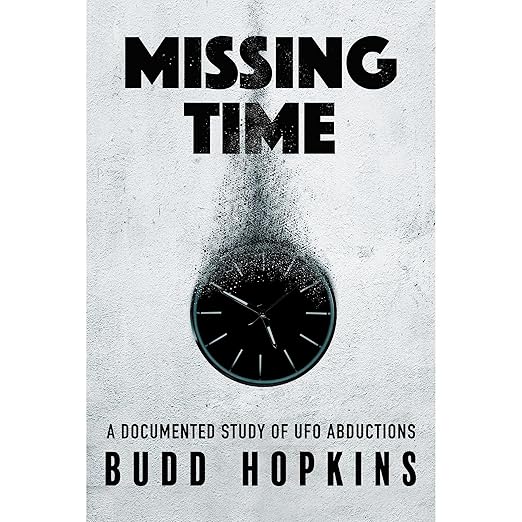
Quick Take
- Narration: Virtual Voice narration throughout. The 9-hour runtime is serviceable for a documentary study format, but lacks the interpretive presence a human narrator would bring to emotionally charged case material.
- Themes: alien abduction case studies, recovered memory and hypnosis, the psychology of anomalous experience
- Mood: Methodical and unsettling, with the weight of careful documentation pressing against deeply strange content
- Verdict: A foundational document of UFO abduction research that defined the field, essential for serious readers of the paranormal, even if the AI narration is a significant compromise for a work this intimate.
I came to Budd Hopkins’ Missing Time having read a fair amount of the contemporary UFO literature that references it, books that treat the Greys, hypnotic regression, and the abduction phenomenon as established conversation rather than emerging shock. What you realize reading the original is how much of that vocabulary Hopkins himself introduced. Published in 1981, Missing Time did not just document a phenomenon; it named the framework through which the phenomenon would be understood for the next four decades. The phrase has become synonymous with a particular and troubling kind of encounter. The grey-skinned entities with hypnotic black eyes that now dominate popular imagination of what an alien looks like, Hopkins was among the first researchers to document these descriptions systematically and compare them across witnesses who had never met.
This is not the book you pick up for a breezy listen. It is a comparative study of individuals from different backgrounds, geographies, and life circumstances who share, under hypnotic regression, strikingly similar accounts of encounters they cannot consciously remember. Hopkins approaches his subjects with a researcher’s seriousness, not a sensationalist’s appetite, and that restraint is what makes the book lasting rather than merely notorious.
Our Take on Missing Time
What Hopkins achieves here is a methodological contribution as much as a documentary one. He was working in a period when hypnotic regression had credibility in clinical and forensic contexts. One reviewer notes that crimes were being solved using hypnosis, with a kidnapping case as an example, and he applied that methodology to a class of experience that the psychiatric establishment had no framework for. Whether you accept his conclusions or not, the process he describes, gathering case histories, conducting regressions, comparing accounts for convergence, is serious investigative work, not tabloid sensationalism.
The individuals at the center of the book come to life with considerable vividness. Reviewers consistently describe the subjects as feeling real, their fears palpable, their experiences rendered with a specificity that makes the book difficult to dismiss as confabulation even when you would like to. Hopkins was an artist before he was an abduction researcher, and that background surfaces in his capacity to observe and render human detail with care.
Why Listen to Missing Time
The case for reading Missing Time in 2025 is primarily historical and scholarly: you are encountering the foundational text of a field of inquiry, complete with the assumptions, methodological choices, and cultural context of its moment. The book makes no claim to deliver final answers. One reviewer appreciated this quality specifically, noting that Hopkins moves the study forward without claiming to resolve it. For listeners interested in the sociology of belief, the history of anomalous experience research, or the cultural construction of what an alien looks like, this is primary source material.
The Virtual Voice narration is the most significant caveat for the audio format. AI narration handles expository prose adequately, but this book contains testimony that is emotionally charged: people recounting disturbing, disorienting experiences under hypnosis. The absence of a human narrator who can modulate tone appropriately flattens what should be affecting material. The book is still worth listening to in this format, but readers who have the option to read the print edition may prefer it for the more intimate case study sections.
What to Watch For in Missing Time
Hopkins’ use of hypnotic regression as a primary evidence tool is the book’s methodological pressure point. The scientific consensus on recovered memory has shifted considerably since 1981, and the reliability of hypnotically retrieved memories is now disputed in ways Hopkins could not have anticipated. A careful listener will engage with the case histories while holding that methodological question open. The book is most useful as a document of what witnesses believed they experienced and how Hopkins interpreted those experiences, not as straightforward forensic evidence of extraterrestrial contact.
The book also predates the more adversarial cultural conversation about abduction accounts that emerged in the 1990s. Hopkins’ tone here is exploratory rather than defensive, which gives the work a different quality than later abduction literature that had to contend with a skeptical mainstream.
Who Should Listen to Missing Time
For serious readers of UFO and paranormal research, this is required reading: a foundational text that earns its place in any thorough library on the subject. It is also valuable for anyone interested in the intersection of psychology, memory, and anomalous experience. Casual listeners looking for an entertaining paranormal story may find the documentary density demanding. Those uncomfortable with the methodological uncertainties of hypnotic regression should approach with that awareness. The Virtual Voice narration makes it a less immersive experience than it could be, but the content carries sufficient weight to justify the format’s limitations.
Frequently Asked Questions
Is this the original 1981 Budd Hopkins book, or an updated edition?
The content is Hopkins’ original 1981 work, republished as an audiobook in January 2026 by August Night Press. It has not been revised or updated and reflects Hopkins’ research and conclusions as of the original publication.
Is the narrator a human performer or AI-generated?
The narrator is listed as Virtual Voice, which means AI-generated narration. This is worth knowing before purchase, particularly for a book with emotionally charged case study material where a human narrator would add significant interpretive value.
Does the book argue definitively that alien abductions are real?
Hopkins presents the case histories and argues for their seriousness as a documented phenomenon, but he does not claim to provide definitive proof of extraterrestrial contact. The book is framed as a comparative study that moves the field of inquiry forward rather than resolving it.
How does Missing Time relate to the popular cultural image of the Greys?
Hopkins’ documentation of witness accounts in this book, the grey-skinned, large-eyed entities described under hypnosis, is widely credited with establishing that image as the dominant cultural representation of an alien lifeform. The book is a direct source of what many people now picture when they imagine an alien encounter.