Wong's Balance Between Skepticism and Reverent Inquiry
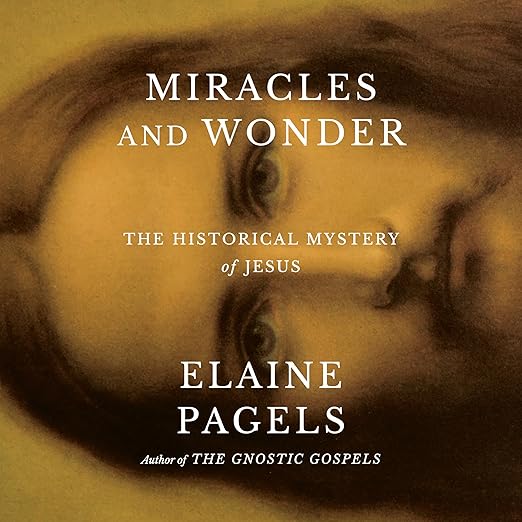
Elaine Pagels writes history the way a great trial lawyer builds a case, and this audiobook of Miracles and Wonder is the clearest demonstration of that method in a career full of them. Rather than starting from faith or from skepticism, Pagels starts from a genuinely strange historical fact: an obscure, poor young Jewish man from an occupied backwater of the Roman Empire somehow became the center of the largest religion in human history, and she spends eight hours and fifty-four minutes reconstructing how that happened using the gospels themselves as historical evidence rather than devotional text.
Eunice Wong narrates with the scholarly composure the material demands, managing the tension between critical analysis and something closer to reverent inquiry without collapsing into either pure skepticism or devotional warmth. That balance matters enormously for this specific book: Pagels is not debunking Jesus, and she is not defending him either. She is asking why the stories about him assumed the specific shape they did, and Wong's measured, unhurried delivery gives that method room to build its case point by point rather than rushing toward a conclusion the material does not actually offer.
Calling a serious work of religious history a mystery is a genuine structural choice, not just marketing language, and it is one more popular historians have leaned into successfully as true-crime-style narrative nonfiction has grown into its own crowded category. Pagels earns the comparison instead of just borrowing its momentum: every chapter poses a real question with real historical consequence, then follows the evidence to an answer that is argued, not assumed, which is precisely what separates serious historical mystery from the looser genre now filling bestseller lists.
Pagels Calls Them Necessary Fabrications
The book's structure is its best trick. Each chapter opens with a pointed question: why is Jesus said to have a virgin birth, why do his followers claim he rose from the dead, and works backward through the gospel texts and their historical context to show how the earliest Christian communities arrived at their answers under real pressure, persecution, a failed rebellion against Rome, and a leader who died the death of a common criminal rather than a triumphant messiah. Pagels calls many of the story's most compelling details necessary fabrications, explanations invented to paper over facts that threatened to end the movement before it started, and following her reasoning chapter by chapter recreates the feeling of watching a scholar think in real time.
This is the culmination of a career that started with The Gnostic Gospels, Pagels's National Book Award winner from 1979, and listeners familiar with that earlier work will recognize the same instinct here: take marginalized or uncomfortable historical evidence seriously instead of explaining it away. Jon Meacham calls this book 'brilliant and necessary,' and Tara Westover's blurb, that it speaks to believers and non-believers alike, is doing real work. You do not need any particular faith position to follow Pagels's argument, only patience for a scholar who treats two-thousand-year-old questions as genuinely open.
The synopsis itself frames the story as thrilling and tense, and that framing earns its place: this is not just Jesus's story but his followers' story too, a small group of hunted, grieving people improvising a new movement while genuinely afraid for their lives. Pagels gives that desperation real weight, and The New York Times Book Review's assessment, that the depth of spirituality she uncovers here is profound, points at exactly this: the book finds its emotional register not in miracle claims themselves but in what desperate people do with loss and fear when the alternative is giving up entirely.
Pagels brings a specific, hard-won personal stake to this material that her earlier academic work did not always foreground. She has written elsewhere, in her 2018 memoir Why Religion?, about losing both her young son and her husband within roughly a year of each other, and that experience with grief and the search for meaning afterward is not incidental to how she reads early Christian communities processing loss and persecution in Miracles and Wonder. It does not turn the book sentimental, Pagels remains a careful historian throughout, but it explains the empathy underneath the rigor.
The title's two nouns do specific work: miracles are the historical claims Pagels investigates skeptically, virgin birth, resurrection, healing, while wonder is closer to her own stance toward the material, genuine amazement that any of this took hold at all, regardless of whether a given miracle claim survives historical scrutiny. That distinction matters for how to approach the book: Pagels is not asking listeners to believe the miracles, she is asking them to sit with the wonder of how belief itself, however it formed, changed the course of human history.
One Reviewer Admits Losing Interest Later On
One reviewer, otherwise positive about the historical detail on the gospels and their evolution, admits losing interest toward the later chapters, and that is a fair warning for anyone expecting the same momentum from start to finish. Pagels writes with clarity, but this is still a work of serious historical argument built from close textual comparison across four different gospel accounts, not a plot-driven narrative, and the density is real even when the prose itself stays accessible.
Be honest with yourself about where you stand before starting, too. Pagels writes for readers open to treating the gospels as historical documents shaped by human authors under specific pressures, not as inerrant transcripts, and a listener who wants their existing faith framework affirmed rather than examined may find her method more unsettling than illuminating. That is not a criticism of the book so much as a fit question worth answering honestly before committing eight-plus hours to it.
Neither Faith-Affirming nor a Secular Takedown
This rewards listeners genuinely curious about how a poor, executed provincial preacher became the center of Western religious history, whether they arrive as believers, skeptics, or somewhere unresolved in between. Fans of Bart Ehrman's or Reza Aslan's historical-Jesus scholarship will find a kindred, if more literary, sensibility here, and anyone who read The Gnostic Gospels decades ago will want to hear where Pagels has taken her thinking since.
Skip this one if you want either a straightforward faith-affirming account of Jesus's life or a purely secular takedown, since Pagels offers neither. Listeners who need a fast-moving narrative arc rather than a patiently built historical argument may also find the back half slower going, exactly as the reviewer above described, though the payoff for sticking with it is a genuinely rare kind of intellectual honesty.
Quick Take
- Voice: Eunice Wong brings scholarly composure and genuine warmth to Pagels's historical argument, never tipping into either pure skepticism or devotional reverence.
- Big ideas: Historical Jesus scholarship, gospel formation, early Christian persecution
- Atmosphere: Rigorous, patient, and quietly compelling in its argument-building
- Worth it?: A strong pick for anyone curious how a poor executed preacher became history's most consequential religious figure, believer or not.
Do I need a religious or scholarly background to follow this audiobook?
No specific background is required. Pagels writes for a general audience and explains her historical method clearly as she goes, though the material does reward patience with close textual argument across multiple gospel accounts.
Is this audiobook a work of faith or historical criticism?
It is historical criticism, treating the gospels as documents shaped by their authors' specific historical pressures rather than as inerrant devotional text, while still respecting the material's spiritual weight for believers and non-believers alike.
Does the audiobook stay engaging for its full eight-hour-plus runtime?
Most of it does, though one reviewer admits losing interest during later chapters. The earlier material investigating specific gospel claims tends to carry the strongest momentum.