- Voice: Jason Leikam delivers a clean, business-appropriate performance that keeps the material moving without overwhelming Alan Weiss's direct, sometimes combative voice.
- Big ideas: Fee strategy for professional speakers, market positioning, platform skill development
- Atmosphere: Direct, unsentimental, and practically motivated
- Worth it?: Alan Weiss writes for people who want to build a real business around speaking, not people who want to feel inspired about the idea of it.
Weiss Reauthored Money Talks Into This Manual
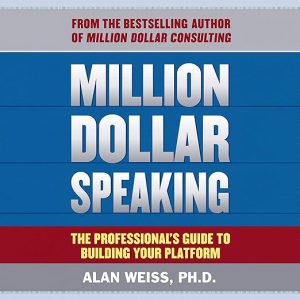
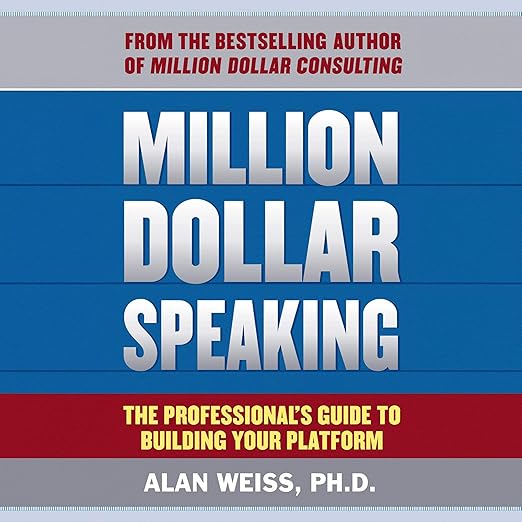
Alan Weiss makes no effort to be everyone's favorite author, and Million Dollar Speaking, available as an audiobook narrated by Jason Leikam, is a good illustration of why that posture works in his favor. The book is blunt about what professional speaking actually requires, specific about the mechanics of building a fee-generating career, and unapologetic about the fact that most people who dream of speaking professionally have not yet developed the platform skills or business acumen the market demands. That directness is either exactly what you need or exactly what will put you off, and Weiss appears unbothered by which camp you fall into.
Weiss is a Professional Speaking Hall of Fame member and the author of more than sixty books, including the widely used Million Dollar Consulting series. Million Dollar Speaking began as a reauthoring of his earlier book Money Talks, and it retains the structure of a practitioner's manual rather than an inspirational text. The audiobook runs eight hours and forty-nine minutes, which is long enough to be genuinely comprehensive and short enough to avoid the padding that afflicts many business books in this space.
Leikam Doesn't Impose Personality on Weiss's Voice
The audiobook covers a specific and often underserved range of concerns: how to deal with difficult crowds, how to set fees that reflect actual value rather than what you think the market will bear, how to target high-potential markets rather than low-competition ones, and how to diversify revenue beyond the platform itself into products, workshops, consulting, and licensing. Reviewer Rob Eagar documented a concrete outcome: after following Weiss's framework, he increased his speaking fees by more than thirty percent. That kind of testimony is worth more than a hundred positive adjectives.
What distinguishes Weiss's approach from generic speaker-training content is his insistence on the business architecture beneath the performance. Most speaking instruction focuses on delivery: how to open, how to structure, how to command a room. Weiss covers delivery, but he treats it as table stakes rather than the destination. The real subject of Million Dollar Speaking is how to build the infrastructure that gets you onto the right stages, at the right fee, in front of the right buyers, repeatedly. That framing is more useful to someone building a career than to someone preparing for a single keynote.
Jason Leikam's narration is a competent match for the material. He does not impose personality onto Weiss's voice, which is the right call. Weiss's prose is already confident and authoritative, and a narrator who tried to amplify that tone would likely tip into parody. Leikam reads clearly, paces well through the checklist-heavy sections that could easily become monotonous, and maintains consistent energy across the full runtime. This is not a narration that earns independent praise, but it does not get in the way of a book that earns its reputation on content.
Checklists Translate Imperfectly From Page to Ear
The book's tone can feel like a sustained provocation. Weiss does not write in the reassuring voice of someone who wants you to believe you are already on the right path. He writes as someone who has watched hundreds of talented speakers fail to build sustainable careers because they underpriced themselves, chose the wrong markets, or confused activity with results. If you are looking for affirmation, this audiobook will disappoint you. If you are looking for an honest diagnosis of why your speaking business is not growing the way you expected, it is considerably more useful.
Reviewer NewFrontier notes that reading Million Dollar Speaking before Weiss's consulting books would have made those later books easier to understand, because this one establishes the logic of his overall framework for independent professional practice. That is worth knowing if you are new to Weiss's catalog. The book works as a standalone, but it also functions as an entry point to a larger body of work that covers consulting, coaching, and thought leadership from the same philosophical base.
The checklists and resource sections embedded throughout the audiobook translate imperfectly to audio. There are passages where Weiss runs through bulleted frameworks that are easier to absorb in print than when heard. If you have access to both formats, reading the checklist sections while listening to the narrative sections is a reasonable hybrid approach. The audiobook is not diminished by this limitation, but it is worth noting for listeners who prefer linear audio consumption without supplementary materials.
Fees That Follow Value, Never Manipulation
This audiobook is for trainers, consultants, coaches, and subject-matter experts who already speak professionally or are building toward it. Weiss assumes you have domain expertise and that you need help converting that expertise into a scalable, high-fee speaking practice. He is not writing for beginners wondering if public speaking might be for them. If you are at that earlier stage, this book will still contain useful material, but it will feel like getting advice about which car to buy before you have learned to drive. Come to this audiobook when you are ready to treat speaking as a business rather than a talent. Reviewer Peter McLean, who found the book a revelation on first reading, noted that Weiss's work is logical, informative, and ethical at all times, and that ethical dimension is worth flagging: unlike some business speakers whose advice operates in a gray zone of manipulation tactics, Weiss's framework is built on the premise that high fees follow genuine value, not performance. That alignment makes the audiobook genuinely sustainable as a guide rather than a one-time motivational spike.
Frequently Asked Questions
Does the audiobook cover how to find paid speaking gigs, or only how to perform once you have them?
Both, but with more emphasis on building the business infrastructure that generates consistent bookings than on the performance craft itself. Weiss covers targeting high-potential markets, building a reputation, and setting fees that attract the right buyers rather than the most buyers.
How does this audiobook compare to other professional speaking guides?
Weiss operates at a more commercially rigorous level than most speaking-improvement books, which tend to focus on presentation delivery. His distinctive emphasis is on the business model beneath the performance, including diversification strategies that extend beyond keynotes into consulting, workshops, and products.
Are the checklists and resource sections in this audiobook easy to follow in audio format?
Not entirely. The checklist-heavy sections are better absorbed in print, and listeners who want to track their progress against Weiss's frameworks may want to pair the audiobook with a print or ebook copy. The narrative and strategic sections translate to audio well; the bulleted resource sections less so.