Quick Take
- Big ideas: Small-scale outdoor adventure, finding genuine challenge within reach of ordinary life, the psychology of restlessness and how to address it
- Atmosphere: Infectious and practical, with Humphreys' genuine enthusiasm making the modest scale of each adventure feel more exciting than its components suggest
- Worth it?: This audiobook works on listeners who have been telling themselves they need more time or money before doing something adventurous, and it dismantles that logic with cheerful persistence.
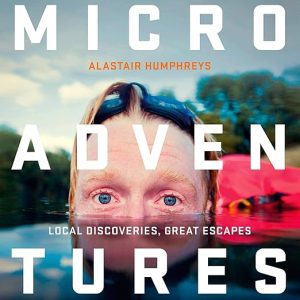
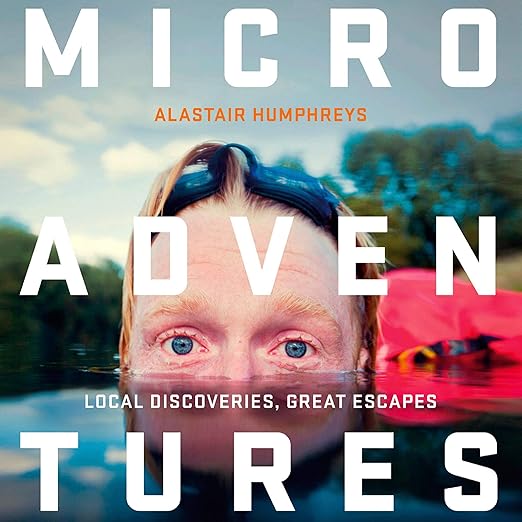
Alastair Humphreys coined the term microadventure after completing some of the most logistically demanding expeditions in contemporary adventure travel: rowing the Atlantic, cycling around the world, walking the length of India. The audiobook version of Microadventures arrives with the authority of someone who has done the large-scale things and concluded that the small things are just as important and far more accessible. Shortlisted for the British Book Awards and described by Geographical magazine as "enthusiastic, pleasingly madcap," this is an eight-hour practical guide and manifesto for adding adventure to ordinary life without waiting for the right conditions to materialize. The narrator for this listing is not credited anywhere on the product page, which is worth confirming through the retailer's sample before purchasing.
The Verdict, Briefly
Humphreys' core argument is simple and has proven remarkably durable: you do not need to cross a continent or take a month off work to have a genuine adventure. You need to sleep on a hilltop within commuting distance of your house, or swim in a river you have driven past for years, or cycle to work by the longest possible route. The microadventure is defined not by its scale but by the quality of attention it demands. You have to plan it, prepare for it, execute it while uncomfortable, and return changed, even if the change is only the fresh way the familiar looks after a night spent outside it.
The book is specifically rooted in Great Britain, and readers in southeast England or Scotland will recognize the hills and coastlines Humphreys references. One reviewer who had lived in that landscape noted both how accurately the book captured its possibilities and how the central philosophy translates globally. The ideas Humphreys includes as illustrations - sleeping on a hilltop, taking a river journey, walking home for Christmas - are demonstrating a method of seeing, not providing a fixed itinerary. That distinction is what prevents the book from becoming a lifestyle brand exercise. Humphreys is asking readers to apply his attention to their own geography, not to replicate his specific adventures.
What the listener reviews consistently identify is that the book gave them permission to act on something they had already been half-thinking about. One listener describes moving toward a solo kayak camping trip that had been intimidating them. Another found the concept arrived exactly when they were considering small outdoor expeditions on their own. A third came to the book through a podcast interview with Humphreys and found the fuller argument in print form clarified and extended what the interview had sketched. Humphreys' skill as a writer, not just as an adventurer, is in making the case for the microadventure feel urgent and personal rather than like a magazine feature recommendation.
The Best Parts of Microadventures
The audiobook format suits the material well for a specific reason: this is a book you might listen to while already doing something active, and a pleasingly recursive quality emerges in the act of processing an argument for getting outside while you are, yourself, outside. The practical sections on kit, safety, and specific adventure ideas are the kind of content listeners absorb well during a walk or commute, and Humphreys writes those sections efficiently enough that they do not drag. He knows his readers have come for the philosophy as much as the logistics, and he does not let the gear lists linger longer than necessary before returning to the ideas.
The book also benefits from Humphreys' honesty about the discomfort involved in microadventures. He does not sell them as uniformly pleasant. Sleeping on a cold hilltop in November is not comfortable. Swimming in a river is frequently colder than expected. The point is not the comfort but what paying attention to difficulty does to your relationship with the familiar world. That honesty is what keeps the book from tipping into lifestyle aspiration, and it is what makes it useful to a reader who is genuinely uncertain whether adventure is something they are capable of.
What Gives Us Pause
The book is genuinely British in its geography and cultural framing. References to specific rivers, hill ranges, and long-distance footpaths assume a familiarity with the English and Scottish landscape that international listeners will not have. This is a calibration issue rather than a flaw: the spirit of the book is universal, but the specific examples need translation. American, Australian, or continental European listeners will find the framework applies but will need to substitute their own local hills and rivers for Humphreys' specific suggestions. The book provides the method; the application is the listener's work.
A few sections lean more practical than lyrical, particularly the kit and safety chapters. These are useful, but listeners drawn to the book for its philosophical core about adventure, risk, and presence may find the gear lists slightly prosaic. They are mercifully brief, and Humphreys knows to move through the logistics quickly and return to the argument. The balance between practical guidance and conceptual framing holds across the full eight hours.
Who Should Pick Up Microadventures
Anyone who has been postponing a trip, a walk, or an outdoor experience because the conditions are not quite right will find this audiobook does immediate work on that habit of deferral. Outdoor enthusiasts who already live adventurously might find the premise familiar, though Humphreys' specific framing of adventure as an attitude rather than a destination is worth hearing regardless of prior experience. Parents looking for a framework to engage their children with the outdoors on small daily scales will find practical and inspiring material throughout. Listeners who are not especially outdoors-oriented but are curious about why some people find enormous satisfaction in uncomfortable small experiences will find Humphreys a patient and generous explainer who never condescends to the uninitiated.
Frequently Asked Questions
Who narrates the Microadventures audiobook?
No narrator is named on this listing as of this review. Alastair Humphreys is a public speaker and podcaster with a well-developed audio presence, so it is worth checking the retailer's sample before purchasing to confirm whether he reads it himself or a professional narrator handles the recording.
Is this audiobook useful for people who live in cities with limited outdoor access?
Yes, and Humphreys explicitly addresses urban listeners. Much of the book's argument is that adventure is available within reach of most people, including those in cities. His examples include sleeping out in local parks, finding wild swimming spots near urban areas, and treating ordinary routes as adventure territory.
Does this audiobook provide specific trip itineraries or is it primarily conceptual?
Both. The book offers concrete examples and practical advice on kit and safety alongside its philosophical argument for small-scale adventure. The specific geographic examples are drawn from Great Britain, so international listeners will need to adapt them, but the structure of each type of microadventure is detailed enough to apply anywhere.