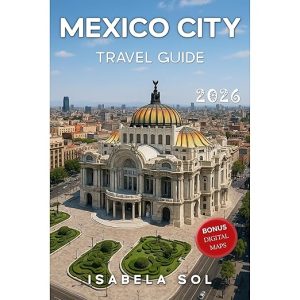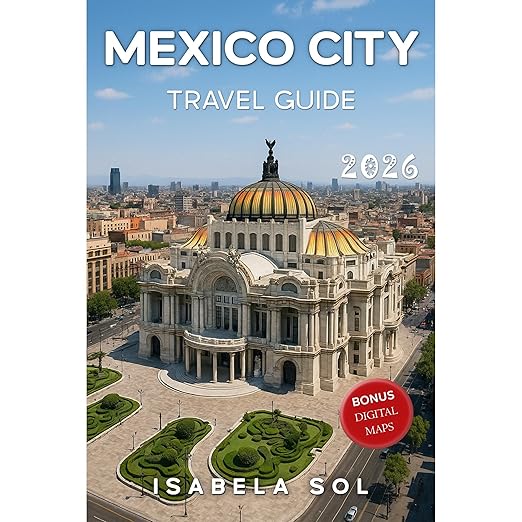
Street tacos, family-run kitchens, and neighborhood bakeries anchor the food chapter of this audiobook, and that kind of specificity runs through Isabela Sol's 2026 update to her Mexico City guide. The premise is a companion that sounds like a well-traveled friend rather than a stack of forum posts, covering everything from which streets feel different after dark to where a modest budget still buys a full afternoon at a museum or a market stall. Mexico City's tourist scene shifts fast enough that an annual refresh actually matters, and this edition folds in revised hotel picks and clearer descriptions of major cultural stops based on direct traveler feedback, plus a downloadable color PDF and digital map access for anyone who wants a visual layer alongside the narration.
The synopsis leans into promises of simple, jargon-free explanations rather than dense travel writing, and the six core sections back that up structurally, planning, food, safety, budget, exploring like a local, and nightlife, each treated as its own self-contained answer to a specific traveler question rather than folded into one long narrative chapter.
The Verdict, Briefly
Isabela Sol organizes the material the way an experienced local answers a barrage of first-timer questions: safety by time of day, budget without stinginess, and neighborhoods worth wandering beyond the postcard sites. Six clearly defined sections cover planning, food, safety, budget, local exploration, and nightlife, and underneath the breezy bilingual sign-off sits a genuinely practical structure aimed at solo travelers, couples, friend groups, and families alike. Reviewer Tica-Soul calls it comprehensive, noting it hits documentation, safety, transportation, and neighborhood specifics in one pass, which matches what the guide promises rather than overselling it.
Sarah Amos, who spent two months actually living in the city, gives the review that matters most for a travel guide: she calls it succinct and says it was light enough to carry daily in a daypack and pull out on the fly. That is the real test for this kind of content, not whether it reads well on a couch beforehand but whether it holds up against two months of actual foot traffic, and by her account it did. Charlie Dogo's review cuts the other way, a reminder that a single afternoon in a city this size barely scratches the surface, which if anything argues for a guide this granular rather than against it.
Tica-Soul's review specifically praises the coverage of documentation requirements alongside safety and transportation, a detail easy to overlook in a guide this focused on food and neighborhoods but genuinely useful for anyone who hasn't traveled internationally in a while and wants a refresher on what paperwork actually matters before departure.
Why Listen to Mexico City Travel Guide 2026
The format suits a guide built around choices rather than raw facts, the kind of decisions useful during a walk or while planning the next day over breakfast. A section like Explore Like a Local points toward peaceful plazas and creative corners that a hurried scroll through a blog post would never surface, and hearing two or three specific names described aloud makes them easier to remember once you're actually standing on the street looking for them. The safety guidance benefits especially from being heard rather than skimmed, since knowing which blocks feel different after dark is worth absorbing slowly rather than glancing past on a screen.
The bonus material adds real value beyond the narration itself: the downloadable PDF and digital map mean the audio doesn't have to carry every visual detail alone, freeing the narration to focus on judgment calls, where to eat, when to head out, what's worth a detour, while the map handles logistics. The nightlife chapter follows the same pattern, naming the areas that feel safest and most enjoyable after dark rather than just listing bar addresses. For a visitor deciding between neighborhoods at eleven at night with a phone running low on battery, that division of labor matters more than a guide trying to be everything at once.
Budget guidance gets equal billing with splurge-worthy recommendations rather than being treated as an afterthought category; museums, parks, markets, and cafés all get folded into the same budget-friendly framing, which matters for a guide trying to serve travelers across a real range of spending comfort rather than assuming everyone wants the same kind of trip.
Points to Consider
The synopsis promises "a guide that feels like your cool friend who actually knows the place", and that is precisely the register AI narration struggles to deliver. Virtual Voice reads competently through logistics, hours, and neighborhood names, but the breezy, joke-cracking tone the marketing leans on so heavily loses its warmth in synthetic delivery. Listeners expecting real personality behind the recommendations may find the narration closer to a well-organized checklist than an actual friend's voice, especially in sections written with heavy second-person enthusiasm.
None of the three attached reviews address narration quality specifically, which is worth stating plainly rather than glossing over. They speak to the guide's usefulness on the ground, Sarah Amos's daypack test and Tica-Soul's completeness, but not to how it sounds read aloud, so this assessment leans on format pattern more than direct listener testimony. Anyone sensitive to flat delivery on personality-driven content should sample a chapter before committing to the full eight-plus hours.
The synopsis itself leans hard into exclamation-point marketing copy, closing with a direct call to "Ready to Make Memories?" before signing off with a bilingual send-off trading planning stress for adventure, and that same enthusiastic tone carries into the narration; listeners who prefer a more understated, just-the-facts delivery style should know upfront that this guide leans toward upbeat encouragement rather than dry reference-book neutrality.
Who Should Listen to Mexico City Travel Guide 2026
First-time visitors mapping out a week or two, rather than a long weekend, get the most from the structure here, since it rewards someone with enough time to actually use the neighborhood-by-neighborhood breakdown instead of hitting the three obvious landmarks and calling it done. Budget-conscious travelers weighing a museum against a market against a street food crawl will appreciate that the guide treats all three as legitimate ways to spend an afternoon rather than ranking one above the others, and families traveling with kids get the same practical safety framing as solo travelers rather than an afterthought chapter.
A friend's voice is exactly what the marketing promises and exactly what synthetic narration cannot fully deliver, so anyone who specifically wants personality and warmth from their travel audio, rather than efficient information delivery, may prefer reading the companion PDF over pressing play. Travelers who already know the city well will find less new ground here than a first-timer would; this guide is built for someone still deciding which neighborhood to book first, not for a reader chasing hidden gems past the beginner stage.
- Read by: AI-generated Virtual Voice delivery handles logistics and neighborhood names cleanly but flattens the guide's promised cool-friend warmth.
- At its heart: City trip planning, food and safety guidance, budget-conscious exploration
- Vibe: Practical and upbeat
- Short version: A genuinely useful 2026 planning tool that works better as a reference companion than as a personality-driven listen.