The Short Version
- Performance: Francisco Salas brings authentic regional credibility, essential for a guide specifically teaching Mexican Spanish pronunciation and slang.
- What it covers: Language acquisition, cultural immersion, regional specificity
- Feel: Warm and practical, structured like a guided vacation
- Our call: Strong regional focus makes this valuable for Mexico-bound travelers with some prior Spanish; less suited to absolute beginners.
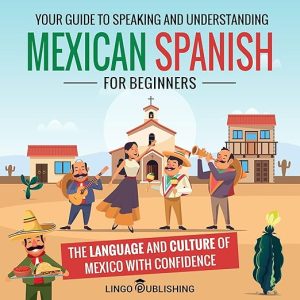
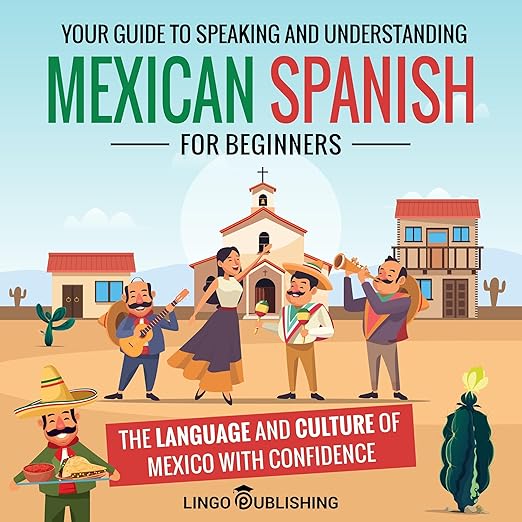
Language-learning audiobooks occupy an unusual corner of the format. They are asking the listener to do something active with content that arrives passively, and the tension between those two modes shapes whether the material actually works. I listened to Mexican Spanish for Beginners over several commutes, which is probably close to the intended use case, short enough listening segments to allow for repetition without losing context, long enough to follow George Donovan's week in Mexico City from one chapter to the next.
The structural conceit here is a smart one. Rather than organizing the book around grammatical categories (the noun chapter, the verb chapter, the conditional tense chapter), Lingo Publishing builds each chapter around a day in George's vacation, with Paula Solis serving as both guide and character. Grammar content arrives through what George needs to communicate at each stage of his trip, ordering food, navigating the city, making friends. That contextual framing makes the material stickier than a conventional textbook approach.
Narrator Francisco Salas is the right choice for this material. A native-sounding voice carrying Mexican Spanish pronunciation is not optional in a language guide, the whole point of focusing on Mexican Spanish rather than generic Spanish instruction is the specific phonology, the particular slang, the regional expressions that distinguish it from Castilian or Caribbean varieties. Salas delivers that authenticity, and the cultural annexes at the end of each chapter, which cover slang, idioms, and comparative notes on Mexican versus Castilian Spanish, benefit significantly from a narrator who sounds like someone who actually grew up with the language. The 4.4 rating and 53 reviews suggest a core audience that found the material genuinely useful.
The Strengths
The book's strongest feature is its honest regional focus. Most beginner Spanish instruction teaches a kind of generic standard Spanish that is usable everywhere but maximally useful nowhere in particular. This title makes the deliberate choice to focus on Mexican Spanish, covering the vocabulary, idioms, and cultural context that matter specifically if you're traveling to Mexico or working with Mexican Spanish speakers. The coverage of slang and the comparison notes on Mexican versus Castilian forms are particularly valuable for listeners who have some prior Spanish instruction but learned from materials that weren't Mexico-specific. Seven hours and 54 minutes is a generous runtime that allows for thorough coverage of the week-long fictional journey without feeling rushed.
Before You Commit to Mexican Spanish for Beginners
The honest caveat here comes from a critical review in the data: one listener notes that despite the title's beginner framing, the book assumes some prior familiarity with Spanish structure. If you genuinely have zero Spanish background, certain explanations will move faster than is comfortable. The audiobook format also creates an inherent limitation for language learning, the exercises and vocabulary sections that work well on the page lose some of their interactive quality in audio. A listener who has no way to pause, repeat, and practice will get less out of this than one who builds in active review time. The fictional frame of George's vacation, while pedagogically clever, also means that the narrative occasionally slows down sections that could otherwise move more efficiently.
Recommended For
Best suited for listeners with some prior Spanish exposure who want to specifically develop Mexican Spanish competency before a trip or for regular contact with Mexican Spanish speakers. Travelers planning a Mexico City visit will find the George Donovan framing directly applicable. True absolute beginners should pair this with a supplemental resource or approach it with patience for sections that assume basic grammatical familiarity. Anyone who wants a generic-Spanish refresher should look elsewhere, the regional specificity that makes this book valuable also makes it a narrow fit.
It is also worth noting what the audiobook format does particularly well here: the repetition of vocabulary through natural dialogue, the pronunciation modeling that comes with a native-sounding narrator, and the way the Mexico City soundscape established through George's story makes abstract vocabulary feel situated in real experience. These are things a purely visual textbook cannot replicate. For travelers who process language best through listening rather than reading, this format-content match is more valuable than it might appear.
Frequently Asked Questions
Is Francisco Salas actually a native Mexican Spanish speaker, and does it matter?
The narration sounds authentically regional, which matters significantly for a guide focused on Mexican Spanish specifically. The pronunciation, slang coverage, and cultural notes all gain credibility from a narrator who sounds like he belongs to the language being taught.
Can I use this audiobook to learn Mexican Spanish without any prior Spanish knowledge?
It's marketed as beginner-level, but at least one reviewer notes it moves faster than a true zero-background listener can comfortably follow. Some prior familiarity with Spanish structure will help you get more out of the content.
How different is Mexican Spanish from the Spanish taught in US schools, and does this book address that?
The book specifically covers differences between Mexican Spanish and Castilian Spanish, including distinct slang, idioms, and pronunciation patterns. For listeners who learned standard or Castilian Spanish, those comparative sections are particularly useful.
Does the George Donovan vacation narrative make the language content harder to use as a reference later?
The narrative structure is better for linear listening than for reference use. If you want to return to a specific grammar point, the chapter-per-day format makes it slightly harder to locate than a conventional textbook structure. Treat it as a course to follow rather than a dictionary to consult.