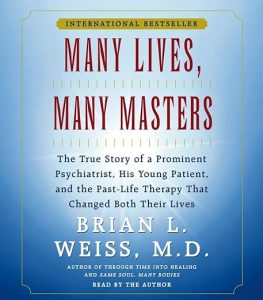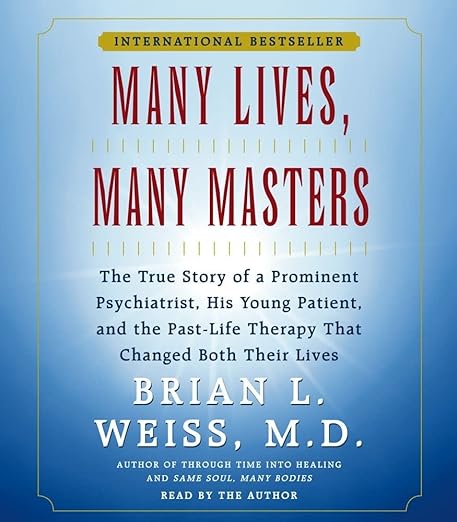
I listened to Many Lives, Many Masters at a time in my life when I was not particularly receptive to its central claims. I had just come from a period of intensive reading in neuroscience and was feeling firmly, even smugly, materialist. It did not matter. Weiss's account got under my skin anyway, not because it convinced me of anything specific but because of the care with which it presents something genuinely inexplicable.
That quality, the book's refusal to resolve itself into comfortable certainty in either direction, is what has kept it in print for four decades and what makes the audiobook a particularly absorbing listen.
Catherine's Hypnosis Sessions Risked Weiss's Own Career
In 1980, Dr. Brian Weiss was a Yale-trained psychiatrist with conventional credentials and conventional skepticism about anything outside evidence-based treatment. His patient Catherine came to him with debilitating anxiety and recurring nightmares that did not respond to standard therapy. Under hypnosis, Catherine began describing what she called past lives, detailed, experientially specific accounts of historical existences in settings ranging from ancient Egypt to colonial America. Weiss was skeptical, then confused, then shaken: she began relaying information that, he argues, she could not have known, including details about his own family and his son who had died in infancy.
The book tells this story with the care of a scientist who knows what he is giving up by telling it. Weiss was professionally aware of what publishing this account would cost him in terms of credibility within mainstream psychiatry. He published it anyway, which gives the book a quality of genuine risk that you can hear in the narration.
His Flat Clinical Voice Slowly Starts Changing
Weiss reading his own work is the right choice for this material. Early in the listen his delivery is flat, measured, clinical, the voice of a man trained to observe without reacting, and that flatness initially frustrated at least one reviewer before they recognized it as character. As the sessions with Catherine deepen and the communications from what the book calls the Masters accumulate, Weiss's voice changes in ways that feel unperformed. He becomes quieter in certain sections. The surprise of that tonal shift, for a listener paying attention, is genuinely affecting.
One reviewer described this as "the most life-changing book" they had ever encountered and noted having listened to it multiple times. Another called it "intriguing" in a way that "put a lot into perspective." These responses span the range of what readers bring to this text: some come looking for spiritual confirmation, some come curious about alternative therapy, some come skeptical and find the skepticism complicated. Weiss's account accommodates all three approaches because it does not insist on resolution.
One Case, Reported Honestly, Never Proven
At one hour and twenty-eight minutes, this is a short listen by audiobook standards, shorter than many of the podcast compilations currently sold at similar price points. That brevity is worth knowing in advance. The book does not attempt to be a comprehensive argument for reincarnation or a clinical treatment manual for past-life therapy. It is the account of one case and its impact on the therapist who experienced it. That scope is deliberate and is part of what makes it work; Weiss is not overselling what he knows.
Listeners who arrive looking for scientific validation of reincarnation as a measurable phenomenon will not find it here. Weiss is honest about the limits of what he can claim, he can report what Catherine said and what he witnessed, not what it proves. The discomfort that some materialist readers experience with the book is often the discomfort of encountering something that resists easy dismissal, which is a different thing from encountering something that has been proven.
Skeptics Unlikely, True Believers Less Satisfied
This audiobook has a specific gravity for listeners who are navigating questions about consciousness, grief, or the limits of conventional medicine, people who are not committed spiritualists but who have found purely materialist frameworks insufficient for things they have experienced or witnessed. Weiss speaks to that space with unusual honesty.
Listeners who are firm skeptics about anything outside empirical psychology are unlikely to find this persuasive and may find it frustrating. Those already committed to reincarnation as doctrine may find it less revelatory than their experience suggests, Weiss arrives at his conclusions slowly and with visible reluctance, which is the quality that makes the book credible to those in the middle and less satisfying to those who want strong affirmation. For everyone between those poles, this is a short, specific, and genuinely strange listen that earns its reputation for staying with people.
- Performance: Dr. Brian Weiss reads his own account, which begins flat but gains emotional credibility as the case study deepens, the clinical voice gradually warming into something more personal and sincere.
- What it covers: Past-life regression and the continuity of consciousness, the limits of materialist psychiatry, healing through narrative
- Feel: Quietly uncanny and accumulative, the strangeness builds slowly and stays with you
- Our call: Whether you approach this as spiritual testimony or as a case study in the therapeutic power of belief, the audiobook earns its canonical status in alternative psychology through the specific texture of Weiss's account.