Quick Take
- Narration: Seth Andrews brings a measured, documentary-style authority to Ami Ganatra’s scholarly material – his pacing suits the myth-correction tone, though listeners unfamiliar with Sanskrit names may need to adjust.
- Themes: Historical myth versus popular narrative, feminine agency in ancient epics, the geography and politics of dharma yuddha
- Mood: Scholarly and revelatory – suited to curious, patient listeners willing to have familiar stories reexamined
- Verdict: A valuable corrective to centuries of accretion and misreading around the Mahabharata – Ganatra sticks rigorously to Vyasa’s text and the results are illuminating.
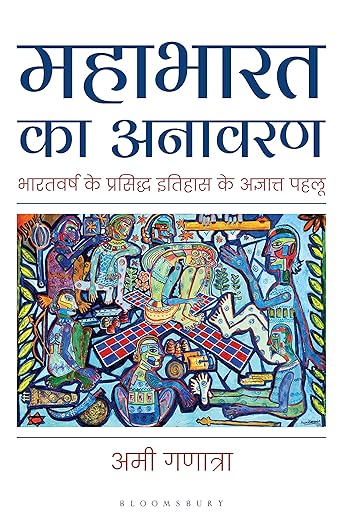
I was partway through a chapter on the role of Draupadi as Queen of Indraprastha when I realized I had been operating with several assumptions about the Mahabharata that Ami Ganatra was quietly and methodically demolishing. That experience – of finding something you thought you understood suddenly and usefully complicated – is what Mahabharata Unravelled does best. Ganatra is not retelling the epic. She is going back to Vyasa’s original text and measuring what actually happens there against the popular understanding that has accumulated across centuries of retellings, adaptations, and what she calls erroneously-held popular notions.
The specific questions she addresses are genuinely curious: Did Drona refuse to teach Karna? Did Draupadi actually mock Duryodhana at Indraprastha? What was the geographical extent of the Kurukshetra war? What role did the Pandavas’ sons play in the conflict? Does the south of India appear in the Mahabharata at all? These are questions that serious students of the epic have debated, and the popular answer to several of them is, it turns out, wrong – or at least not supported by Vyasa’s text in the way that popular retellings suggest. Ganatra’s approach is to trace each question back to its source material, acknowledge where interpretation is required, and distinguish between what Vyasa wrote and what later tradition added.
Our Take on Mahabharata Unravelled
The treatment of women in the epic is one of the book’s strongest sections. Ganatra directly addresses the question of whether the women of Mahabharata-era society were meek and submissive – a characterization she finds unsupported by the primary text – and provides specific examples from Vyasa’s narrative that suggest considerably more agency and voice than popular retellings tend to grant them. Draupadi in particular emerges as a figure of political and moral authority, and the discussion of her responsibilities as queen rather than just her personal suffering in the dice game is a genuinely illuminating reframing.
The book’s methodology is transparent and honest about its limits. Ganatra specifies that she works from generally accepted authentic sources of Vyasa’s Mahabharata and does not claim to resolve every contested question definitively. Where scholars disagree, she acknowledges it. Where the text is ambiguous, she says so. This intellectual honesty is part of what gives the book its credibility – it reads as scholarship in service of the material rather than as advocacy for a particular position. For an international English-speaking audience approaching this material with curiosity rather than prior expertise, this is the right register.
Why Listen to Mahabharata Unravelled
Seth Andrews’s narration brings a documentary quality to the material that suits it well. He is authoritative without being overbearing, and the measured pace he employs allows complex arguments to land before the next one begins. The Sanskrit and Sanskrit-derived names will pose challenges for listeners unfamiliar with them – the phonology is genuinely different from English and from other ancient language traditions that Western listeners might know – and Andrews navigates this as well as a narrator working with this level of material density can be expected to. Listeners who find themselves struggling with names should know that patience pays off; once the major characters are established in sound, the later chapters flow considerably more easily.
At eleven hours and nine minutes, this is a substantive listen that rewards the kind of attention you would give a university lecture rather than a narrative audiobook. Ganatra is not telling a story so much as building an argument, and the audio format requires the listener to track that argument across chapters without the navigational aids that print readers can use. Taking notes or listening with a basic reference to the epic’s key figures alongside is a sensible approach for listeners new to the material.
What to Watch For in Mahabharata Unravelled
A note about the language metadata: this book is listed as Hindi-language in some catalog records, which appears to be an error. The audiobook is narrated by Seth Andrews in English. The text was written in English, translated and adapted for an international audience. The original print edition was published in India but in English. Listeners seeking an English-language scholarly treatment of the epic should not be deterred by the metadata confusion.
The book also assumes that readers have at least a general familiarity with the Mahabharata’s broad outlines – the Pandavas and Kauravas, the Kurukshetra war, the major characters. Ganatra is not providing an introduction for listeners with no prior exposure. Someone completely new to the epic would benefit from a brief overview first, after which Unravelled functions as an excellent deepening of that foundation. For readers who grew up with versions of the Mahabharata through regional retellings, television adaptations, or cultural transmission, the experience of having those familiar versions compared against Vyasa’s original is particularly valuable.
Who Should Listen to Mahabharata Unravelled
This audiobook is ideal for the curious and reasonably informed general listener who wants a scholarly but accessible engagement with one of the world’s great epics. It suits listeners who come to it with questions rather than settled narratives, and who are willing to have familiar stories examined critically. The academic rigor may feel demanding for listeners accustomed to narrative-driven historical audio, but the rewards for patient engagement are real. Anyone who has found themselves in a discussion about the Mahabharata and wondered whether what they know is actually what Vyasa wrote will find this an essential companion. Skip it if you are looking for an immersive retelling of the epic’s narrative; this is a work of historical and textual analysis, and it makes no apology for that.
Frequently Asked Questions
Do I need to be familiar with the Mahabharata before listening to Mahabharata Unravelled?
A basic familiarity with the epic’s major characters and narrative arc is helpful, though not strictly required. Ganatra writes for an educated general audience rather than specialists. Listeners who grew up with the Mahabharata through any cultural transmission – family, television adaptations, regional retellings – have more than enough foundation. Those with no prior exposure at all might benefit from a brief overview of the basic story before beginning.
Is Mahabharata Unravelled a retelling of the epic or an analytical study of it?
It is analytical rather than a retelling. Ganatra takes specific questions and myths about the Mahabharata – common misunderstandings, popular-but-unsupported narrative claims – and measures them against what Vyasa’s original text actually says. The focus is on clarifying the historical record rather than presenting the story in new narrative form.
How does Seth Andrews handle the Sanskrit names and terminology as narrator?
Andrews delivers the material with authority and consistency. The Sanskrit-derived names are phonologically challenging for listeners without prior exposure, and the early chapters may require some patience. Once the major character names are established in sound through repetition, the listening experience becomes substantially easier. Andrews’s measured pacing helps the names land rather than rush past.
The catalog lists this audiobook as Hindi-language, but the review says it is in English. Which is correct?
The audiobook is in English, narrated by Seth Andrews. The Hindi-language metadata appears to be a catalog error. The book was written in English by Ami Ganatra for an international audience and published through a major Indian publisher’s English-language imprint. Listeners seeking an English-language scholarly treatment should proceed without concern.