Greenlit Every SNL Cold Open Since 1975
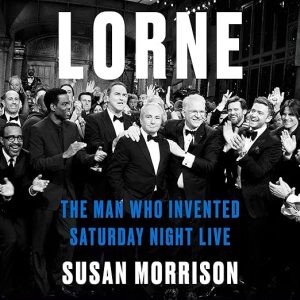
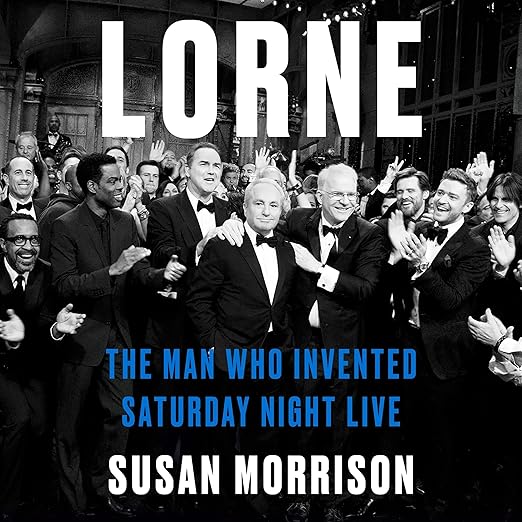
I have watched SNL cold opens more weekends than I can count without ever once picturing the man who has greenlit every single one of them since 1975, and this audiobook of Susan Morrison's Lorne finally gives that oddly invisible figure a voice, across twenty-two hours and fifty minutes of reporting most fans have been waiting decades for.
What makes this biography different from the usual celebrity-adjacent cash-in is access. Morrison spent enough time embedded with Michaels and the full Saturday Night Live apparatus that Variety's review calls the result 'a warts-and-all week in the life of SNL,' watching the real, chaotic process of putting an episode together from scratch. That is a genuinely rare vantage point on an institution that has spent fifty years being simultaneously the most public and the most guarded operation in American comedy.
Michaels himself participated with what one reviewer calls candor, honesty, and real humor, which matters because a subject who stonewalls or only offers sanitized anecdotes can sink even the best-reported biography. His cooperation, alongside hundreds of interviews from people who worked under him across five decades, gives Morrison something rare: a portrait built from both the inside and the outside at once, Michaels's own account checked constantly against the memories of the writers and performers who watched him operate for years.
Dr. Evil, Obi-Wan, and a Comedy God
The character sketches alone justify the runtime. Michaels gets described across these pages as a tastemaker, a mogul, a withholding father figure, a shrewd businessman, and, according to the people who have spent careers trying to read him, the direct inspiration for Mike Myers's Dr. Evil. Tracy Morgan calls him Obi-Wan Kenobi, Kate McKinnon calls him the great and powerful Oz, and Bob Odenkirk describes him as some kind of very distant, strange comedy god, three wildly different metaphors from three people who worked for him directly, which tells you as much about how unknowable Michaels remains as any direct biographical fact could.
Morrison draws from hundreds of interviews spanning Michaels's entire circle, Will Ferrell, Tina Fey, John Mulaney, Chris Rock, and Dan Aykroyd among the named contributors, and the resulting portrait covers fifty years of an institution that somehow never stopped being culturally relevant, a genuinely rare achievement for any single piece of media, let alone a sketch comedy show built around weekly turnover. The New York Times gave this an Editors' Choice designation and compared its scope to biographical monuments usually reserved for founding fathers and canonical authors.
Beyond the New York Times, this book landed on best-of-the-year lists from NPR, The New Yorker, Elle, Kirkus Reviews, and the Denver Public Library, plus a longlist nod for the PEN/Jacqueline Bograd Weld Award for biography, a genuinely unusual sweep for a book ostensibly about a television show. That range of recognition, general-interest outlets alongside a literary award longlist, signals that Morrison's reporting cleared a bar well above typical entertainment journalism, treating Michaels's life with the same seriousness a biographer would bring to any major cultural figure.
First Name Only, After Fifty Years
Titling the book simply Lorne, first name only, is itself a statement: Morrison is betting that after fifty years, Michaels has reached the rare tier of cultural figure recognizable by first name alone, and the book's reporting largely justifies that bet. More than a hundred Emmy wins associated with his shows, according to the synopsis, is a genuinely staggering number for anyone to accumulate across a single career, and the book treats that statistic less as a trophy count and more as evidence of an unusually durable eye for talent sustained across five completely different eras of American comedy.
The withholding father figure description the synopsis uses is not incidental color; multiple performers across Michaels's decades have described a similar dynamic, intense loyalty and career-making opportunity paired with real emotional distance, and Morrison does not flinch from that less flattering side of the portrait. That willingness to sit with contradiction, rather than resolve Michaels into either pure mentor or pure operator, is exactly what separates serious biography from hagiography, and it is a big part of why critics keep reaching for words like warts-and-all to describe the reporting.
Closer to Journalism Narration Than Comedy
Kristen DiMercurio has no directly comparable long-form entertainment-biography credit in this specific catalog to measure against, so her performance is worth judging against what a nearly twenty-three-hour, cast-heavy biography actually demands: keeping a huge rotating cast of named comedians and executives vocally distinct without impersonating any of them outright, and sustaining narrative energy across a runtime that rivals a serious literary doorstop. That is a genuinely different skill than narrating fiction, closer to long-form journalism narration, where clarity and pacing matter more than character voices.
Nearly twenty-three hours is a serious commitment, longer than most single-subject biographies, and worth flagging plainly for anyone assuming this is a breezy celebrity-memoir listen. The comedy-humor genre tag on this listing is accurate to the subject matter but slightly misleading about tone: this reads far closer to serious cultural journalism, in the tradition of the best entertainment-industry reporting, than to a laugh-a-minute comedic memoir, even though genuine funny material surfaces constantly given who Morrison spent years interviewing.
Behind-the-Scenes Jackpot, With Slower Stretches Too
One reviewer calls this a behind-the-scenes jackpot, and that framing is accurate in both directions: listeners get remarkable access, but access this granular also means slower stretches focused on network politics, cast turnover negotiations, and decades-old production disputes that will matter enormously to SNL historians and considerably less to a listener who just wants Weekend Update highlights. Pace your expectations toward a definitive institutional history rather than a highlight reel.
Consider the sheer number of now-major entertainment careers that trace back through Michaels's specific talent-spotting decisions across five decades, a genuinely unusual through-line for any single person to claim credit for, and one the book uses as its own implicit argument for why this particular biography earned both its length and its unusually broad critical reception.
Almost a Full Day Inside SNL History
This is essential listening for serious Saturday Night Live fans, anyone fascinated by how a single person's taste can shape American comedy for half a century, and readers of major entertainment-industry biographies looking for one built on genuinely unprecedented access rather than secondhand reporting.
Skip it if you want a fast, breezy celebrity biography rather than a nearly full-day commitment to institutional history, or if your SNL interest stops at a handful of favorite sketches rather than extending to the fifty-year business and personality story behind them.
Before You Press Play
- Voice: Kristen DiMercurio keeps a huge rotating cast of named comedians and executives vocally distinct across a nearly full-day runtime.
- Big ideas: Saturday Night Live institutional history, entertainment power and mystery, decades of comedy culture
- Atmosphere: Sweeping, candid, and surprisingly emotionally layered
- Worth it?: The definitive Lorne Michaels biography for serious SNL fans willing to commit to a genuinely long, deeply reported listen.