Quick Take
- Narration: Shari Leon reads with quiet dignity, appropriate for a text that demands contemplation rather than performance.
- Themes: Swadharma, worldly and moral discipline, longevity as spiritual evidence
- Mood: Still and unhurried, like sitting with someone who has seen everything
- Verdict: A genuinely unusual spiritual document, part travelogue, part philosophical encounter, entirely unlike mainstream mindfulness or self-help fare.
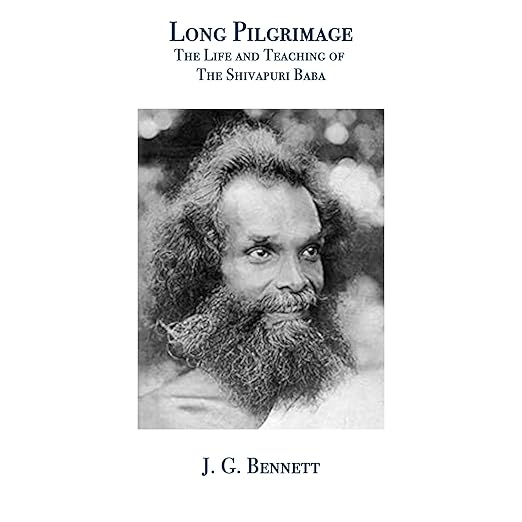
I tend to be skeptical of books built around a single extraordinary figure whose life is presented as proof of a doctrine. The hagiographic impulse is strong in spiritual writing, and it often flattens the subject while inflating the teaching. Long Pilgrimage, J.G. Bennett’s account of his encounters with the Shivapuri Baba, surprised me. The book earns its reverence not through sentimentality but through specificity, and through the Shivapuri Baba himself, who is one of the more genuinely unusual figures I have encountered in this kind of writing.
The Shivapuri Baba, born in India in 1826, spent twenty-five years in forest solitude after his grandfather’s death. He then spent forty years walking around the world on foot, crossing oceans, meeting monarchs, and carrying his philosophy with him. He lived to at least 135 years old, possibly 137. Bennett, a British philosopher with a background in Gurdjieff’s work, met him multiple times and documents both the encounters and the teaching known as Swadharma, or Right Life. The book is organized around three disciplines: worldly order, moral discipline, and the path beyond both toward what the Shivapuri Baba called simply the truth.
Our Take on Long Pilgrimage
What makes this book different from most spiritual encounter narratives is the rigor of the central teaching. The Shivapuri Baba’s Swadharma is not mystical in the vague sense, it is structural. He speaks about putting worldly affairs in order as a prerequisite for spiritual work rather than an obstacle to it. Reviewer Daniel Garcia described it as a manual for living before it is anything else, and that is accurate. The practical clarity of the teaching sits alongside the extraordinary facts of the Baba’s life in a way that grounds rather than inflates the spiritual claims.
Bennett brings his own intellectual framework to the material, he was a serious thinker, not a credulous follower, and that keeps the book from collapsing into hagiography. He asks questions. He pushes on the teaching. The result is a dialogue of sorts between a Western philosophical tradition and a Hindu one that neither assimilates nor condescends.
Why Listen to Long Pilgrimage
Shari Leon’s narration is well-matched to the material. She reads without ornamentation, allowing the philosophical passages to land at their own pace. The account of the Shivapuri Baba’s global pilgrimage, a man born in an era when crossing the ocean was considered a cardinal sin in his Hindu tradition, who ignored this and met Queen Victoria anyway, is genuinely interesting as travelogue independent of its spiritual content, and Leon handles the biographical sections with the same clarity as the philosophical ones.
Reviewer Will Szal’s detailed background note on the Shivapuri Baba in the reviews is worth reading as companion material. The figure is so historically unusual that readers approaching this cold may find the factual scaffolding helpful before they encounter the teaching itself.
What to Watch For in Long Pilgrimage
The synopsis is notably brief for a nearly nine-hour audiobook. Listeners expecting a conventional spiritual memoir with narrative arc may be surprised by the book’s structural looseness, it is part memoir, part doctrinal exposition, part philosophical encounter, and the seams are visible. This is not a polished literary autobiography but a document from a different era of spiritual writing, and its virtues are not the virtues of conventional narrative form.
The Swadharma teaching, while practical, assumes a framework of consciousness and liberation that comes from classical Indian philosophy. Listeners without some familiarity with Hindu metaphysics will follow the practical dimensions but may find the third section on what lies beyond consciousness somewhat abstract. Bennett does his best to translate, but some prior orientation helps.
Who Should Listen to Long Pilgrimage
Essential for anyone interested in Hindu philosophy as lived practice, in Gurdjieff-adjacent traditions, or in the history of Western encounters with Indian spirituality. Also valuable for readers drawn to genuinely unusual biographical subjects, the Shivapuri Baba’s life story is extraordinary on purely factual terms. Less suited for listeners seeking accessible mindfulness content or a contemporary self-help framework.
Frequently Asked Questions
Do I need background in Hinduism or Gurdjieff’s work to follow Long Pilgrimage?
Some prior orientation helps with the deeper philosophical sections, particularly the discussion of what lies beyond consciousness. The worldly and moral discipline sections are clear and practical without specialist knowledge. Bennett’s Gurdjieff background is present but not dominant.
Is the Shivapuri Baba’s extreme longevity presented as fact or as uncertain tradition?
Bennett treats the accounts of his age, variously given as 135 to 137, with serious rather than credulous attention. The book acknowledges the difficulty of verifying birth records from 1826 India while treating the figure as historically real and documented through multiple reliable witnesses.
How does Shari Leon’s narration handle the blend of travelogue, biography, and philosophy?
Leon reads evenly across all three registers without forcing a meditative tone onto the biographical sections or a brisk pace onto the philosophical ones. The narration is restrained and appropriate for a text that asks for contemplation.
Is this a practical spiritual guide or primarily a historical and philosophical document?
Both, genuinely. The Swadharma teaching is concrete and actionable, ordering daily life to create space for spiritual work, while the biographical material provides historical context. Reviewer Daniel Garcia’s description of it as a manual for living captures the practical dimension accurately.