Quick Take
- Narration: Virtual Voice AI narration handles the practical content adequately but lacks the emphasis variation and warmth that would make the motivational sections land with full force.
- Themes: Real estate listing strategy, mindset for sales professionals, niche marketing and client conversion
- Mood: Direct and instructional, with motivational interludes throughout
- Verdict: The twelve essentials framework is genuinely practical and field-tested, though the AI narration and motivational framing make this a less effective listen than it would be as a read.
I will be straightforward about something from the outset: Listing Boss is narrated by Virtual Voice, Amazon’s AI text-to-speech system. That information matters for anyone considering this audiobook, not because AI narration is automatically inferior, but because the specific demands of business coaching content, which depends on emphasis, warmth, and the sense of a knowledgeable person speaking directly to you, are where AI narration shows its current limitations most clearly. I will return to this, but I want to address the content first, because the content has real merit independent of how it is delivered.
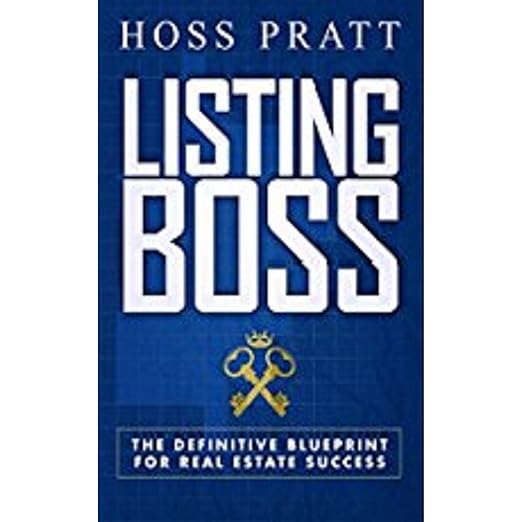
Hoss Pratt is a real estate coach with documented results, and Listing Boss: The Definitive Blueprint for Real Estate Success is a practical guide organized around twelve essentials for building a listing-dominant real estate business. The framework covers vision-setting, mindset development, niche identification, marketing system deployment, listing presentation mastery, and buyer conversion, among other components. Pratt is particularly strong on the listing presentation itself, which is the moment most agents either win or lose a potential client, and his treatment of that specific skill is the most practically useful section in the entire book.
The Twelve Essentials and Where They Deliver Real Value
Several of the twelve essentials will feel familiar to anyone who has read broadly in real estate or sales coaching literature. The early sections on developing a top-producing mindset, establishing productive routines, and identifying high-value activities over time-consuming low-yield work are genuinely useful reminders, but they are not proprietary Pratt insights. One reviewer who had been in the industry for four years described these opening sections as similar to a lot of other books in the genre: solid but recognizable. That is an accurate assessment of the first third of the book.
Where Pratt earns his authority is in the operational specifics that follow. The section on deploying a marketing arsenal has concrete guidance on lead generation systems, follow-up cadence, and market differentiation that goes beyond the conceptual level of most coaching books. His approach to KPIs and daily scheduling is detailed enough to be immediately implementable, which one reviewer confirmed: they finished the book in two days and started acting on the content that same afternoon. That kind of immediate applicability is the mark of practical guidance over inspirational content, and it distinguishes the book’s stronger sections from its more generic ones.
What the Virtual Voice Narration Does and Does Not Do
Virtual Voice handles the book’s informational content adequately. Lists, frameworks, and step-by-step processes translate reasonably well to AI narration because they depend on clarity over expression. The motivational passages are where the limitation becomes most apparent. Pratt’s coaching style, based on the written text and the reviews from people who have attended his events, appears to rely significantly on energy and directness. The AI narration delivers those passages with the same measured tone it uses for data-driven sections, which flattens their intended impact considerably.
The book’s most-quoted directive, you are the reason you don’t have the results you want right now, is meant to land as a challenge. In the text it reads as a direct confrontation designed to provoke action. In Virtual Voice delivery it lands as a simple observation. That gap matters significantly in a book where motivation is load-bearing rather than ornamental. Listeners who respond well to the written text and who can supply their own internal energy will get more from the audiobook than those who depend on narration to carry the coaching force through the listen.
The Listing Presentation Chapter as the Book’s Real Contribution
The listing presentation chapter deserves specific attention because it is where Pratt most clearly outpaces the generic coaching content that fills the book’s earlier sections. He has clearly observed a large number of listing appointments and knows precisely where agents lose the conversation and why. His instruction on anticipating objections before they arise, demonstrating market knowledge in ways that establish immediate credibility, and positioning the commission as a value rather than a cost is specific, practiced, and applicable across different market conditions. One reviewer with twelve years of experience found the updated market perspective in this section alone worth the time investment, and that endorsement from someone with substantial prior knowledge is meaningful.
The Right Expectations for This Format
New agents looking for a structured entry point into listing-focused practice will find the twelve essentials a useful scaffold with enough specificity to move from reading to action. The book is honest about its intended audience: it works for beginners establishing a foundation and for experienced agents looking to refresh a listing strategy that has grown stale. Listeners who are primarily motivated by the coaching dimension of the content may want to seek out Pratt’s live or recorded video material alongside the audiobook, where his delivery presumably carries the energy that Virtual Voice cannot replicate. The content justifies the investment of time. The format limits how effectively it delivers that content.
Listing Boss has been gathering reviews since 2017, and the consistency of the response across eight years of readers with different levels of experience is telling. New agents find the framework, experienced agents find specific sections worth revisiting, and the listing presentation chapter in particular keeps appearing in reviews as the element that prompted immediate behavioral change. That longevity suggests the content has durability beyond its initial market. The Virtual Voice narration is the format’s honest limitation, not the content’s, and listeners who approach it knowing what they are getting, practical instruction delivered without coaching energy, will take more from it than those who expect the audiobook format to carry the motivational weight that only a live or recorded presentation of this material can fully deliver.
Frequently Asked Questions
Does the Virtual Voice AI narration make Listing Boss significantly harder to listen to than a human-narrated version would be?
The AI narration is functional for the instructional content but loses effectiveness in the motivational passages. Listeners who can engage with the framework analytically rather than depending on the narrator for inspiration will find it workable across the full runtime.
Is the twelve essentials framework primarily for new agents or does it have value for experienced professionals?
Reviewers with four years and twelve years of experience both found value, for different reasons. New agents get the full foundational framework, while experienced agents tend to find the listing presentation and marketing arsenal chapters most immediately applicable.
How does Pratt’s approach to the listing presentation differ from standard real estate coaching on that topic?
Pratt focuses heavily on objection anticipation and commission value positioning, which goes beyond the script-based approaches common in entry-level coaching. The section has enough specificity to be useful even for agents with existing presentation frameworks who want to sharpen them.
At five and a half hours, does the book cover all twelve essentials in sufficient depth or does it feel rushed?
The runtime means some essentials receive more development than others. The listing presentation, marketing arsenal, and mindset sections are the most fully developed. Others function more as framework introductions that point toward further practice and refinement.