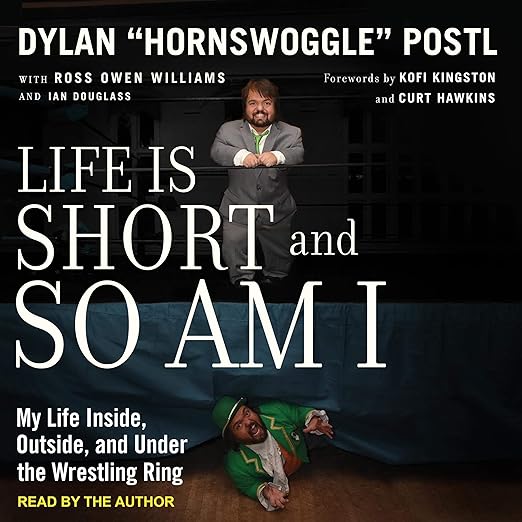
- Narrator: Postl narrating his own story brings authentic timing and genuine vulnerability throughout
- Subjects: Perseverance against physical and institutional odds, family support, identity inside and outside the ring
- Tone: Upbeat and funny with honest emotional undercurrents
- Bottom line: A wrestling memoir that works even if you've never watched a match
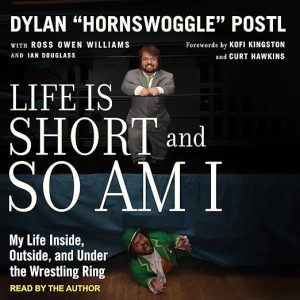
Dylan Postl's memoir opens with a question that cuts straight to the center of his life story: what does it actually take to walk into a professional wrestling ring when the world has already decided you don't belong there? This audiobook, narrated by Postl himself in a voice that moves between self-deprecating humor and unguarded sincerity, answers that question across seven-plus hours of storytelling that earns every minute. Born with achondroplasia, a form of disproportionate dwarfism, Postl spent his early childhood cycling through surgeries rather than Little League fields, and the memoir traces the arc from those hospital rooms to a decade-long WWE career that nobody outside his family expected.
Self-Narration Is the Only Sensible Choice Here
Self-narration is the only sensible choice for this material, and Postl delivers with the instincts of a performer who has spent years reading a live audience. He brings the wrestling anecdotes in with the timing of a practiced storyteller, and he drops into genuine vulnerability during the medical chapters without lingering so long it curdles into melodrama. The pacing across 7 hours and 41 minutes stays brisk throughout. You feel the momentum of a life that refused to slow down, even when the circumstances demanded it.
The emotional architecture underneath the career narrative is what distinguishes this from a standard sports memoir. Postl is frank about the gap between the character audiences loved and the person living that career night after night, and he handles the lonelier stretches of his WWE tenure with enough honesty to make the book's sunnier passages feel earned rather than performed. His 4.7 rating reflects an audience that recognized this quality and rewarded it.
Born with achondroplasia, Postl endured multiple surgeries by age twelve and dreamed of professional wrestling while doctors recommended other directions for his life. What makes this memoir remarkable is not the adversity itself but the lens through which he examines it: relentlessly forward-looking, occasionally furious, and funny in ways that feel grounded in actual experience rather than retrospective polish.
Doctors and Gatekeepers Both Said No
The WWE chapters are where this audiobook finds its rhythm and sustains it. Postl's rise from local independent shows in his teens to a decade-long contract playing Hornswoggle, Finlay's sidekick and eventually a breakout character in his own right, is narrated with insider detail that wrestling fans will love and non-fans can still follow without prior knowledge of the industry. He explains the physical demands of professional wrestling for someone with his frame with striking specificity, and he does not spare the industry's rougher edges either.
Before he turned twenty, Postl was signed by WWE, and the book covers what that transition meant in practical terms: the schedule, the travel, the physical toll, the relationships formed and strained on the road. He is particularly strong on the dynamics of being a performer whose character was inseparable from his physical appearance, and on what it felt like to have that character embrace a mainstream audience while the person inside the character navigated a more complicated reality.
The relationship with his family, particularly the support that kept him grounded during the loneliest stretches of life on the road, gives the book genuine weight beyond the career highlights. Postl is honest about what success cost and what it gave back, and the memoir's emotional intelligence in tracking both of those things is what makes it worth listening to even for people with no particular interest in wrestling.
The memoir also functions as a document of persistence in the face of institutional doubt. Doctors advised against wrestling. Industry gatekeepers questioned whether there was a place for him. Postl's account of proving those doubts wrong is not triumphalist in the hollow motivational-speaker sense. It reads more like an honest ledger of what it actually cost to get there, which is considerably more interesting.
Some Passages Read Like Prepared Speeches
Listeners expecting a comprehensive backstage exposé of WWE will find some of that material here but not wall-to-wall dish. Postl is candid about his experiences without burning bridges unnecessarily, which means some chapters feel deliberately restrained. The transition sections between major career beats can feel slightly abrupt, particularly when he moves from one storyline to the next without much connective tissue explaining the passage of time or the internal experience between those moments.
The opening chapters covering his childhood surgeries and medical history are dense with procedural detail. For listeners primarily interested in the wrestling career, this section requires some patience. It pays off in later chapters where the physical context matters, but the front-loading is noticeable for listeners with a specific agenda.
A small number of passages aimed at delivering life lessons read a bit more like prepared speeches than organic reflection. These moments are infrequent enough not to derail the overall flow, but they stand out against the more naturalistic storytelling that dominates the rest of the book.
Postl's Voice Is the Whole Point
Wrestling fans who followed Hornswoggle's WWE run will get the most immediate enjoyment here, but the book is genuinely accessible to anyone who has never watched a single match. The real audience is anyone drawn to memoirs about navigating a career in a field that was not built with you in mind, and doing so without losing either your sense of humor or your sense of self.
Parents of children with achondroplasia or other physical differences may find this audiobook particularly resonant, both for the medical candor and for the model it offers of a life built on stubbornness and positivity rather than accommodation. At 4.7 stars, listeners have already registered their verdict: this one connects. Postl's voice is the whole point, and it delivers across every section of the book.