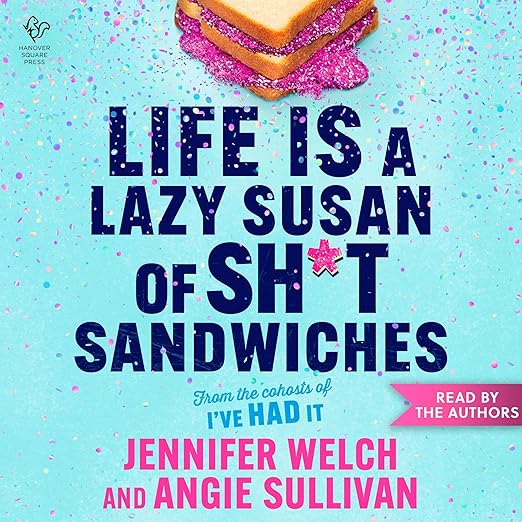
Jennifer Welch and Angie Sullivan have been best friends long enough that their humor has become structural - not a style they deploy but a load-bearing element of how they survive difficult things together. Their audiobook, Life Is a Lazy Susan of Sh*t Sandwiches, runs 5 hours and 32 minutes and is narrated by both Welch and Sullivan, whose podcast I've Had It built a substantial audience around a particular brand of "hopeful cynicism." For long-term podcast listeners, this book provides the full personal backstory that the show only gestures at in passing. For newcomers, it works as a standalone memoir in two voices about how two specific people developed the worldview and friendship that made them interesting to millions. The material is not light: it covers addiction's strain on marriages, Angie's reckoning with her husband's infidelity, the emotional realities of divorce and co-parenting, the divergent early experiences that shaped their politics in genuinely different directions, and the accumulation of small and large humiliations that adult life delivers with its characteristic lack of scheduling. The title is honest about what the book understands life to be, and Welch and Sullivan are honest about having eaten their share of what it serves.
What Jennifer Welch Delivers
The audiobook's defining asset is the narration itself. Welch and Sullivan reading their own material produces something that no professional narrator could replicate: the actual texture of their friendship, in their actual voices, with the rhythms of two people who have spent decades talking through things together. When they describe the personal moments that shaped them - Angie's specific reckoning with betrayal and its aftermath, Jennifer's experience of watching addiction restructure the intimacy of her marriage over time - the voices carry the weight of the events rather than just the words describing them. One reviewer describes the honesty as "delightful," which is the right word precisely because it names a response that is not sympathy but relief: the relief of hearing someone name experiences that most public narratives about women's adult lives carefully avoid. The book's framing as "hopeful cynicism" is not marketing language but a genuine description of how Welch and Sullivan process difficulty. The cynicism earns the hope rather than performing it, and the humor throughout operates the same way - present because it is how they actually function under pressure, not because it softens the content for an audience that might find the unmediated version too much to take.
What Jennifer Welch Gets Right
The dual-narrator structure recreates something close to the conversational rhythm of I've Had It. Welch and Sullivan alternate between chapters and trade off within sections in a way that reflects how they actually talk rather than how a recorded audiobook conventionally divides narration responsibilities. Regular podcast listeners describe the experience as the podcast running at a different depth - the same voices and dynamic, but with the full personal histories that make the podcast persona legible in a way it was not before. A listener who describes finishing it all in one sitting notes the particular quality of its tonal range: quick, easy pacing applied to genuinely difficult subject matter without the usual signals that difficulty is arriving and you should prepare yourself for it. Angie's writing and storytelling earns specific praise from reviewers, with one describing her contributions as the most affecting part of the audiobook. The chapter addressing her experience of infidelity takes on a different quality when heard in her own voice rather than read silently - the directness has a different texture when delivered by the person it actually happened to.
Where Jennifer Welch Loses Some Ground
Listeners who come with no prior exposure to I've Had It will not be lost, but some of the texture - references to the Bravo show Sweet Home Oklahoma, the specific private language of a long friendship, the running callbacks to moments from the podcast's history - will land with less resonance than for established fans. The book is organized around themes and chronological memory rather than strict linear narrative, which suits the conversational style but can occasionally make the sequence of events harder to track as the two narrators' accounts weave together without always anchoring themselves in specific dates or timelines. The political material - the section on how their early experiences shaped their politics in genuinely different directions - is handled with more nuance than the format might suggest. The "hopeful cynicism" framing is visible there: they disagree without needing to resolve their disagreement, which is more sophisticated than most public discussions of political difference between friends manage to achieve. The profanity is consistent and substantial throughout, which is part of the book's identity rather than an oversight.
Who Should Pick Up Life Is a Lazy Susan of Sh*t Sandwiches
This audiobook is for I've Had It podcast fans who want the full personal backstory behind the show's dynamic, for listeners who appreciate candid female friendship memoir where humor and difficulty genuinely coexist rather than taking turns, and for anyone who has found the official emotional vocabulary for navigating adult life leaves out most of what actually happens. The dual narration by both authors is not a bonus feature but the central experience - this audiobook is best heard in audio form precisely because the voices are the point. Both women bring a quality to their own material that no substitute narrator could deliver, and the 5-hour format means there is no point at which the listening experience asks more patience than it has earned. Listeners who prefer strictly organized personal development frameworks, or who require their humor to stay within polished and safe boundaries, will find the material's honesty and profanity at odds with those preferences.
Key Details
- Read by: Jennifer Welch and Angie Sullivan narrate their own material, and the dual-host format translates the podcast dynamic cleanly - you can hear their genuine friendship in the rhythms of how they hand off and inhabit each other's stories.
- At its heart: Female friendship as survival strategy, marriage under strain, humor as emotional infrastructure
- Vibe: Warm, profane, and unexpectedly moving - the comedic delivery does not soften the difficult material, it coexists with it throughout.
- Short version: Podcast fans who want more of Jennifer and Angie's backstory will find this audiobook delivers exactly that, with both hosts narrating and the honesty fully intact.
Questions Listeners Ask
Does the Life Is a Lazy Susan audiobook feature both Jennifer Welch and Angie Sullivan narrating their own material?
Yes. Both authors read their own sections, and the dual-narrator format closely replicates the conversational dynamic of their podcast. Hearing each woman narrate her own personal history is one of the format's primary strengths.
How does the audiobook handle the more serious topics like infidelity and addiction?
With directness rather than deflection. The humor in the book does not minimize the difficult material - the two coexist throughout, which is consistent with the 'hopeful cynicism' the authors identify as their operating philosophy.